Traffic signs
244 traffic signs · DE / EN / AR
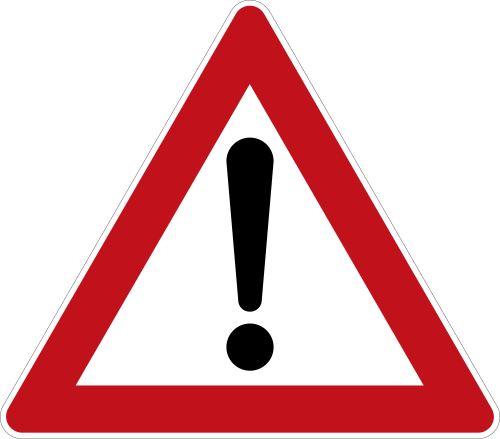
Sign 101: Danger point
Warns of a hazard; a supplementary plate may describe it. Pay extra attention and reduce your speed.
↗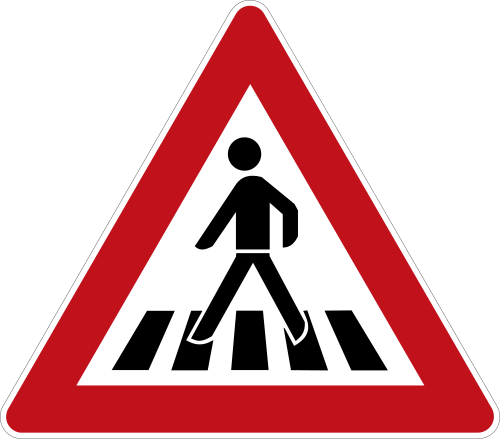
Sign 101-11: Pedestrian crossing ahead
Announces a zebra crossing. Approach at moderate speed, let pedestrians cross and wait if necessary. Overtaking at the crossing is prohibited.
↗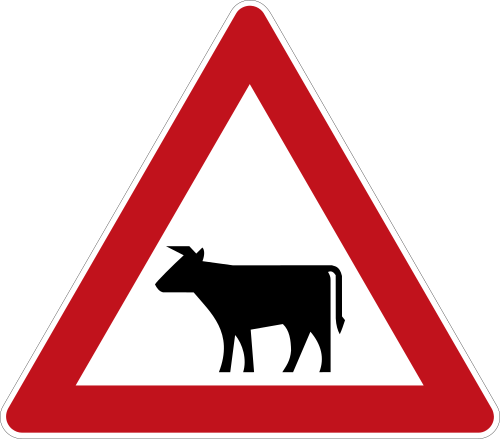
Sign 101-12: Cattle crossing
Warns of livestock being driven across or along the road. Drive slowly, keep your distance, do not sound the horn and stop if necessary.
↗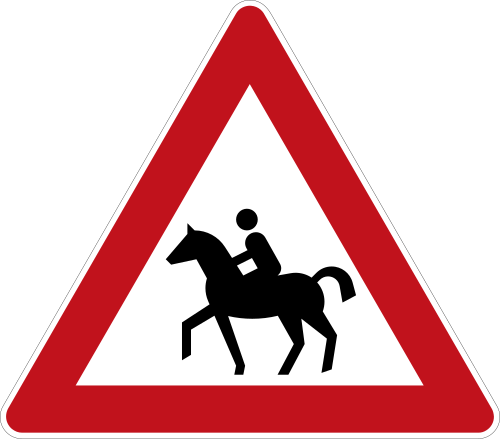
Sign 101-13: Horse riders
Warns of horse riders crossing or using the road. Pass slowly with plenty of lateral distance and avoid noise so the horses are not startled.
↗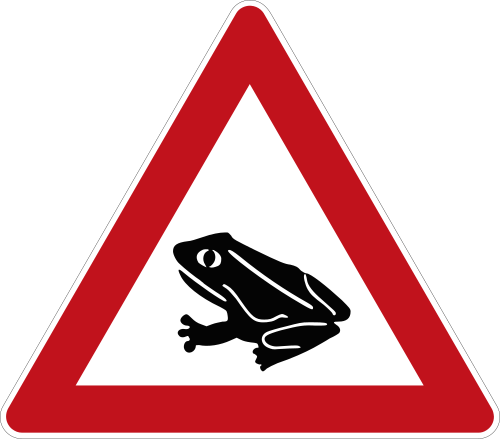
Sign 101-14: Migrating amphibians
Warns of toads, frogs and newts on the road, especially on damp spring nights. Drive slowly and watch out for volunteers helping them across.
↗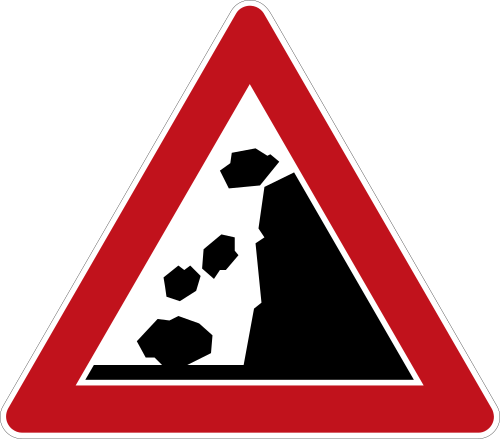
Sign 101-15: Falling rocks
Warns of falling rocks and rocks lying on the road. Stay alert, expect obstacles and avoid stopping in this area.
↗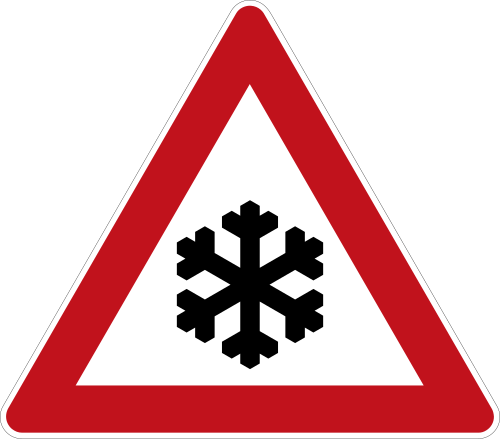
Sign 101-51: Snow or ice
Warns of slippery conditions from snow or ice, e.g. on bridges or in woodland. Drive slowly, keep a large gap and steer and brake gently.
↗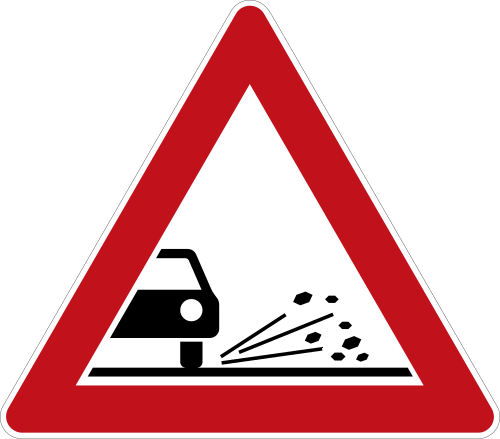
Sign 101-52: Loose chippings
Warns of loose chippings or gravel. Stones may be thrown up and grip is reduced: slow down, increase your distance and avoid sudden braking or steerin
↗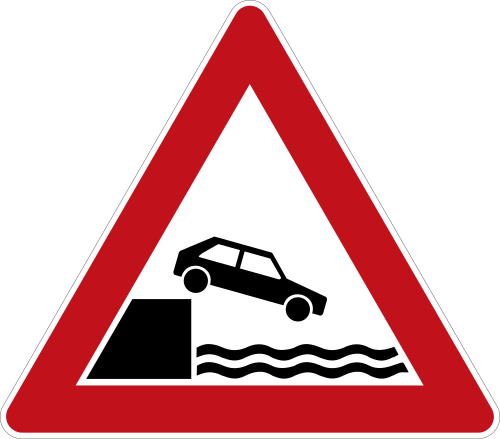
Sign 101-53: Quayside or riverbank
Warns that the road leads to an unprotected bank or quay, with a risk of ending up in the water. Drive very carefully, especially in darkness or fog.
↗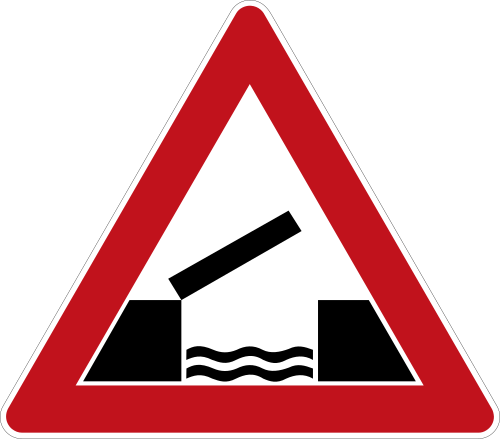
Sign 101-55: Opening bridge
Warns of a lifting, bascule or swing bridge. Expect barriers or traffic lights and stop when the bridge is opening.
↗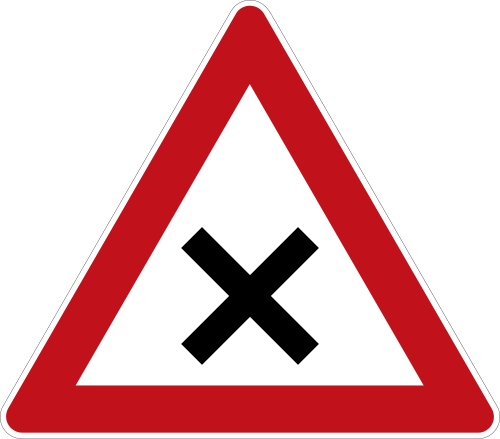
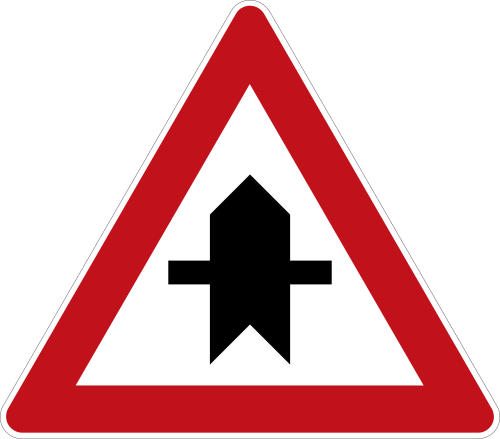
Sign 102: Junction with priority from the right
At the next crossroads or junction, “right before left” applies. Approach at moderate speed and give way to vehicles coming from the right.
↗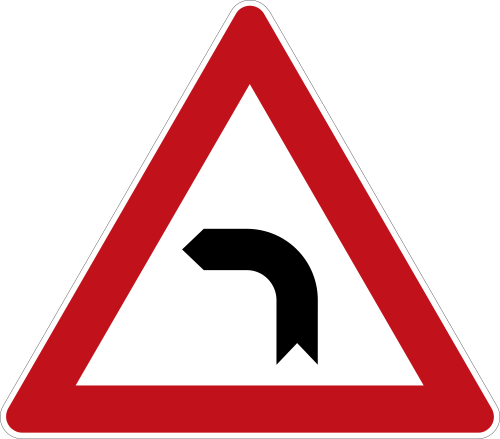
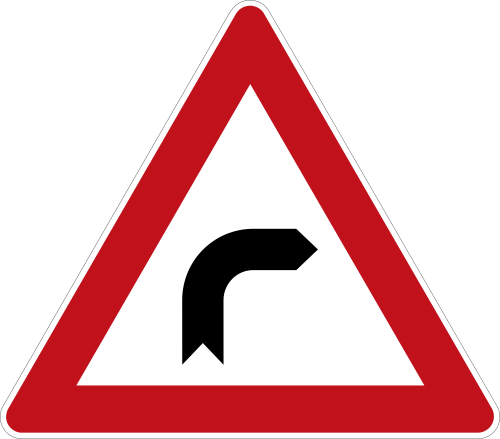
Sign 103-10: Bend to the left
Warns of a dangerous left-hand bend. Slow down before the bend and do not drift towards the middle of the road.
↗
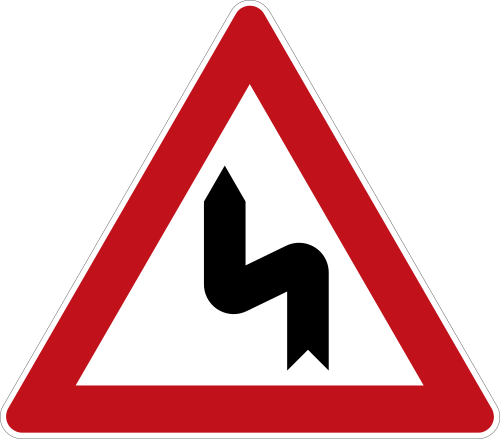
Sign 103-20: Bend to the right
Warns of a dangerous right-hand bend. Slow down before the bend and watch for oncoming vehicles cutting the corner.
↗
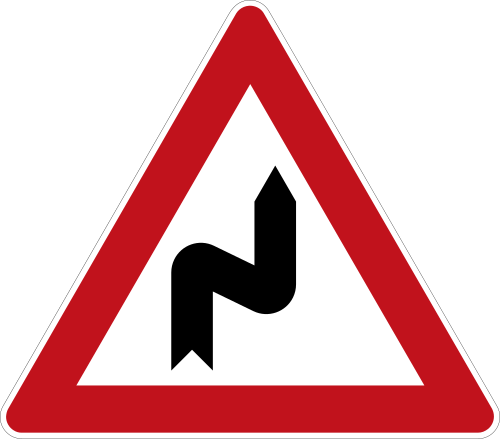
Sign 105-10: Double bend, first to the left
Warns of two dangerous bends in succession, the first one to the left. Reduce your speed in good time.
↗
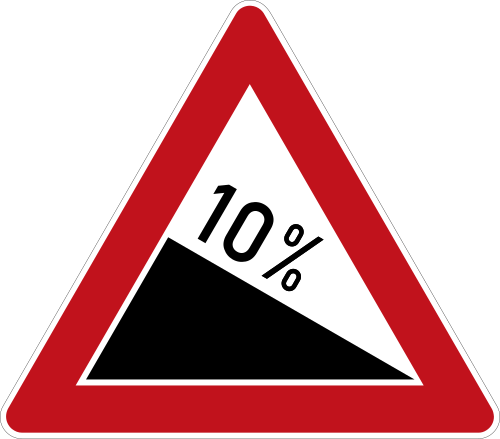
Sign 105-20: Double bend, first to the right
Warns of two dangerous bends in succession, the first one to the right. Reduce your speed in good time.
↗
Sign 108-10: Steep descent (10 %)
Warns of a steep 10 % downhill gradient. Change down to a lower gear early and use engine braking so the brakes do not overheat.
↗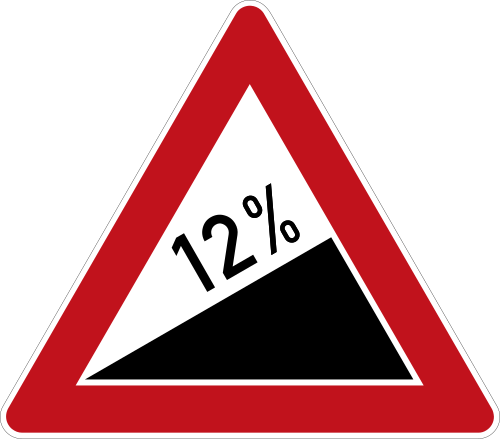
Sign 110-12: Steep ascent (12 %)
Warns of a steep 12 % uphill gradient. Change down in good time and expect slow vehicles; use the parking brake for hill starts.
↗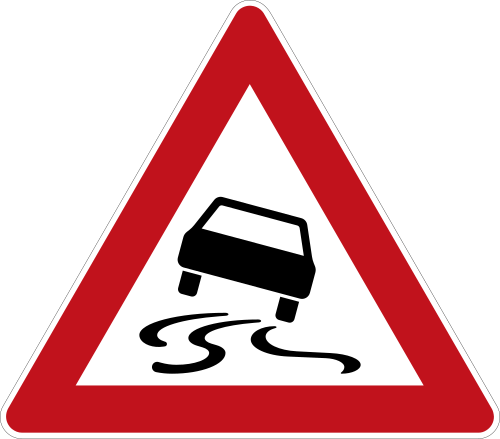
Sign 114: Slippery road
Warns of a risk of skidding when the road is wet or dirty. Slow down, keep a larger distance and avoid harsh braking, accelerating or steering.
↗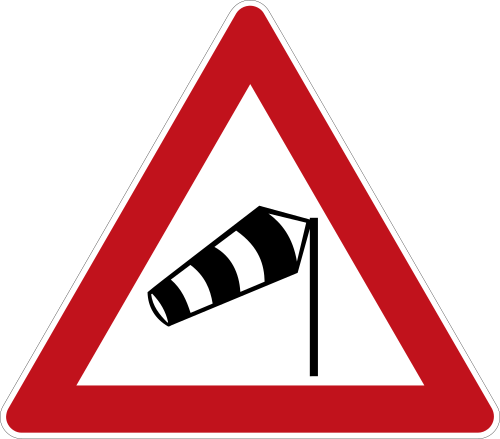
Sign 117-10: Crosswind from the right
Warns of strong crosswinds from the right, e.g. on bridges, at gaps in woodland or when passing trucks. Hold the wheel firmly and slow down, especiall
↗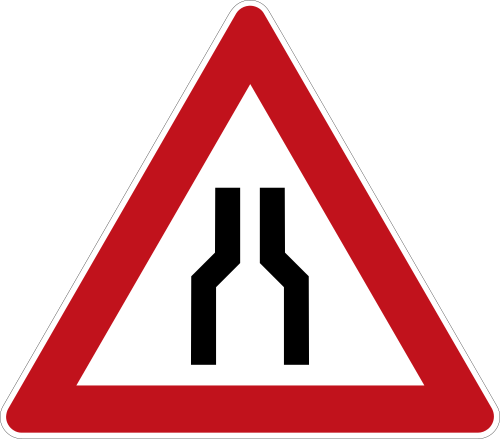
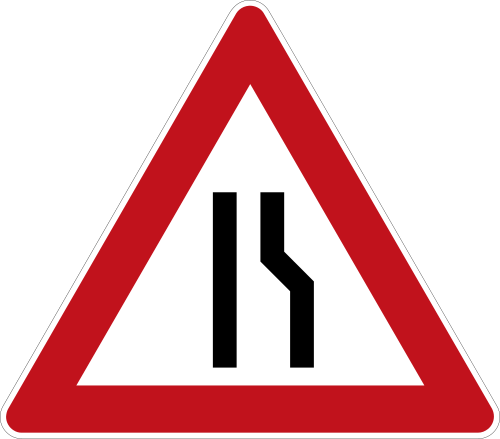
Sign 120: Road narrows
Warns that the road narrows on both sides. Slow down, watch for oncoming traffic and wait if there is not enough room for both.
↗
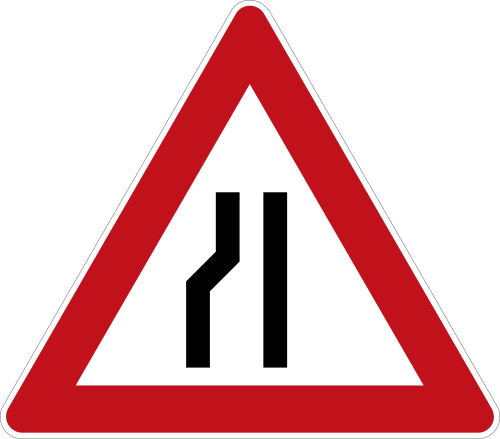
Sign 121-10: Road narrows on the right
The road narrows from the right. If you are on that side and must move left to pass, let oncoming traffic go first (§ 6 StVO).
↗
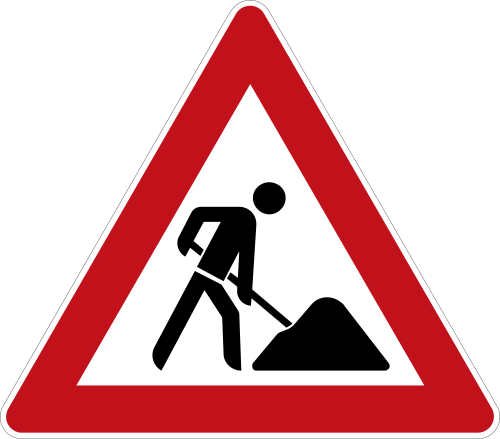
Sign 121-20: Road narrows on the left
The road narrows from the left. Expect vehicles to move over from the left or merge into your path, and adjust your speed.
↗
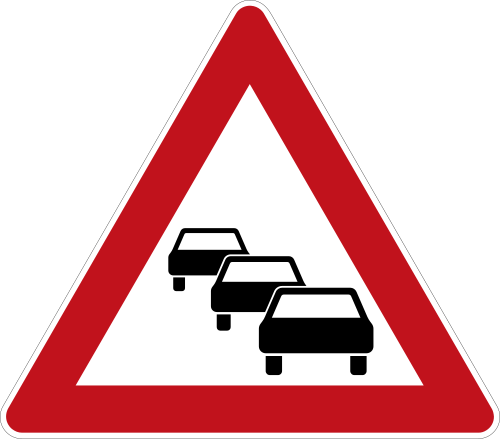
Sign 123: Roadworks
Warns of roadworks. Expect workers, construction vehicles, narrower lanes and dirt on the road; drive slowly and follow barriers and marker boards.
↗
Sign 124: Traffic queues likely
Warns of slow-moving or stationary traffic. Slow down in good time; hazard lights may be used to warn drivers behind. Form an emergency corridor when
↗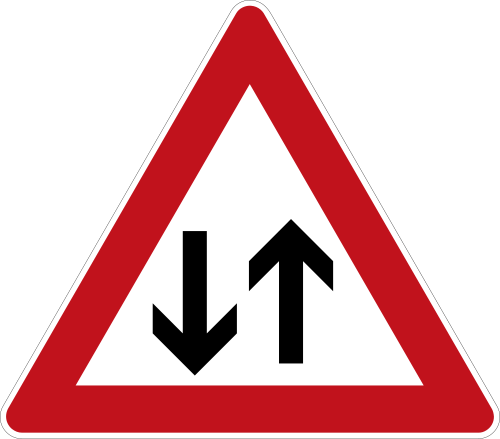
Sign 125: Two-way traffic
Warns that oncoming traffic now uses the road, which so far carried traffic in one direction only. Keep to the right and overtake only with great care
↗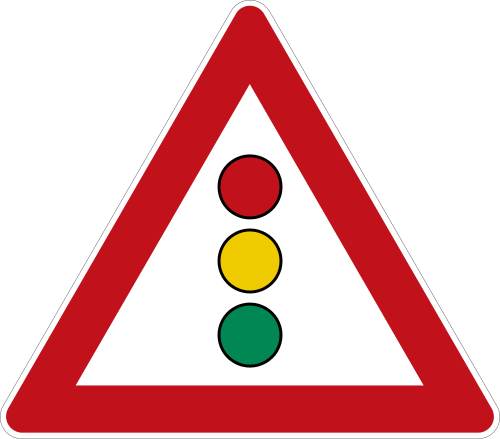
Sign 131: Traffic lights ahead
Warns of traffic lights you may not expect or see in time. Approach ready to brake and expect queuing traffic.
↗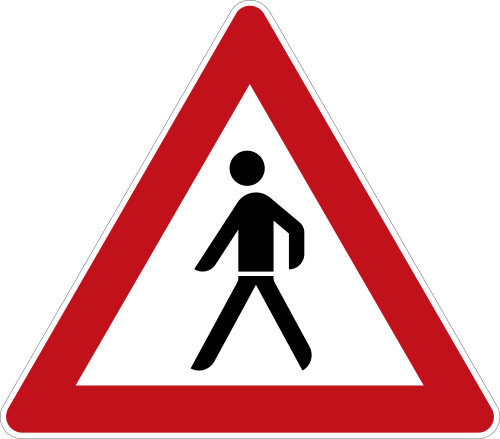
Sign 133-10: Pedestrians
Warns of pedestrians crossing or walking on the road. This is not a zebra crossing, but drive slowly and be ready to brake.
↗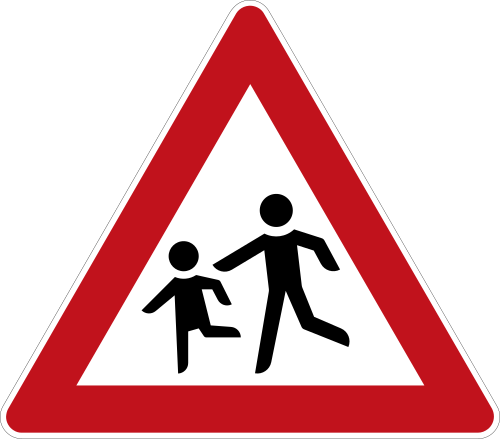
Sign 136-10: Children
Warns of children, e.g. near schools, nurseries or playgrounds. Slow down and be ready to brake; children may suddenly run into the road (§ 3 (2a) StV
↗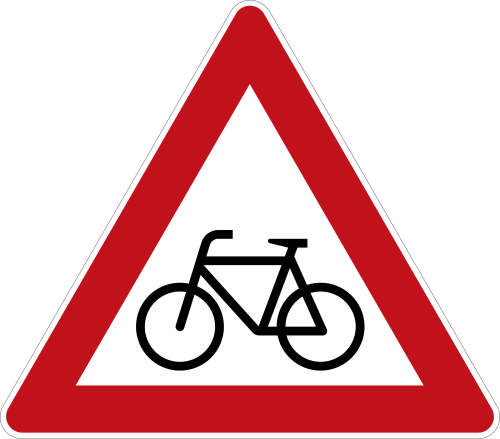
Sign 138-10: Cyclists
Warns of cyclists crossing or joining the road. Expect cyclists and when overtaking keep at least 1.5 m (in town) or 2 m (outside town) away.
↗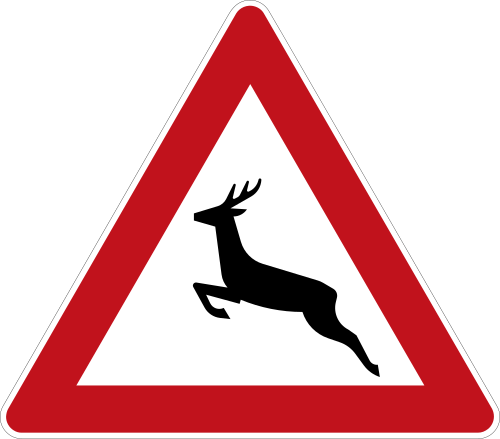
Sign 142-10: Wild animals
Warns of wild animals crossing the road, especially at dawn and dusk. Drive slowly; if an animal is on the road, dip your lights, sound the horn, brak
↗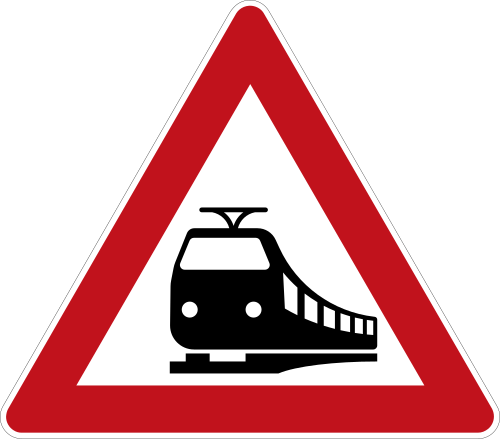
Sign 151: Level crossing
Announces a level crossing. Approach at moderate speed only; from this sign up to and including the crossing you must not overtake motor vehicles. Tra
↗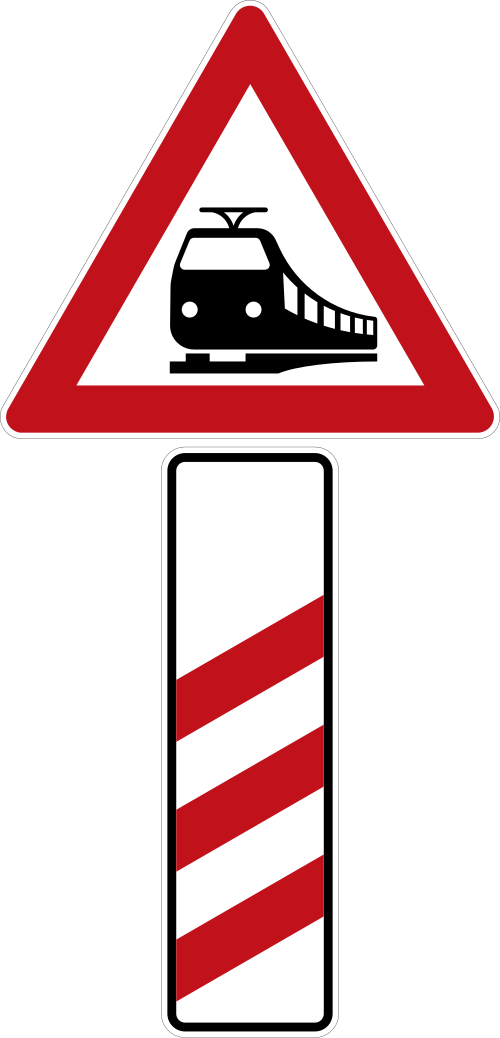
Sign 156-10: Level crossing with three-bar countdown marker
Announces a level crossing about 240 m ahead. Approach at moderate speed; from here up to and including the crossing, do not overtake motor vehicles.
↗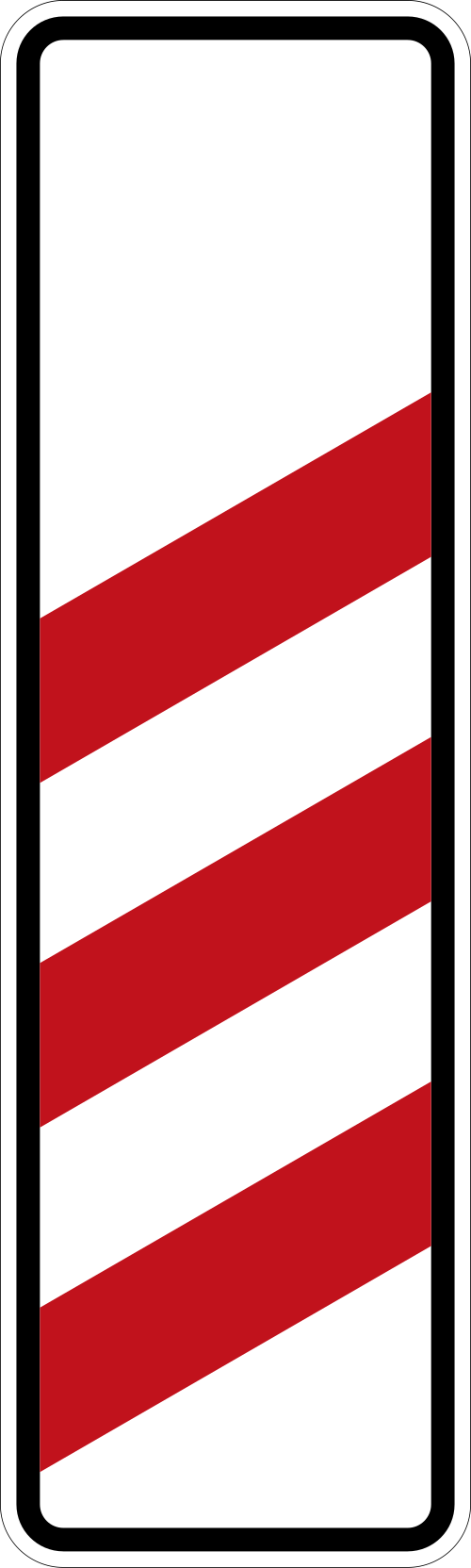
Sign 157-10: Three-bar countdown marker (right)
Countdown markers announce a level crossing; the three-bar marker stands about 240 m before it. Slow down and watch for warning signals.
↗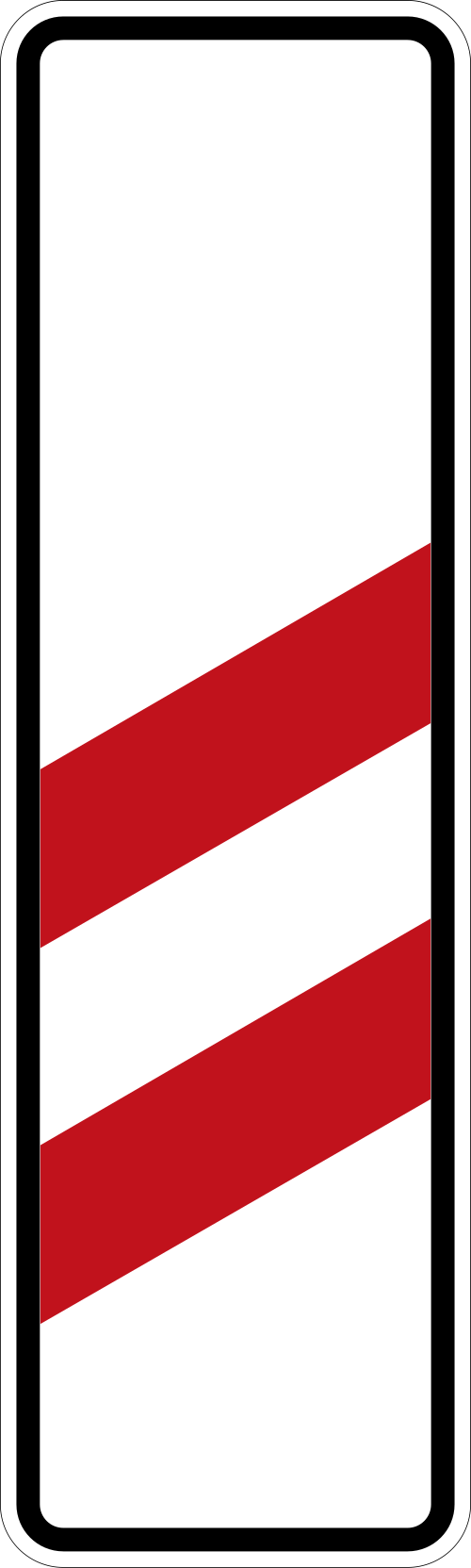
Sign 159-10: Two-bar countdown marker (right)
The two-bar marker stands about 160 m before a level crossing. Keep to a moderate speed and be ready to brake.
↗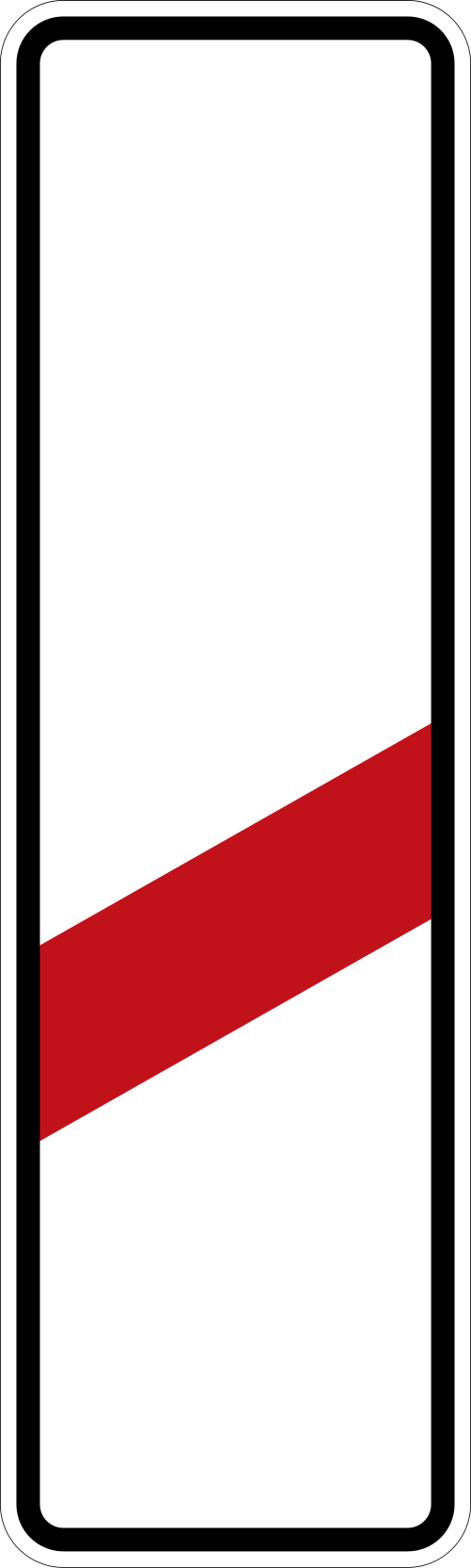
Sign 162-10: One-bar countdown marker (right)
The one-bar marker stands about 80 m before a level crossing. Be ready to stop before the St Andrew's cross.
↗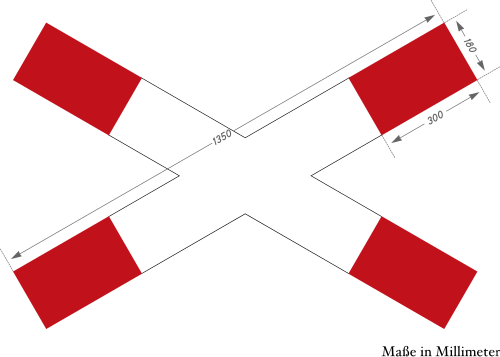
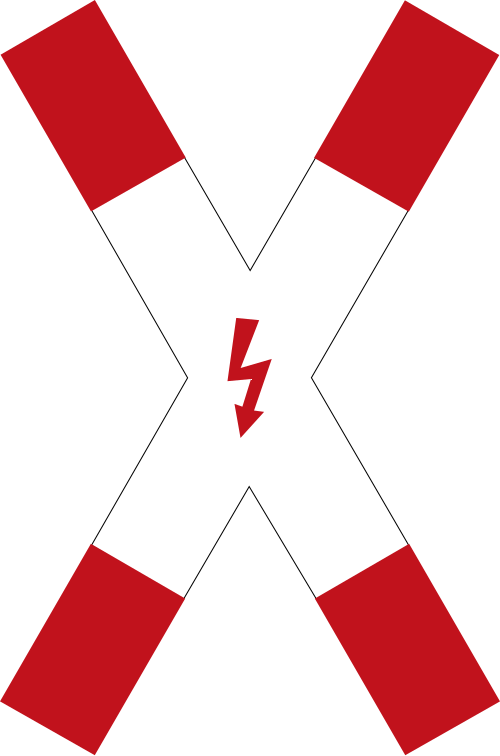
Sign 201: St Andrew's cross
Give way to rail traffic. Do not stop within 10 m before it if that would hide the sign; do not park within 5 m (in town) or 50 m (outside town) befor
↗
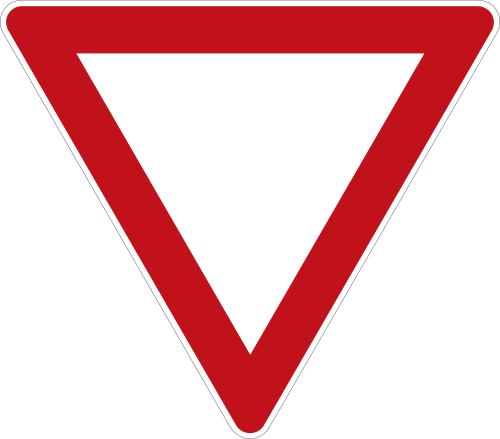
Sign 201-51: St Andrew's cross (upright) with lightning arrow
Give way to rail traffic. The lightning arrow indicates a live overhead power line – danger to life from high voltage, e.g. when climbing onto tall ve
↗
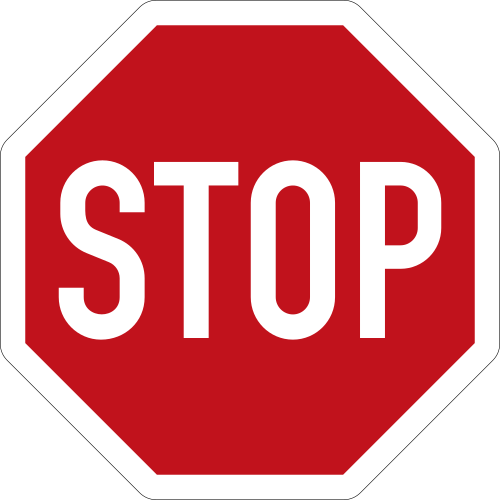
Sign 205: Give way
You must give way to traffic on the road you are entering or crossing. Approach at moderate speed and only continue if you will not endanger or signif
↗
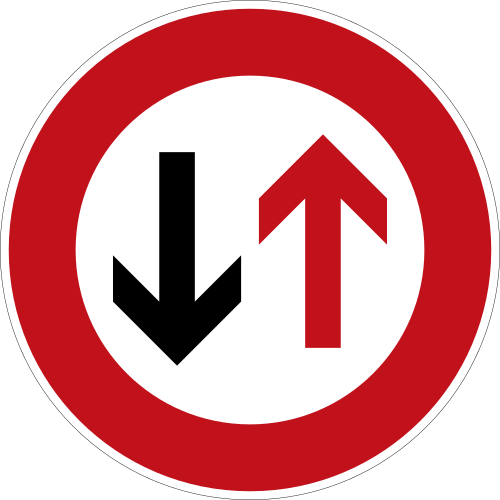
Sign 206: Stop and give way
You must always come to a complete stop – at the stop line or, if there is none, where you can see the other road – and then give way.
↗
Sign 208: Give way to oncoming traffic
At the narrow section ahead, oncoming traffic has priority. Wait before the narrow section until oncoming vehicles have passed.
↗
Sign 301: Priority at the next junction
You have priority only at the next crossroads or junction. After that, the rules at the following junctions apply again.
↗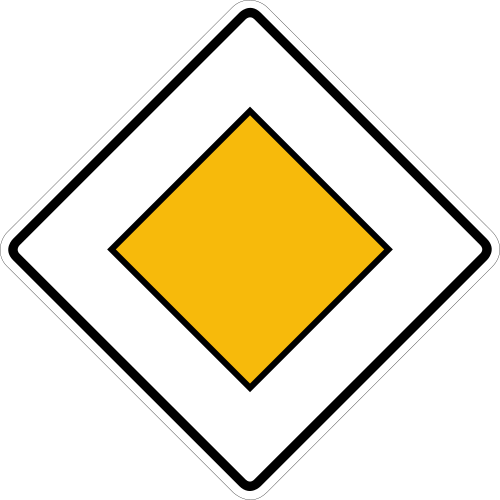
Sign 306: Priority road
You have priority at all following crossroads and junctions until the next sign 205, 206 or 307. Outside towns, parking on the carriageway is prohibit
↗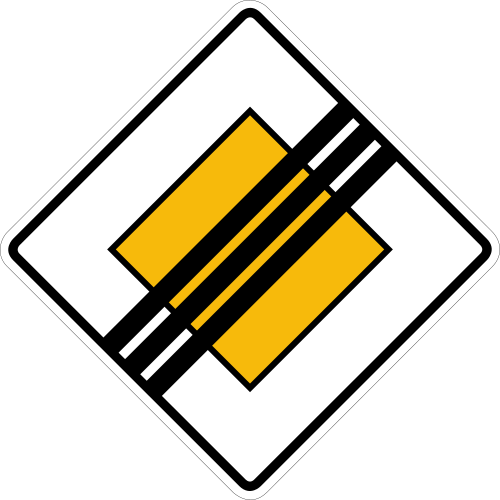
Sign 307: End of priority road
The priority road ends. At the following junctions, “right before left” applies unless otherwise indicated; a sign 205 or 206 often follows soon.
↗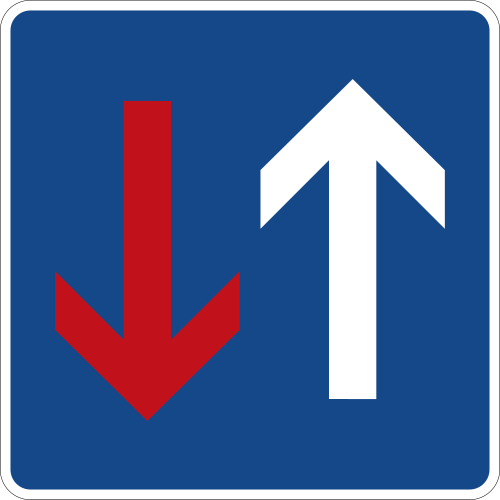
Sign 308: Priority over oncoming traffic
At the narrow section ahead, you have priority over oncoming traffic. Still drive carefully and be prepared to give up your right of way if necessary.
↗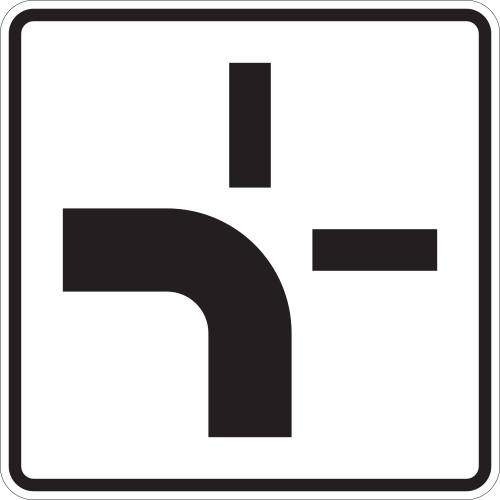
Supplementary plate 1002-10: Course of priority road (crossroads, bending left)
The thick line shows the priority road: it comes from below and bends left at the crossroads. If you follow it, you must indicate and watch for pedest
↗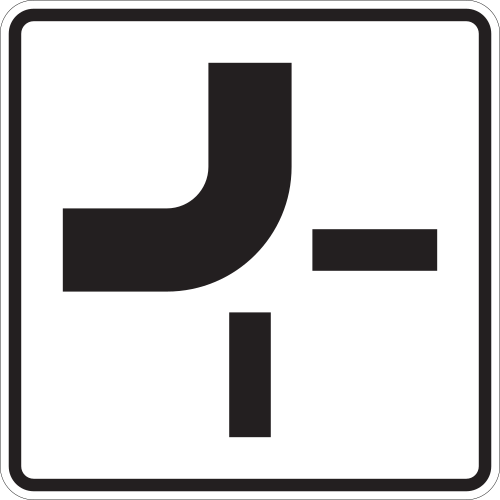
Supplementary plate 1002-11: Course of priority road (crossroads, left to top)
The priority road runs from the left to the top. You approach from below on a minor road and must give way to vehicles on the priority road (from the
↗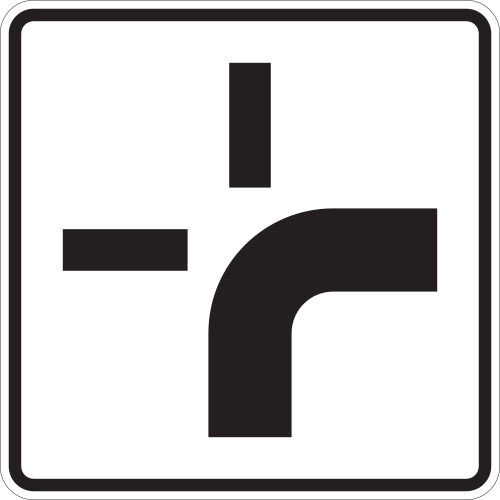
Supplementary plate 1002-20: Course of priority road (crossroads, bending right)
The priority road comes from below and bends right at the crossroads. If you follow it, you must indicate. Going straight on or left means leaving the
↗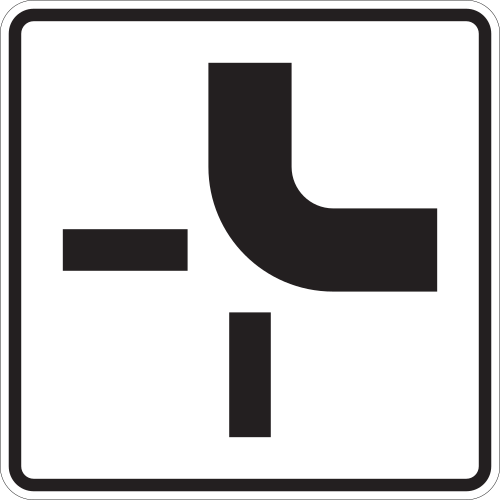
Supplementary plate 1002-21: Course of priority road (crossroads, right to top)
The priority road runs from the right to the top. You approach from below on a minor road and must give way to vehicles on the priority road (from the
↗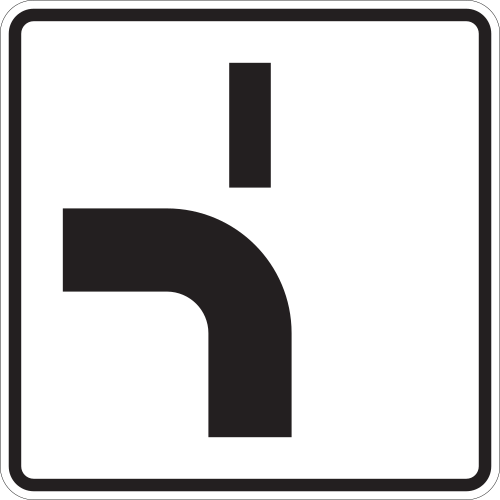
Supplementary plate 1002-12: Course of priority road (T-junction, bending left)
At this junction the priority road bends from below to the left; the road straight ahead is a minor road. If you follow the priority road, indicate le
↗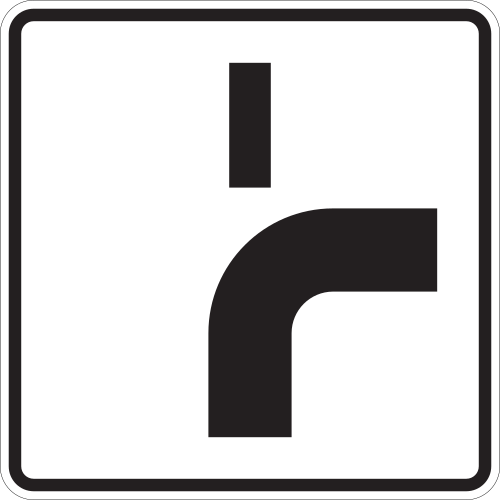
Supplementary plate 1002-22: Course of priority road (T-junction, bending right)
At this junction the priority road bends from below to the right; the road straight ahead is a minor road. If you follow the priority road, indicate r
↗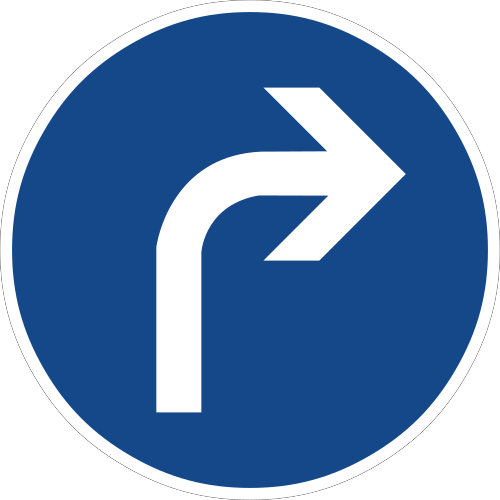
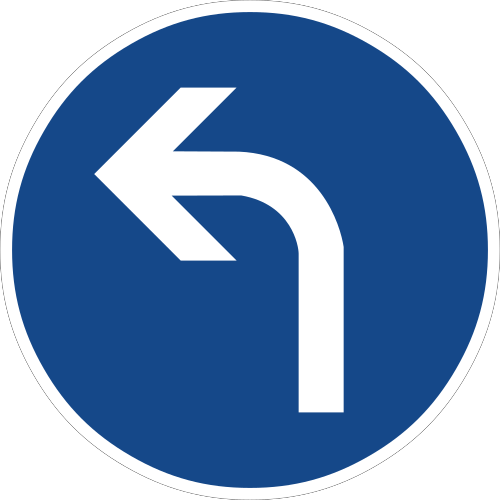
Sign 209: Mandatory direction – turn right
You must turn right at the next crossroads or junction. All other directions are prohibited.
↗
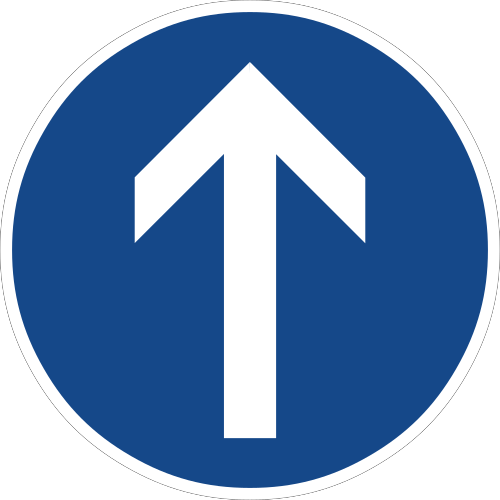
Sign 209-10: Mandatory direction – turn left
You must turn left at the next crossroads or junction. All other directions are prohibited.
↗
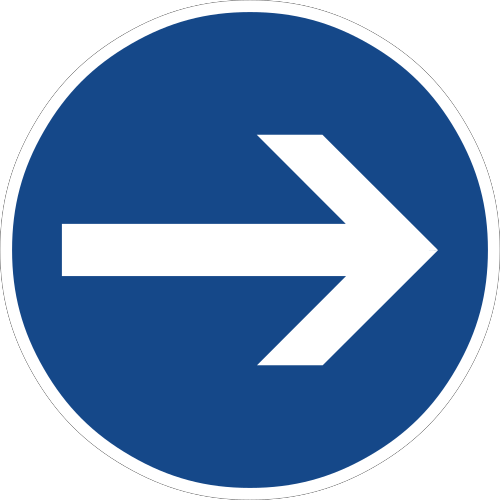
Sign 209-30: Mandatory direction – straight ahead
You must go straight ahead at the next crossroads or junction; turning is prohibited.
↗
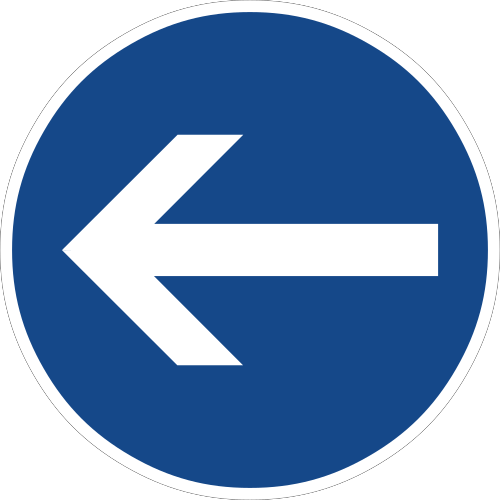
Sign 211: Mandatory direction – turn right here
You must turn right exactly at this point. The sign stands right where the turn has to be made.
↗
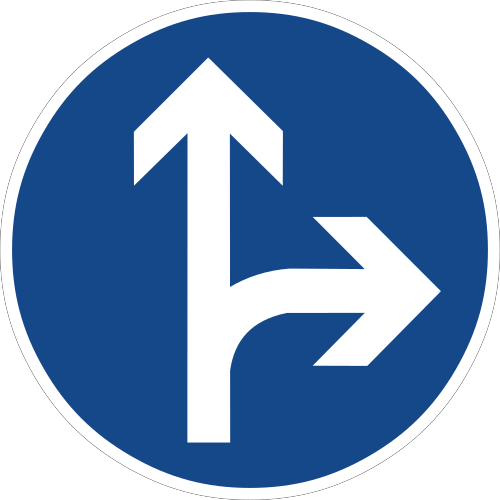
Sign 211-10: Mandatory direction – turn left here
You must turn left exactly at this point. The sign stands right where the turn has to be made.
↗
Sign 214: Mandatory direction – straight ahead or right
You must go straight ahead or turn right at the next crossroads or junction; turning left or making a U-turn is prohibited.
↗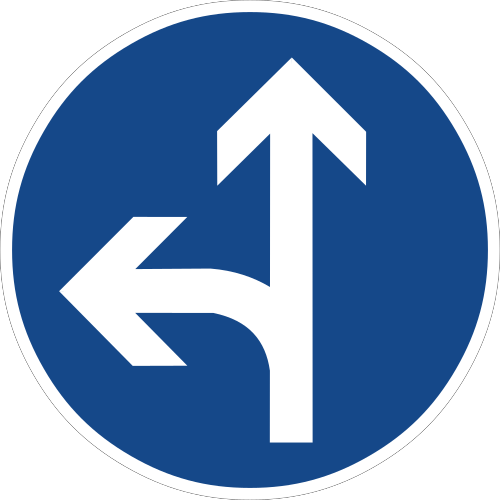
Sign 214-10: Mandatory direction – straight ahead or left
You must go straight ahead or turn left at the next crossroads or junction; turning right is prohibited.
↗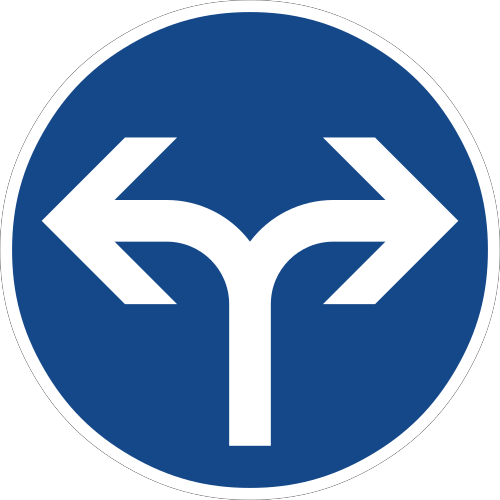
Sign 214-30: Mandatory direction – right or left
You must turn right or left at the next crossroads or junction; going straight ahead is prohibited.
↗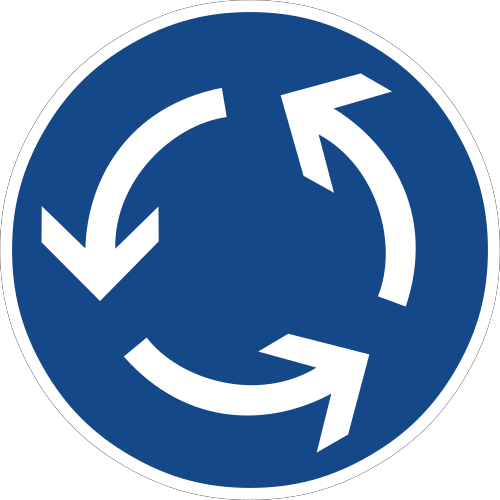
Sign 215: Roundabout
Drive anticlockwise around the island; do not drive over the central island (except very large vehicles) and do not stop in the roundabout. With sign
↗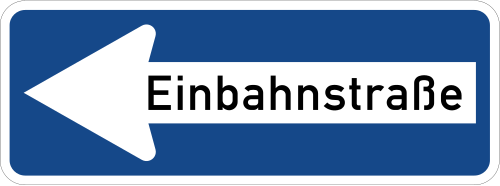
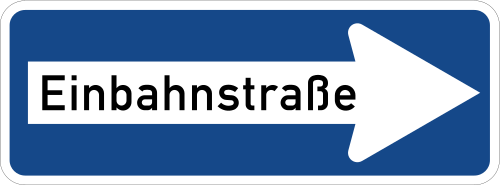
Sign 220-10: One-way street (pointing left)
You may only drive in the direction of the arrow. In one-way streets you may also stop and park on the left; to turn left, position yourself as far le
↗
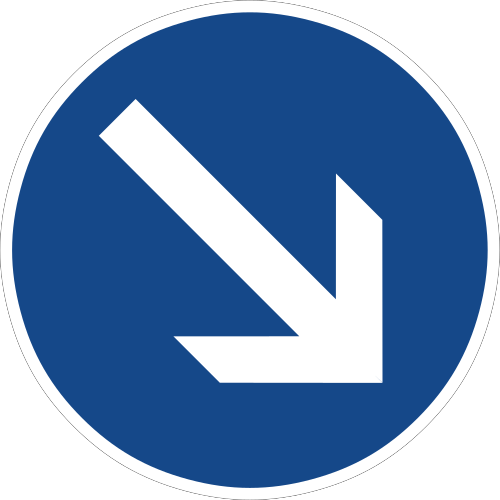
Sign 220-20: One-way street (pointing right)
You may only drive in the direction of the arrow. In one-way streets you may also stop and park on the left; if contraflow cycling is allowed, expect
↗
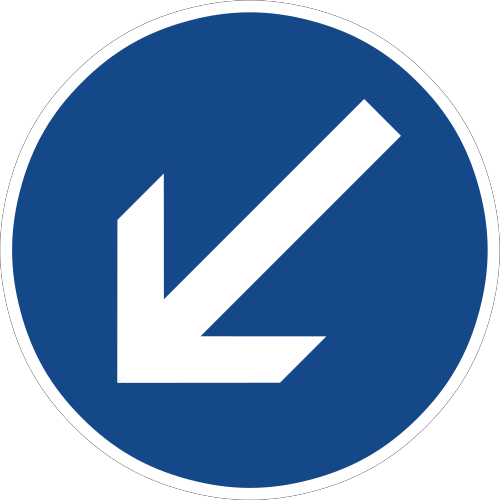
Sign 222: Keep right
You must pass the obstacle, traffic island or barrier on the right.
↗
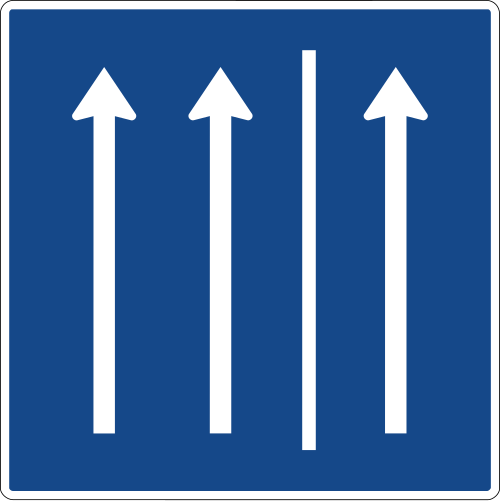
Sign 222-10: Keep left
You must pass the obstacle, traffic island or barrier on the left, e.g. at roadworks.
↗
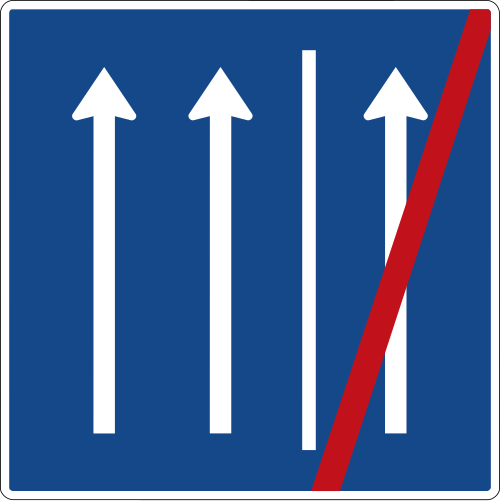
Sign 223.1-50: Use hard shoulder (two lanes)
The hard shoulder is opened as an extra lane and must be used like a right-hand lane. The edge line may then be crossed like a broken lane line.
↗
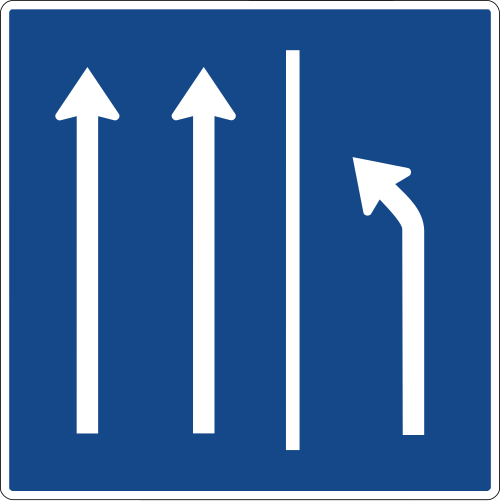
Sign 223.2-50: Stop using hard shoulder (two lanes)
The hard shoulder is no longer open as a traffic lane. It must no longer be used for driving.
↗
Sign 223.3-50: Leave hard shoulder (two lanes)
The hard shoulder must be cleared: if you are driving on it, merge carefully and in good time into the lane to its left.
↗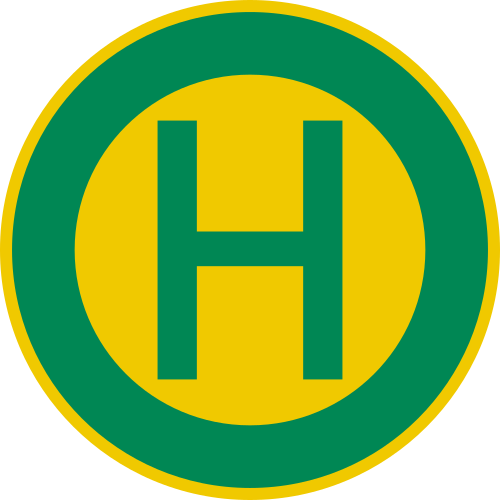
Sign 224: Bus or tram stop
Marks a stop for scheduled buses, trams and school buses. Do not park within 15 m before or after the sign. Pass stationary buses only with care.
↗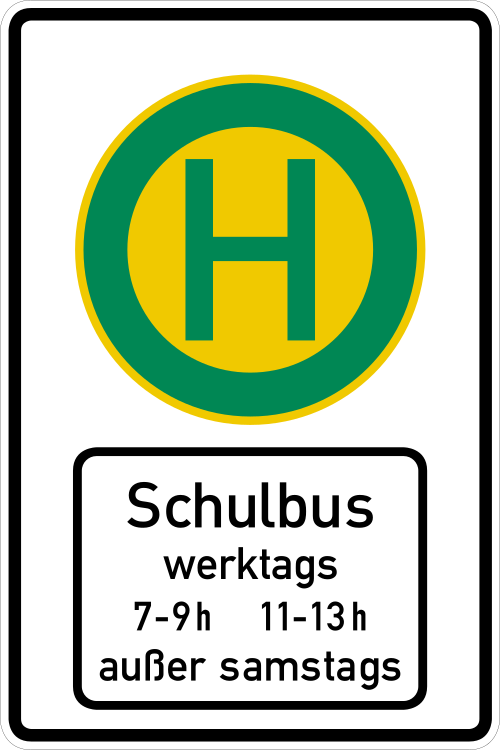
Sign 224-51: School bus stop (with times)
A stop for school buses only – here on working days except Saturdays, 7–9 am and 11 am–1 pm. During these times, parking is prohibited within 15 m eit
↗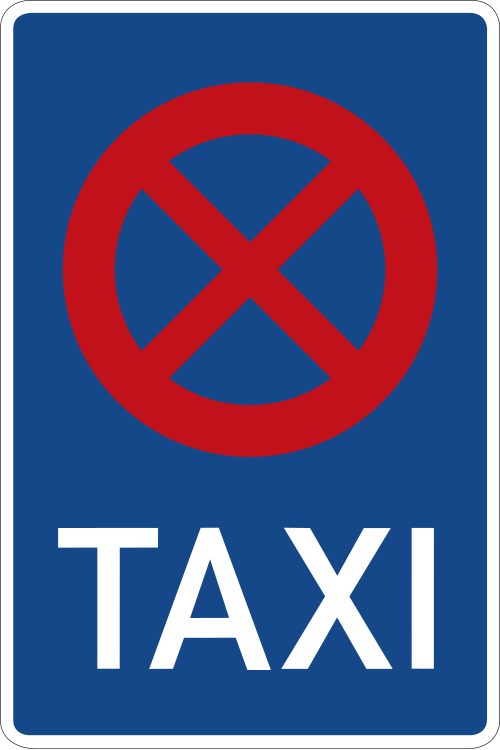
Sign 229: Taxi rank
You must not stop at a taxi rank – only taxis available for hire may stop there. Its length is shown by arrows, the number of taxi spaces or road mark
↗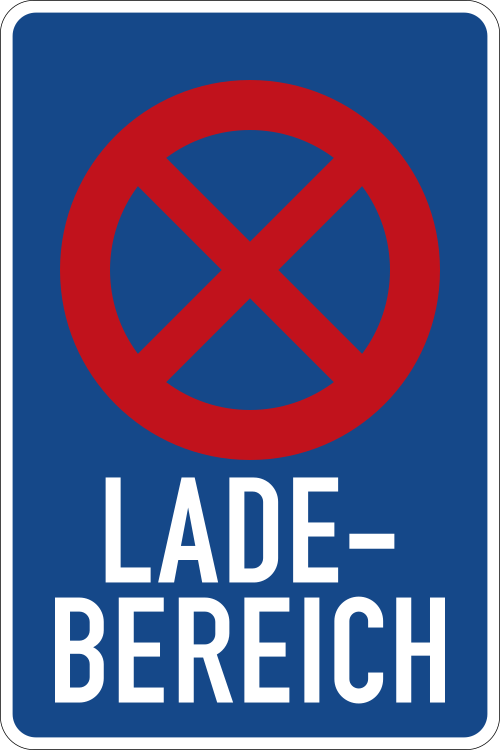
Sign 230: Loading zone
Stopping and parking are allowed here only for loading and unloading vehicles, and this must be done without delay. Arrows or markings show where the
↗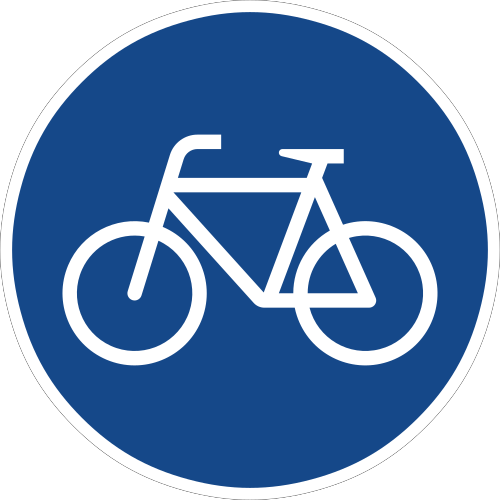
Sign 237: Cycle path
Reserved for cyclists, who must use it. Other traffic, e.g. cars, must not use it – so you may not stop or park on it either.
↗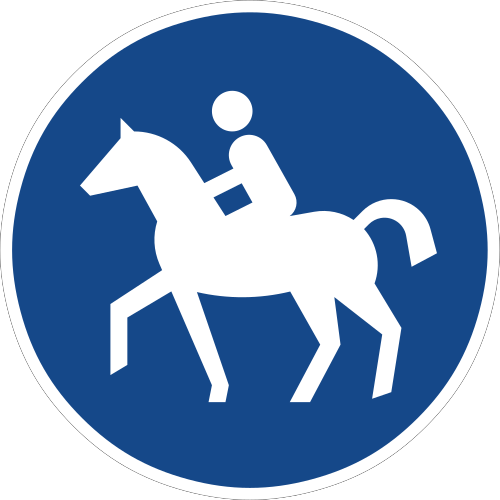
Sign 238: Bridleway
Reserved for horse riders: anyone riding or leading a horse must use it. Other traffic must not use it.
↗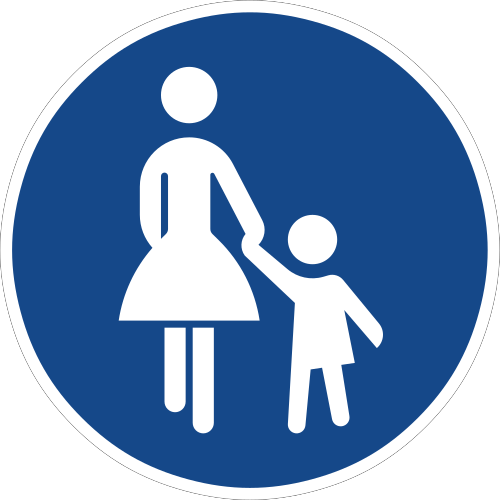
Sign 239: Footpath
For pedestrians only. Other users only if a supplementary plate allows it – then at walking speed, without endangering or hindering pedestrians, waiti
↗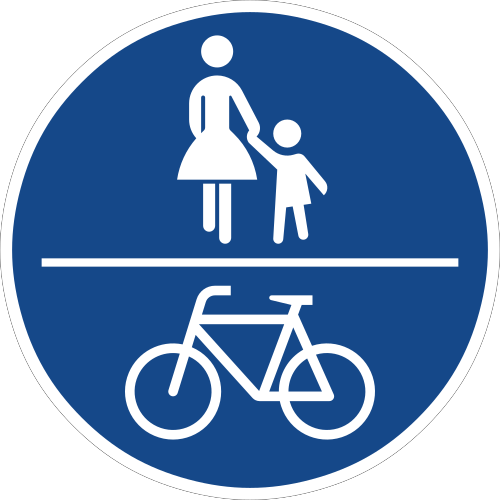
Sign 240: Shared pedestrian and cycle path
Pedestrians and cyclists share this path; cyclists must use it and show consideration for pedestrians. Motor vehicles must not use it.
↗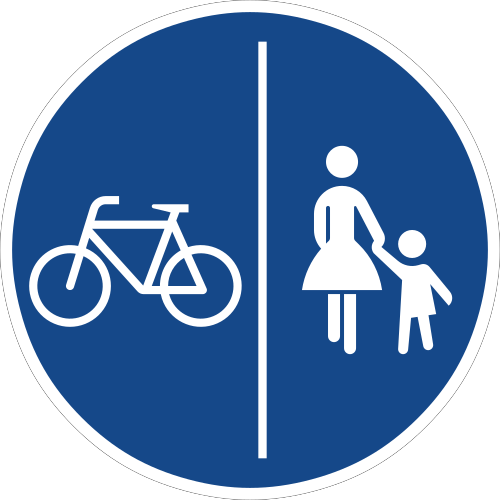
Sign 241-30: Segregated cycle and pedestrian path
The cycle path and footpath run side by side (here: cycle path on the left, footpath on the right). Cyclists and pedestrians must use their own part.
↗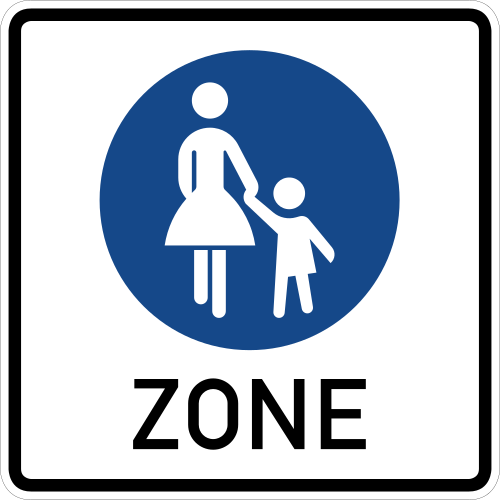
Sign 242.1: Start of pedestrian zone
From here on, only pedestrians may use this area. Vehicles only if a supplementary plate allows it – then only at walking speed, without endangering o
↗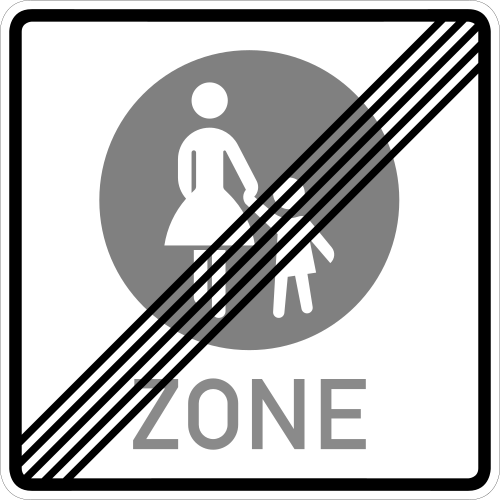
Sign 242.2: End of pedestrian zone
The pedestrian zone ends. Anyone driving out of it must not endanger others and must give way to all other road users (§ 10 StVO).
↗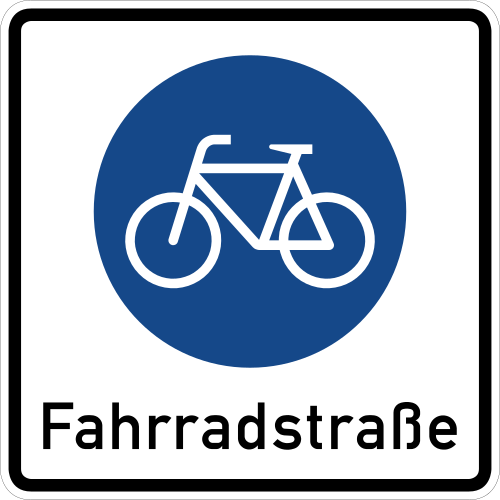
Sign 244.1: Start of cycle street
Only for cyclists and e-scooters; other vehicles only if a plate allows it. Maximum 30 km/h; cyclists may ride side by side and must not be endangered
↗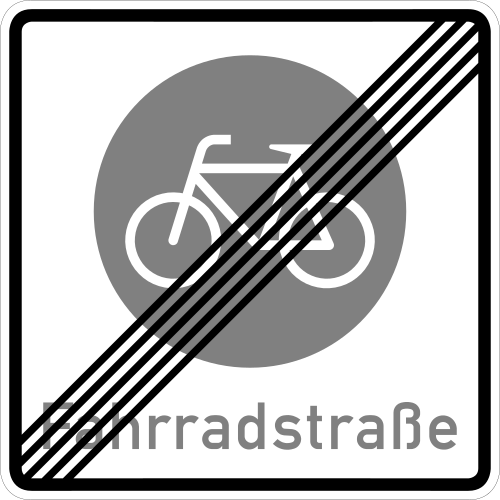
Sign 244.2: End of cycle street
The cycle street ends. From here, the general rules for road use and speed apply again.
↗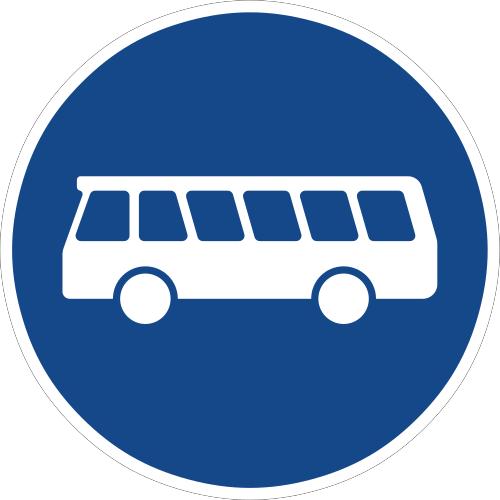
Sign 245: Bus lane
Only for scheduled buses and marked school buses. Taxis, cyclists, electric vehicles etc. only if a supplementary plate allows it. Cars must not drive
↗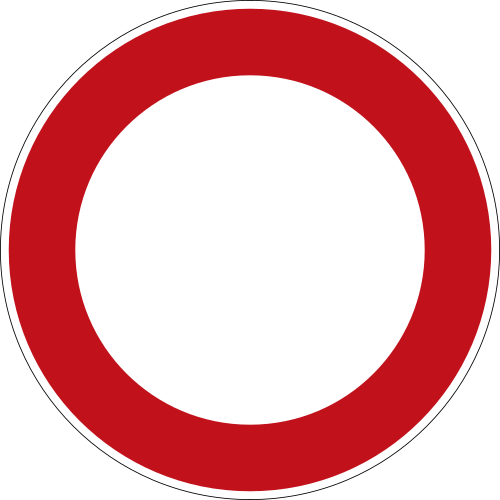
Sign 250: No vehicles
The road is closed to all vehicles. Hand carts, horse riders and people driving livestock are exempt; motorcycles and bicycles may be pushed.
↗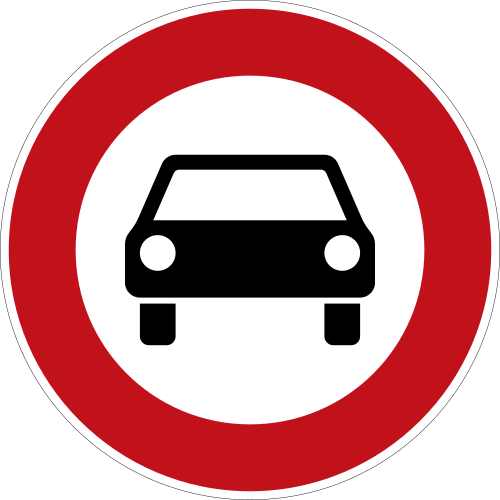
Sign 251: No motor cars
No cars or other multi-track motor vehicles (e.g. vans, trucks). Single-track vehicles such as motorcycles and bicycles may pass.
↗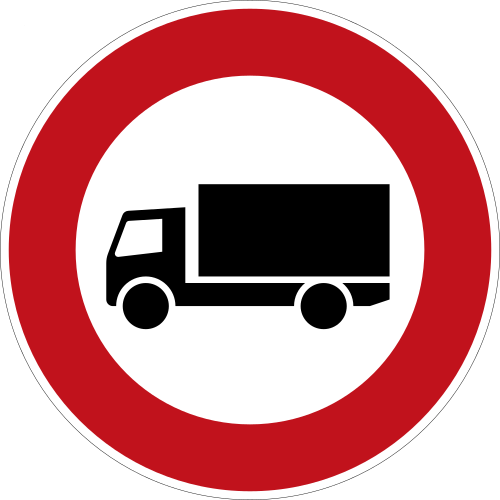
Sign 253: No goods vehicles over 3.5 t
No motor vehicles with a permissible total mass over 3.5 t (including trailers) and no tractors. Cars and buses are exempt – even with a trailer.
↗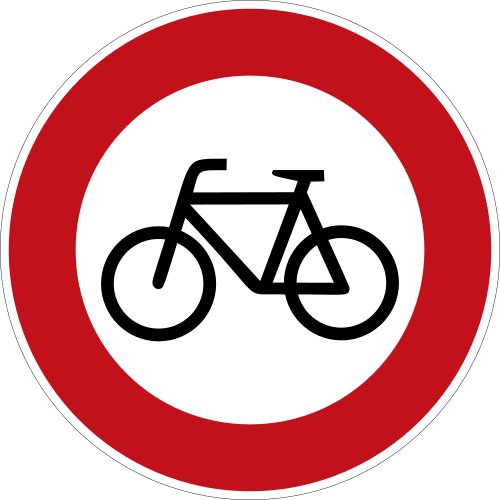
Sign 254: No cycling
Cyclists and e-scooter riders must not ride here. Bicycles may be pushed.
↗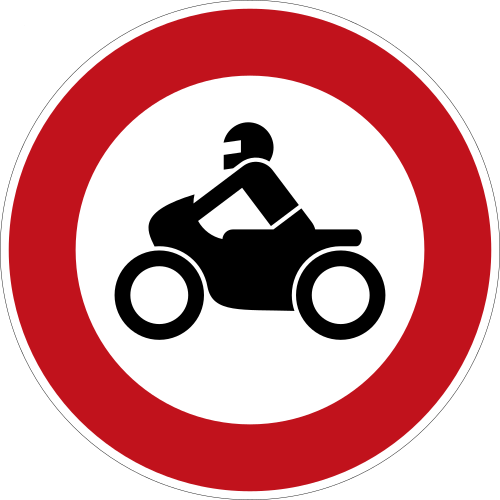
Sign 255: No motorcycles
No motorcycles (including those with sidecars), mopeds or low-power mopeds (Mofas).
↗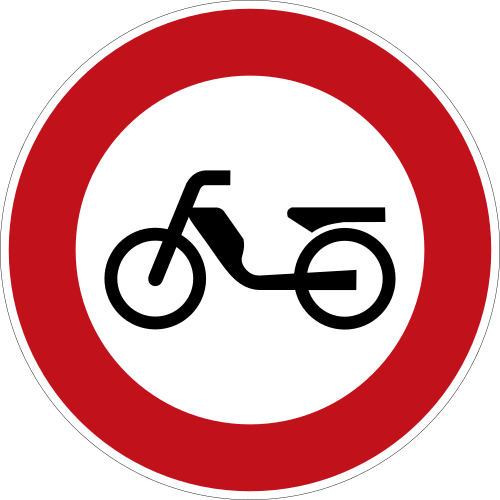
Sign 257-50: No low-power mopeds
Low-power mopeds (Mofas) must not use this road. Other vehicles are not affected.
↗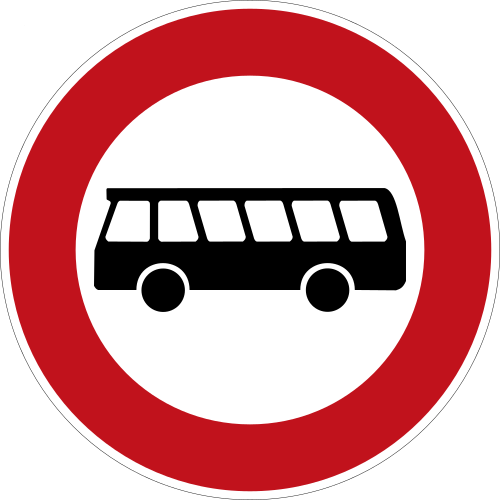
Sign 257-54: No buses
Buses and coaches must not use this road.
↗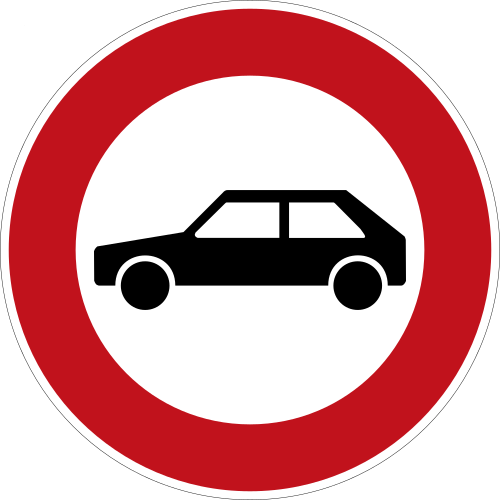
Sign 257-55: No cars
Passenger cars must not use this road. Other types of vehicle are not affected by this ban.
↗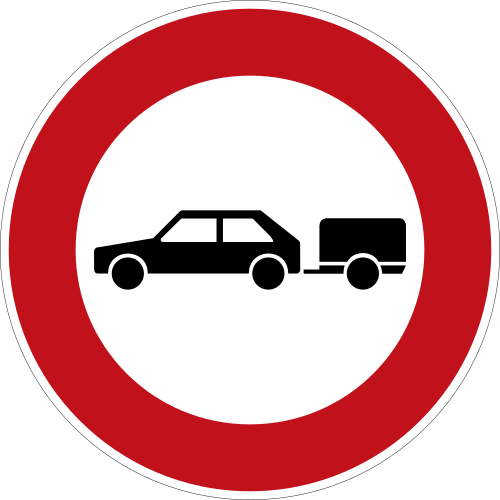
Sign 257-56: No cars towing trailers
Cars towing a trailer (e.g. a caravan) must not use this road. Cars without a trailer may pass.
↗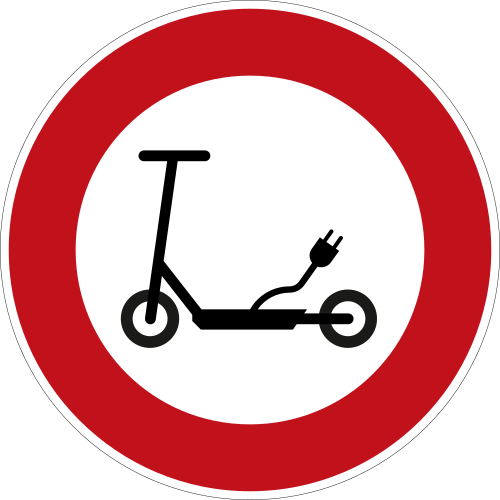
Sign 257-59: No e-scooters
E-scooters and other small electric vehicles under the eKFV must not be ridden here.
↗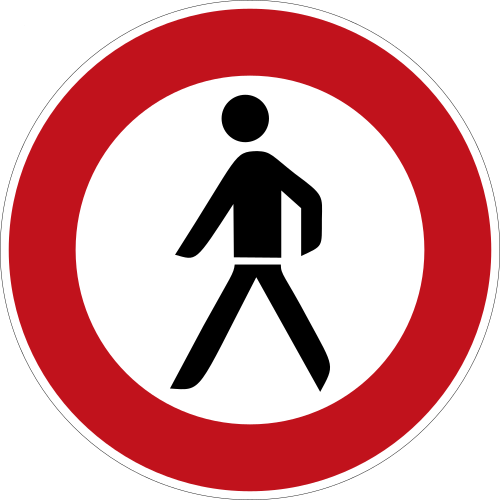
Sign 259: No pedestrians
Pedestrians must not use this path or road.
↗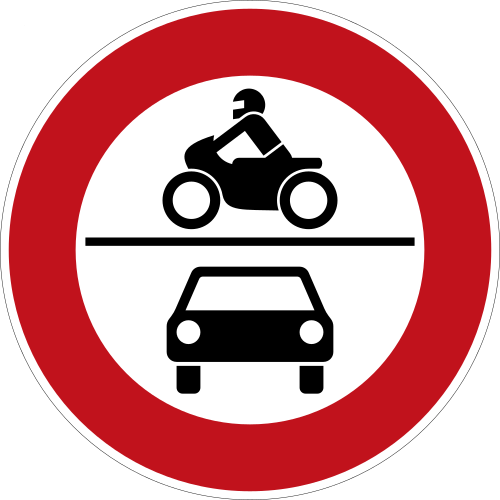
Sign 260: No motor vehicles
No motor vehicles of any kind: motorcycles (incl. sidecars), mopeds, Mofas, cars and other multi-track motor vehicles. Cyclists may pass.
↗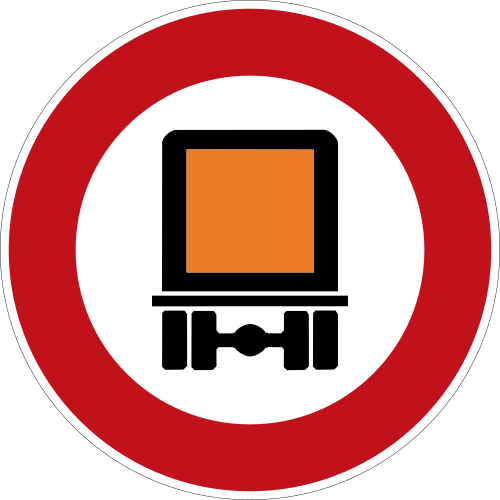
Sign 261: No vehicles carrying dangerous goods
Motor vehicles that must display orange plates because of dangerous goods must not use this road (e.g. before tunnels).
↗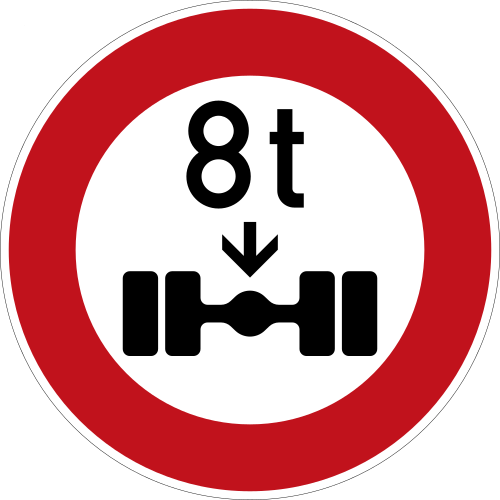
Sign 263-8: Actual axle load limit (8 t)
Vehicles with an actual load of more than 8 t on any axle must not proceed.
↗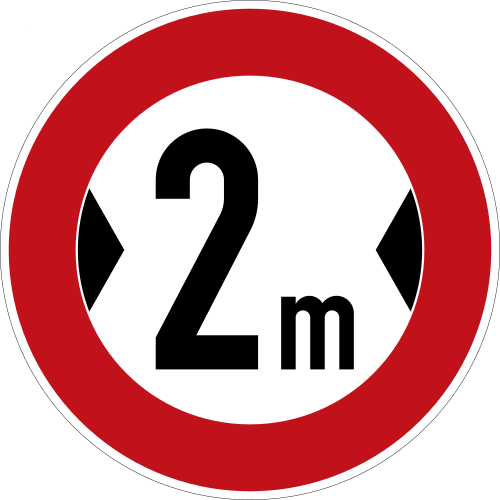
Sign 264-2: Actual width limit (2 m)
Vehicles wider than 2 m including load and exterior mirrors must not drive here – often in the left lane at motorway roadworks.
↗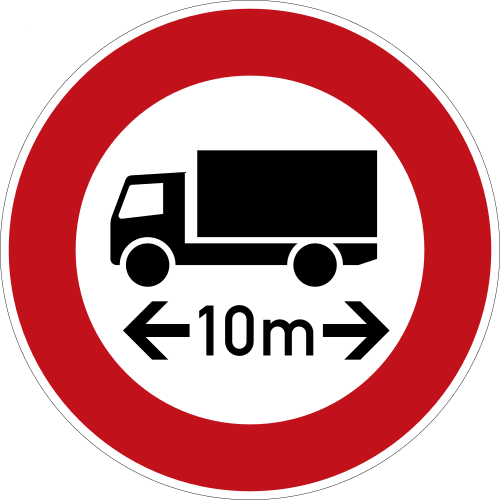
Sign 266-10: Actual length limit (10 m)
Vehicles or combinations longer than 10 m including load must not proceed. For vehicles with trailers, the total length counts.
↗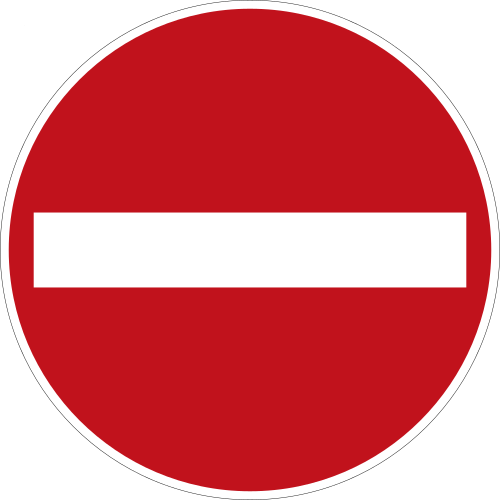
Sign 267: No entry
You must not drive into the road this sign applies to – typically at the exit end of a one-way street. A supplementary plate may allow cyclists.
↗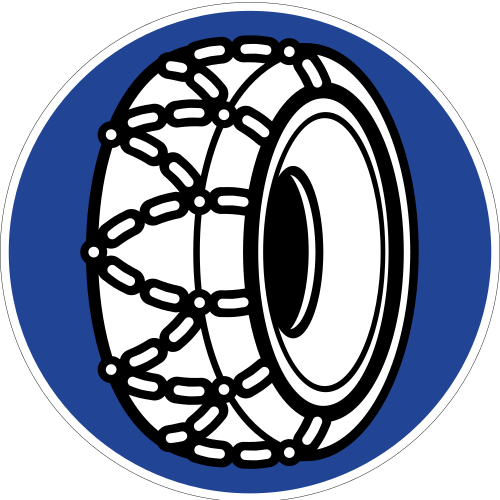
Sign 268: Snow chains required
This road may only be used with snow chains fitted. With snow chains, the maximum speed is 50 km/h.
↗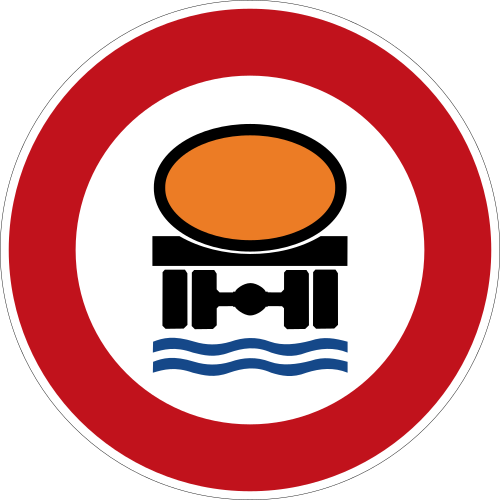
Sign 269: No vehicles carrying water pollutants
Vehicles carrying more than 20 litres of substances hazardous to water (e.g. oil, fuel, chemicals) must not use this road.
↗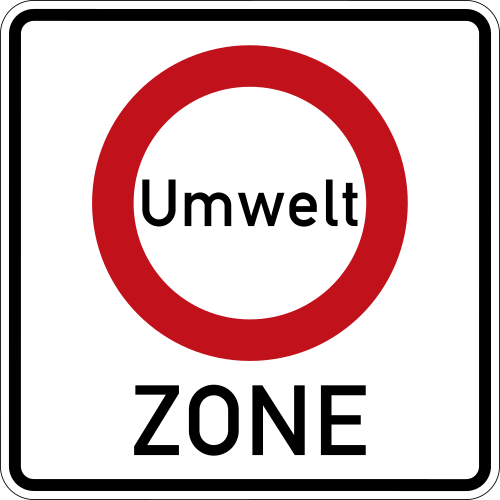
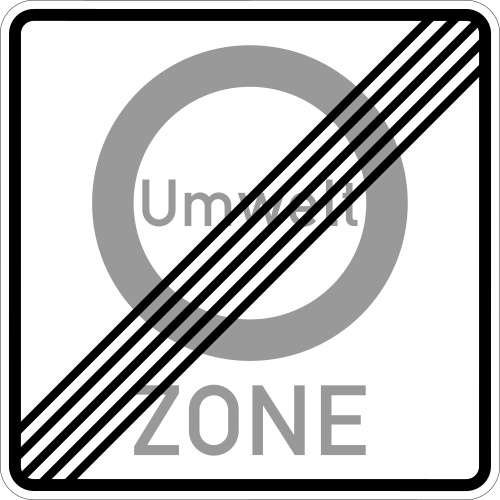
Sign 270.1: Start of low-emission zone
Start of a zone with traffic restrictions to reduce air pollution. Motor vehicles may only enter with the emissions sticker shown on the plate (usuall
↗
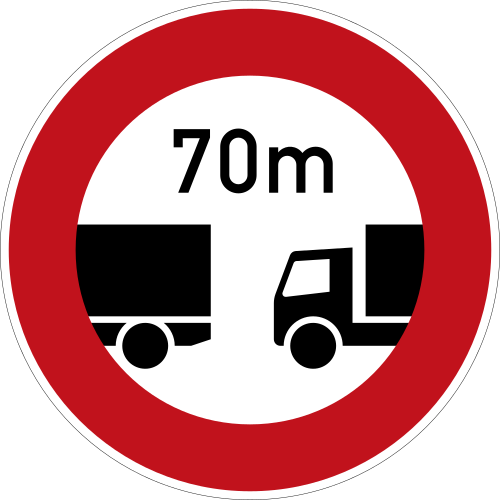
Sign 270.2: End of low-emission zone
The low-emission zone ends. From here, no emissions sticker is required.
↗
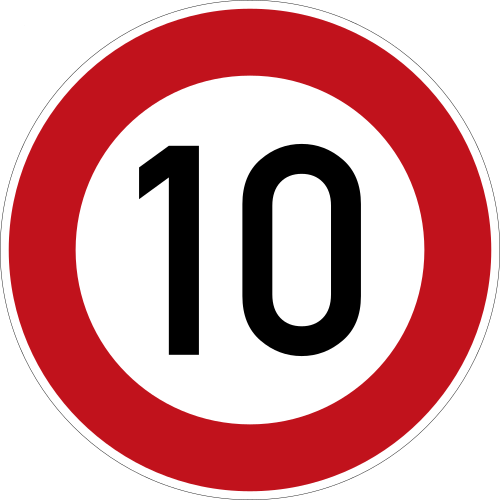
Sign 273-70: Minimum distance 70 m
Drivers of motor vehicles over 3.5 t permissible total mass and of tractors must keep at least 70 m from a vehicle of the same kind ahead. Cars and bu
↗
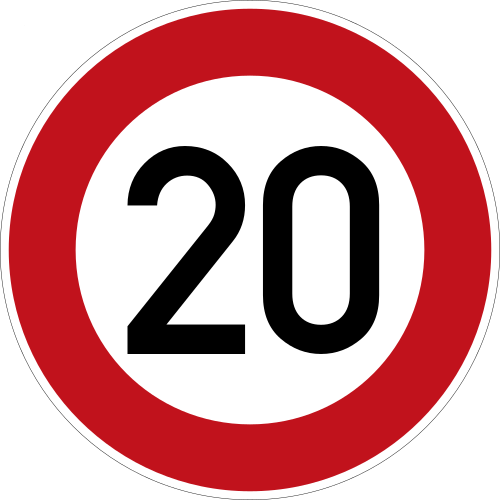
Sign 274-10: Speed limit 10 km/h
You must not drive faster than 10 km/h, e.g. in car parks, narrow sections or roadworks. The limit applies until it is lifted.
↗
Sign 274-20: Speed limit 20 km/h
You must not drive faster than 20 km/h. The limit applies from the sign until it is lifted (e.g. by sign 278 or 282).
↗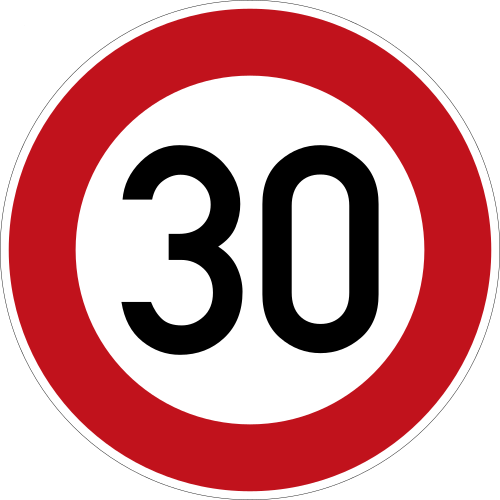
Sign 274-30: Speed limit 30 km/h
You must not drive faster than 30 km/h until the limit is lifted. Unlike in a 30 zone, the existing priority rules on the road remain unchanged.
↗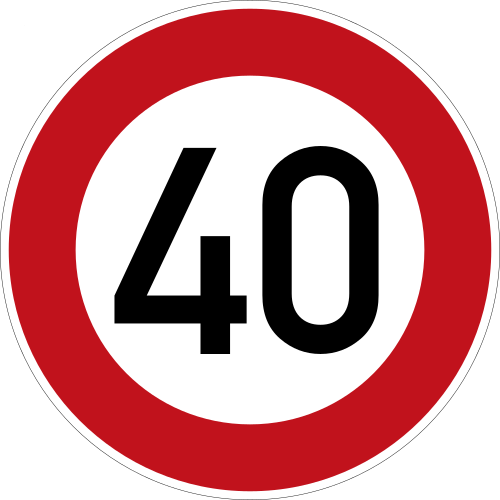
Sign 274-40: Speed limit 40 km/h
You must not drive faster than 40 km/h. The limit applies from the sign until it is lifted, e.g. by sign 278 or 282.
↗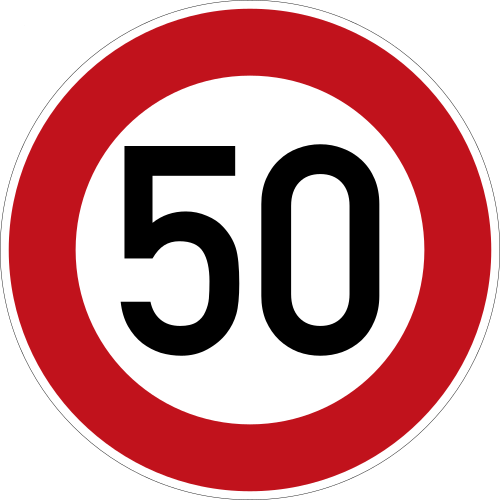
Sign 274-50: Speed limit 50 km/h
You must not drive faster than 50 km/h – outside towns e.g. before hazards. The limit applies until it is lifted.
↗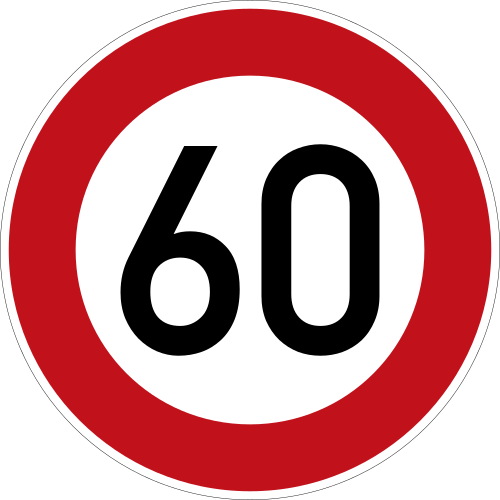
Sign 274-60: Speed limit 60 km/h
You must not drive faster than 60 km/h. In town, the sign allows 60 km/h for all vehicles; outside towns, lower limits for certain vehicles still appl
↗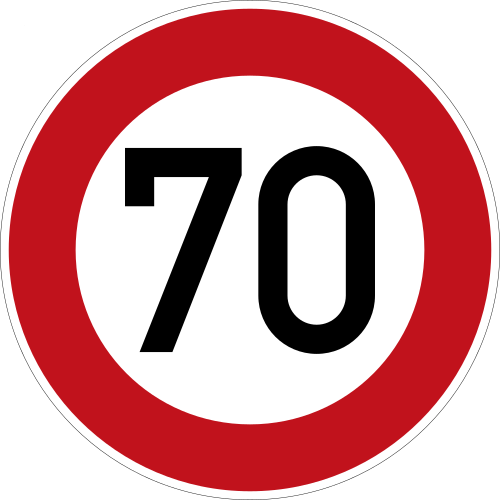
Sign 274-70: Speed limit 70 km/h
You must not drive faster than 70 km/h. In town, the higher speed applies to all vehicles; outside towns, lower limits for certain vehicle types remai
↗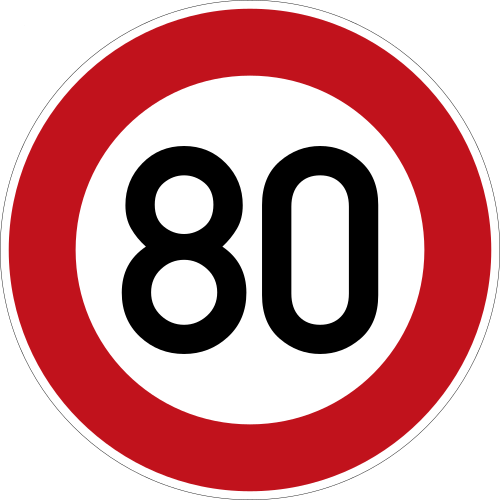
Sign 274-80: Speed limit 80 km/h
You must not drive faster than 80 km/h, e.g. on country roads or at motorway roadworks. The limit applies until it is lifted.
↗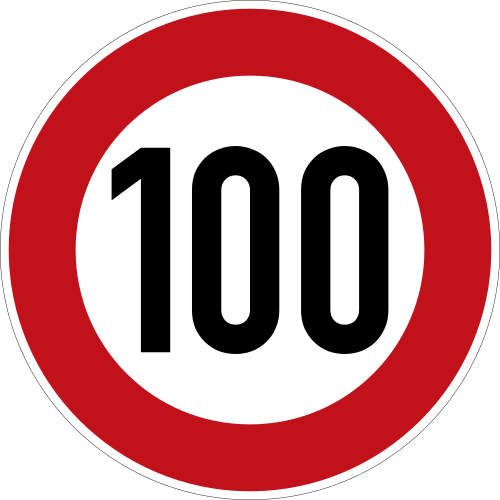
Sign 274-100: Speed limit 100 km/h
You must not drive faster than 100 km/h. Outside towns, the sign never raises vehicle-specific limits: a car with a trailer, for example, may still on
↗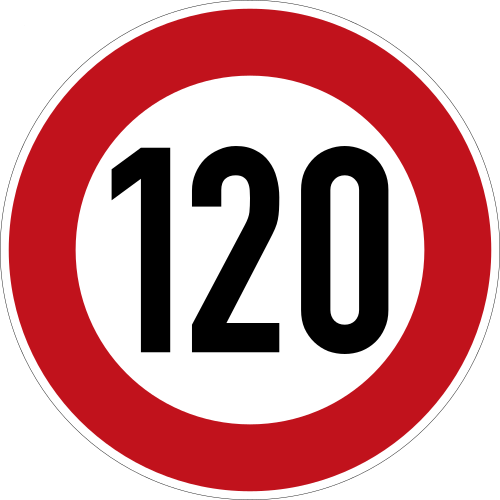
Sign 274-120: Speed limit 120 km/h
You must not drive faster than 120 km/h, e.g. on motorways. Vehicles with a lower limit (e.g. car-trailer combinations at 80 km/h) must keep to their
↗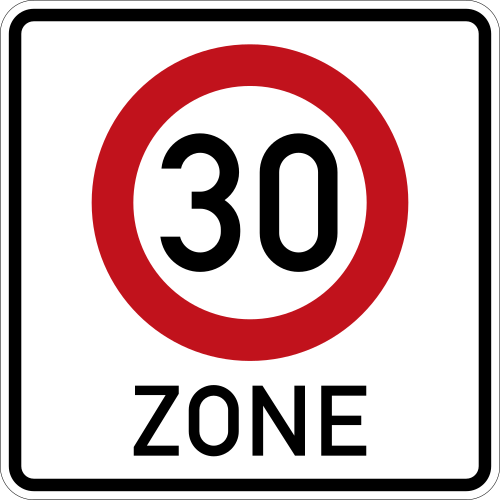
Sign 274.1: Start of 30 km/h zone
Throughout the zone the maximum speed is 30 km/h until sign 274.2. At junctions within the zone, “right before left” usually applies.
↗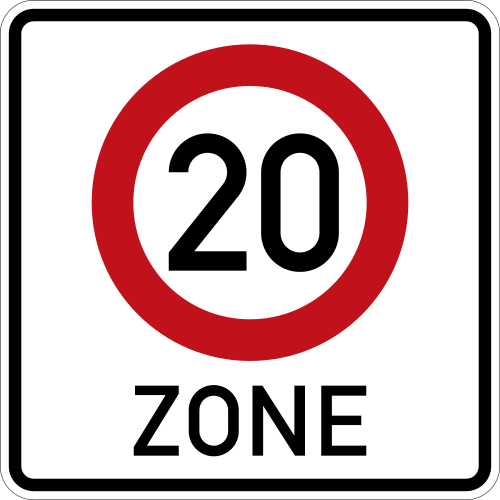
Sign 274.1-20: Start of 20 km/h zone
Used in traffic-calmed shopping areas: throughout the zone the maximum speed is 20 km/h until the zone ends. Expect many pedestrians.
↗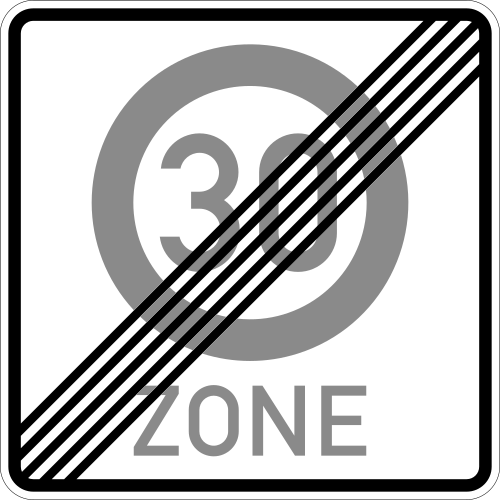
Sign 274.2: End of 30 km/h zone
The 30 zone ends. After it, the general speed limit applies again (50 km/h in town) unless otherwise indicated.
↗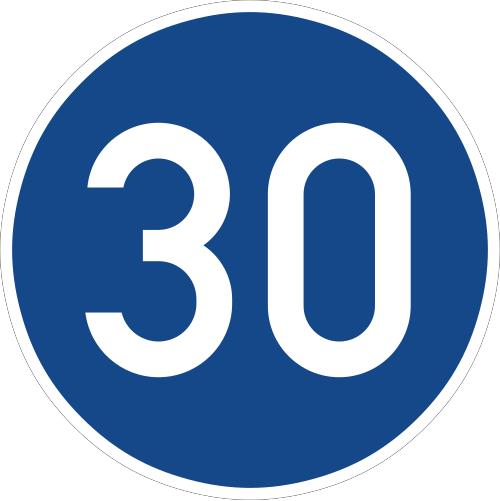
Sign 275-30: Minimum speed 30 km/h
You must not drive slower than 30 km/h unless road, traffic, visibility or weather conditions require it. Vehicles that cannot or may not go this fast
↗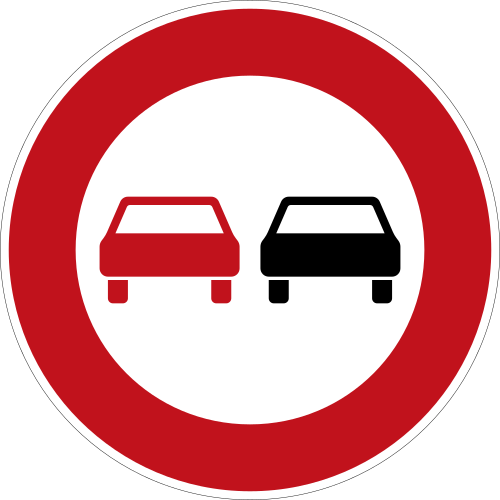
Sign 276: No overtaking
Drivers of motor vehicles must not overtake multi-track motor vehicles or motorcycles with sidecars. Single-track vehicles (e.g. bicycles, mopeds, sol
↗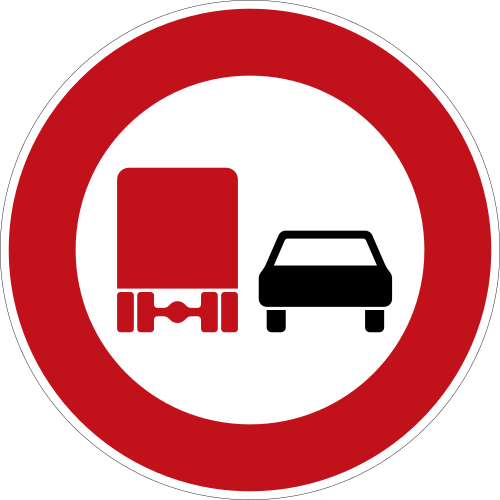
Sign 277: No overtaking for trucks over 3.5 t
Motor vehicles over 3.5 t permissible total mass (including trailers) and tractors must not overtake multi-track motor vehicles. Cars – even with a tr
↗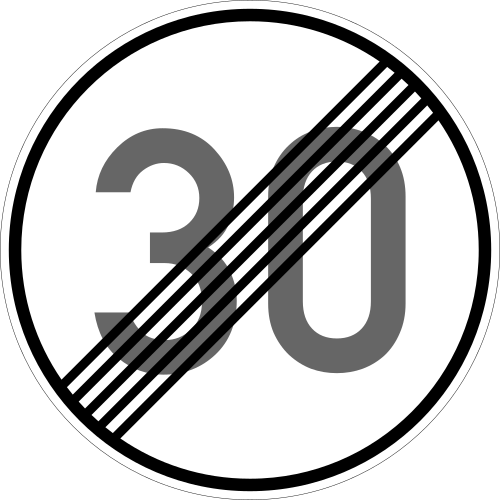
Sign 278-30: End of 30 km/h speed limit
The 30 km/h limit is lifted. The general speed limit applies again, e.g. 50 km/h in town or 100 km/h outside towns for cars.
↗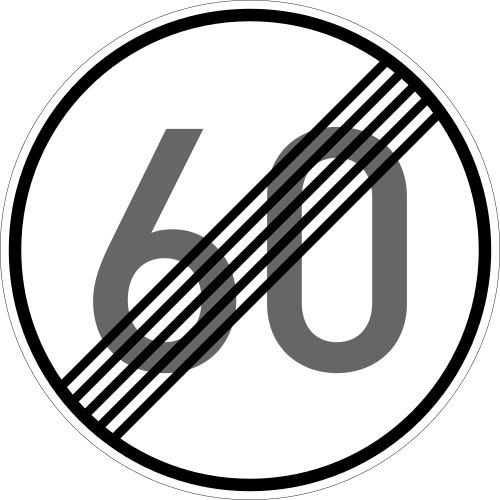
Sign 278-60: End of 60 km/h speed limit
The 60 km/h limit is lifted. The general speed limit applies again, e.g. 100 km/h outside towns for cars.
↗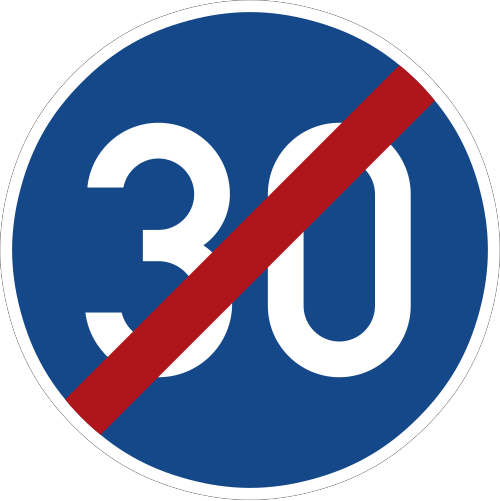
Sign 279-30: End of minimum speed 30 km/h
The minimum speed of 30 km/h ends. From here, you may also drive more slowly.
↗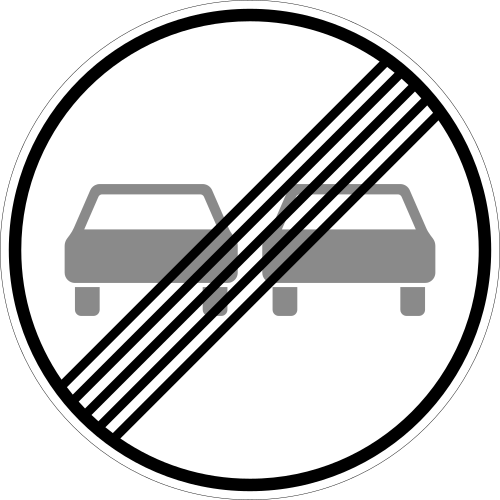
Sign 280: End of no-overtaking zone
The overtaking ban for all motor vehicles is lifted. Overtaking is allowed again where the general rules permit.
↗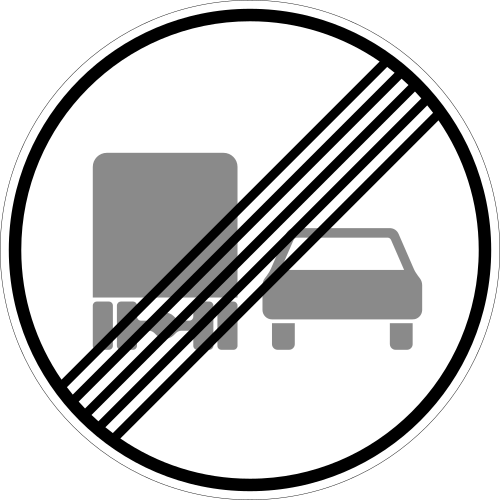
Sign 281: End of no-overtaking zone for trucks over 3.5 t
The overtaking ban for motor vehicles over 3.5 t is lifted. Heavy trucks may overtake again where the general rules permit.
↗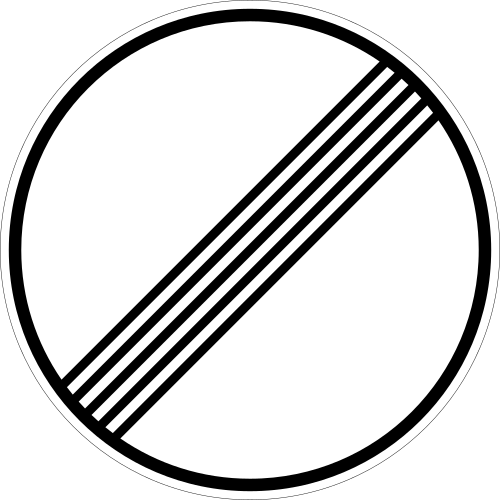
Sign 282: End of all restrictions
All section-based speed limits and overtaking bans are lifted. The general rules apply again.
↗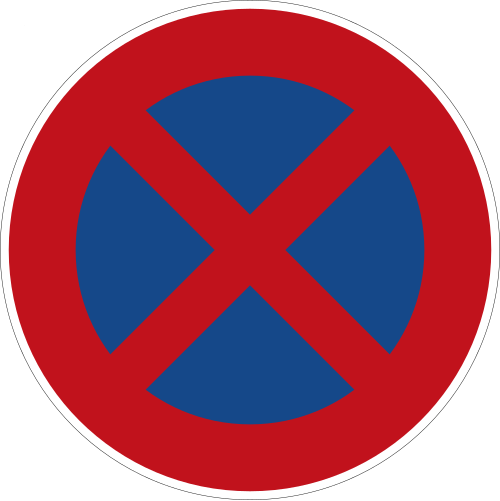
Sign 283: No stopping
Stopping on the carriageway is prohibited – even briefly. The ban applies only on the side of the road where the sign stands, until the next junction
↗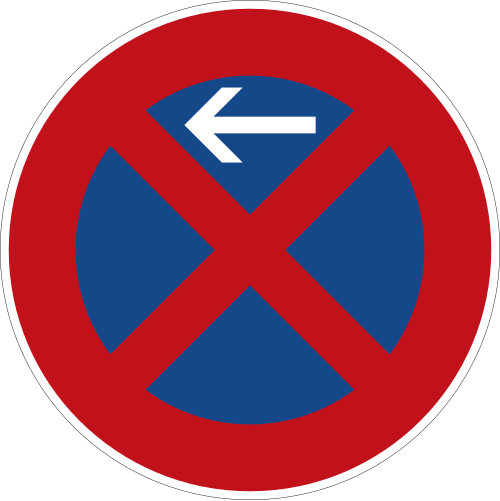
Sign 283-10: No stopping (start)
No stopping; the arrow pointing towards the road marks the start of the restricted section. From here, you must not stop on this side of the road.
↗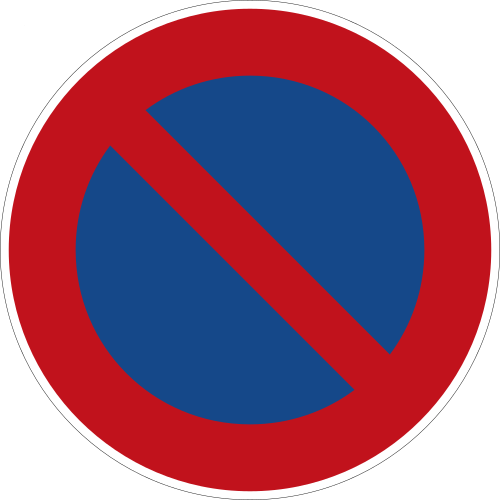
Sign 286: Restricted stopping
You may stop on the carriageway for no more than 3 minutes; longer only to let people in or out or to load/unload promptly. Parking is prohibited. App
↗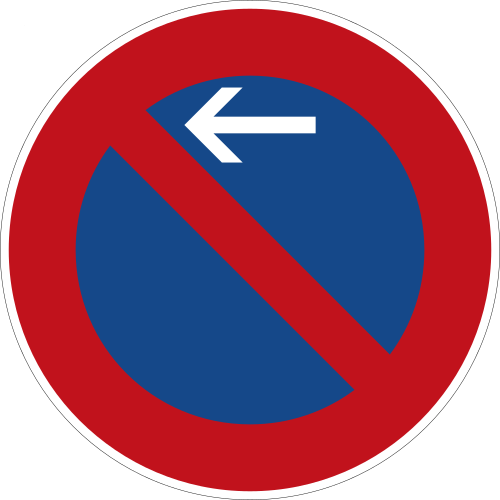
Sign 286-10: Restricted stopping (start)
Restricted stopping; the arrow pointing towards the road marks the start of the section. Stop for 3 minutes at most, longer only to let people in or o
↗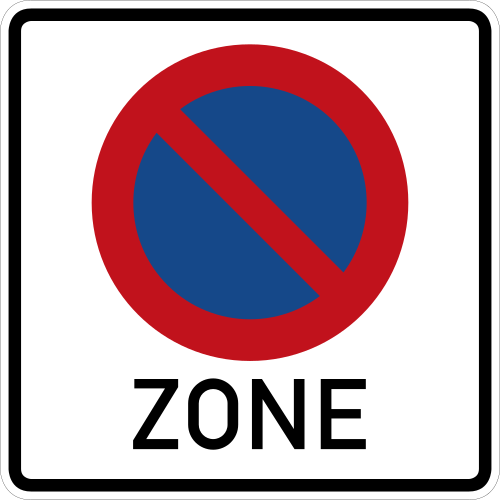
Sign 290.1: Start of restricted stopping zone
Throughout the zone you may stop on all public roads for no more than 3 minutes (longer only to let people in or out or to load/unload). Parking only
↗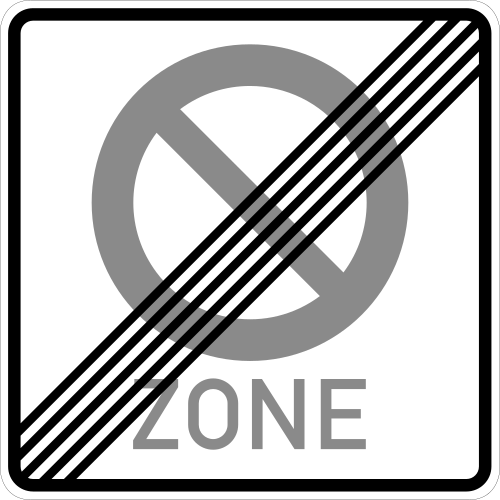
Sign 290.2: End of restricted stopping zone
The restricted stopping zone ends. From here, the general stopping and parking rules apply again.
↗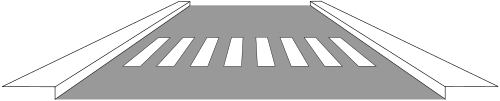
Road marking 293: Pedestrian crossing (zebra)
Let pedestrians and wheelchair users who clearly want to cross do so: approach at moderate speed, wait if necessary, do not overtake. Stopping is proh
↗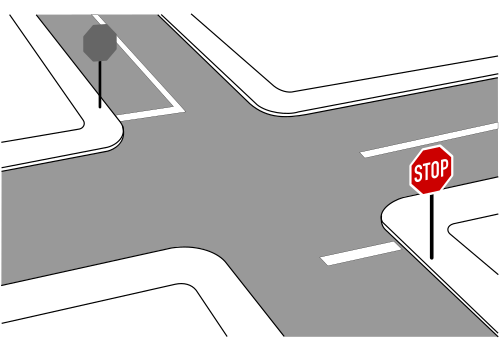
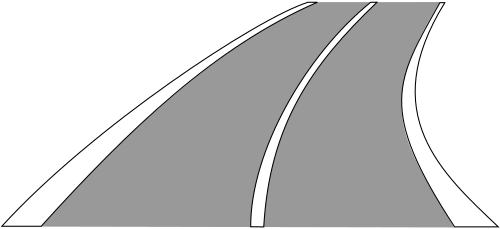
Road marking 294: Stop line
If you have to stop because of sign 206, traffic lights, police or a barrier, stop at this line. If you cannot see the road from there, stop again whe
↗
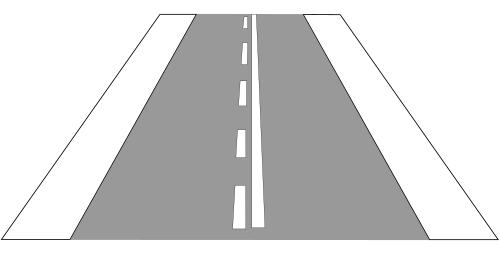
Road marking 295: Solid line (lane or edge line)
You must not cross the solid line, not even partly; if it separates oncoming traffic, keep to its right. Parking is prohibited if less than 3 m of lan
↗
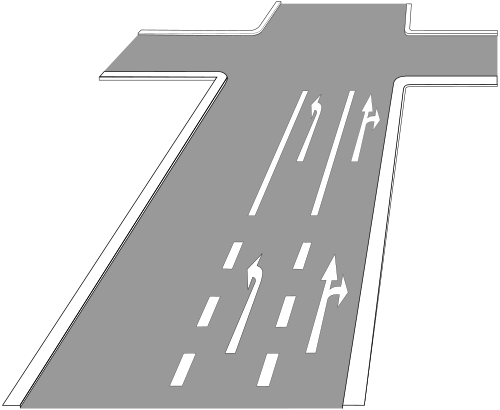
Road marking 296: One-sided solid line
Traffic on the side of the solid line must not cross the marking. Traffic on the side of the broken line may cross it if this does not endanger others
↗
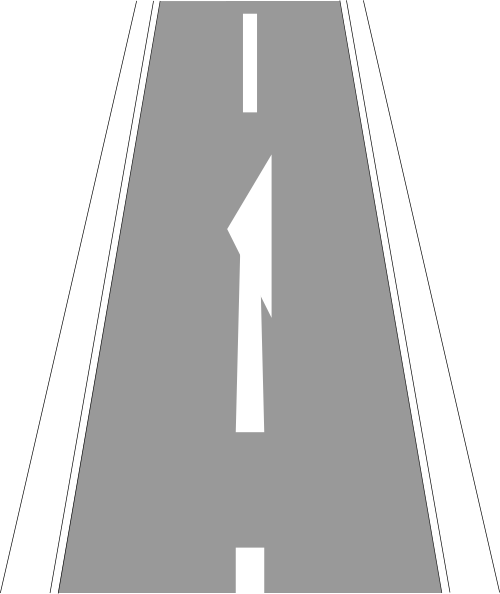
Road marking 297: Lane arrows
If lane lines are marked between the arrows, you must follow the arrow's direction at the next junction. Stopping is prohibited on the marked sect
↗
Road marking 297.1: Advance warning arrow
Announces an upcoming solid line or the end of a lane. Finish any overtaking and move over in good time.
↗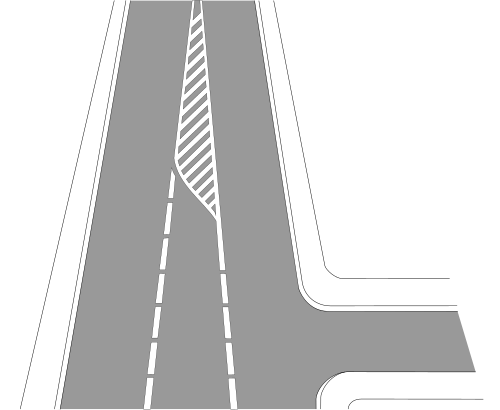
Road marking 298: Hatched area
Hatched areas must not be used – you may not drive, stop or park on them.
↗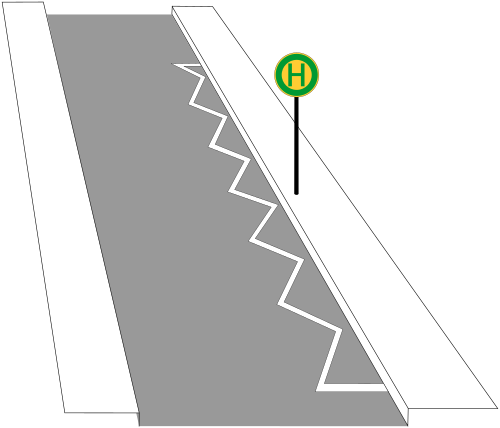
Road marking 299: Zigzag line (no stopping/parking)
The zigzag line marks, extends or shortens a stopping or parking ban, e.g. at bus stops or entrances. You must not stop or park (as applicable) within
↗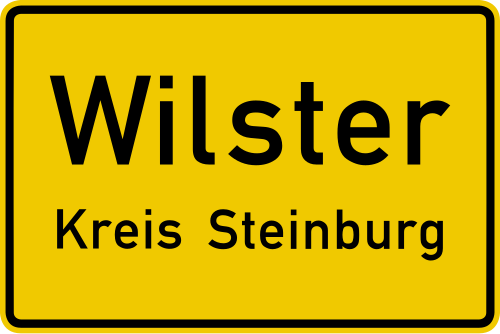
Sign 310: Town entry sign
A built-up area begins here. From this sign, urban rules apply, e.g. a maximum speed of 50 km/h.
↗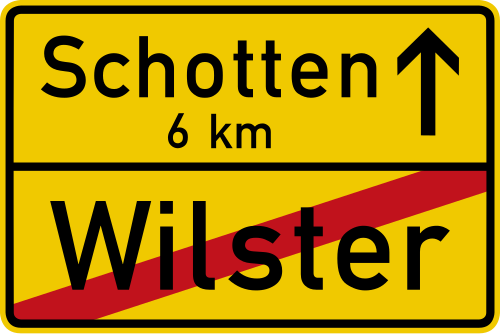
Sign 311: Town exit sign
The built-up area ends here. From this point, out-of-town rules apply, e.g. 100 km/h for cars. The top shows the next town and its distance.
↗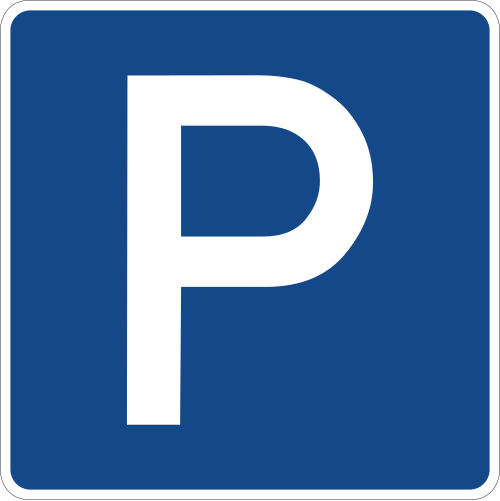
Sign 314: Parking
You may park here. Supplementary plates may restrict this, e.g. by duration, vehicle type, parking ticket, parking disc, or for residents and disabled
↗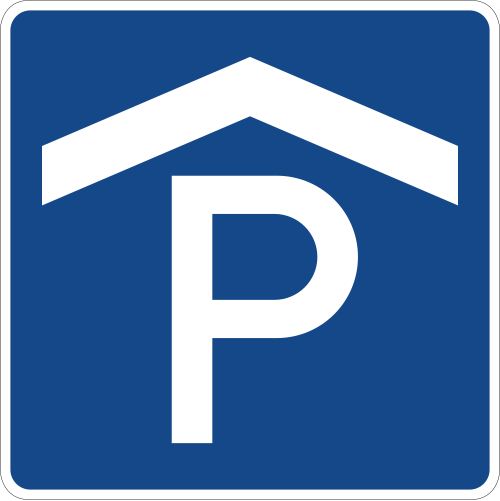
Sign 314-50: Multi-storey car park
Indicates a multi-storey or underground car park.
↗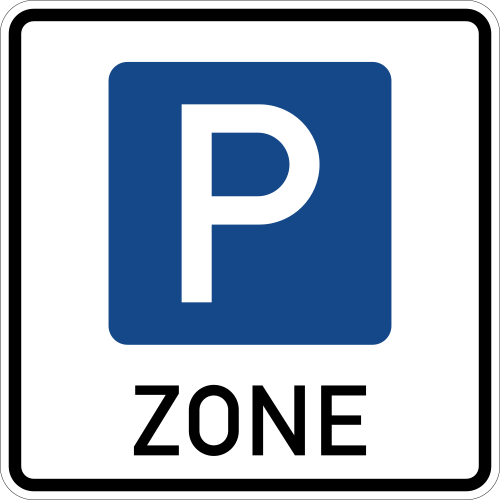
Sign 314.1: Start of controlled parking zone
Throughout the zone you may park only with a parking ticket or parking disc, as the plate specifies – unless stopping or parking is prohibited anyway.
↗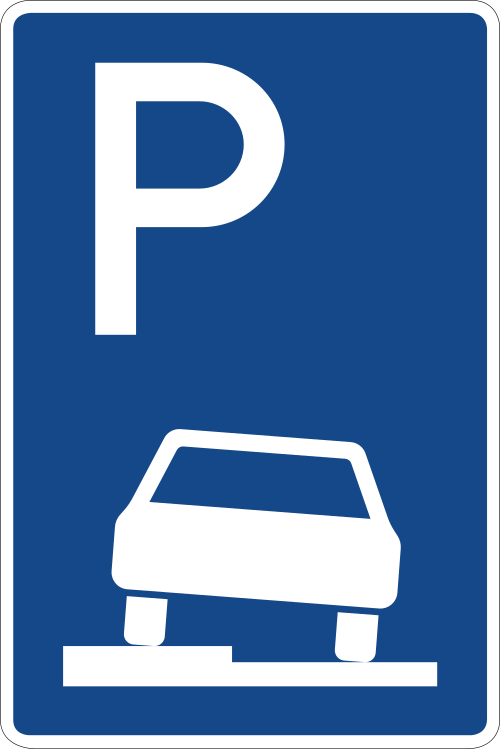
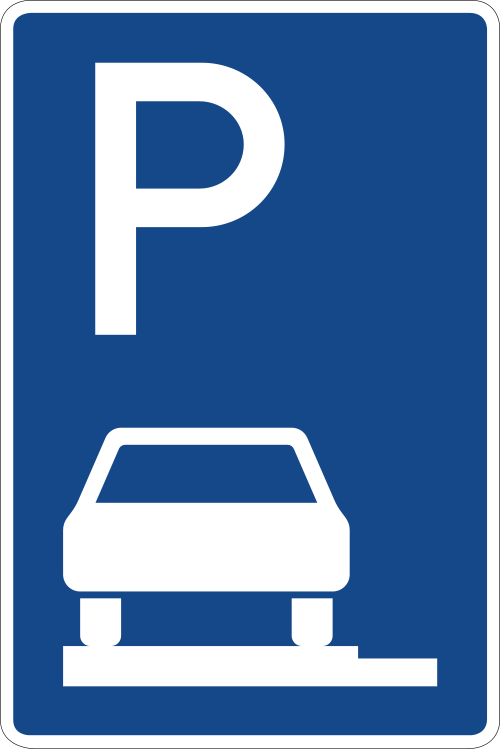
Sign 315-50: Parking half on the pavement
Parking is allowed with the right-hand wheels on the pavement, as shown. Only for vehicles up to 2.8 t permissible total mass.
↗
Sign 315-60: Parking fully on the pavement
Parking is allowed with the whole vehicle on the pavement, as shown. Only for vehicles up to 2.8 t permissible total mass.
↗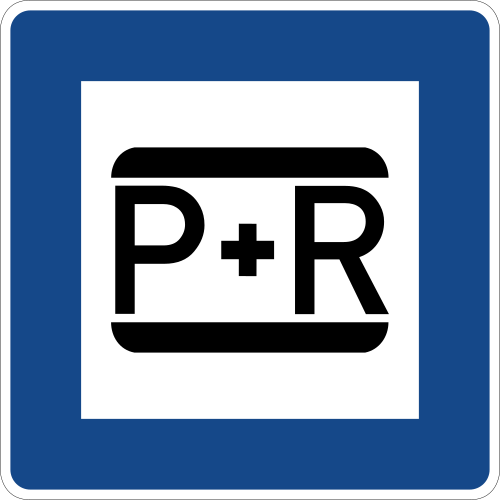
Sign 316: Park and ride
Park-and-ride car park: park here and continue by bus or train.
↗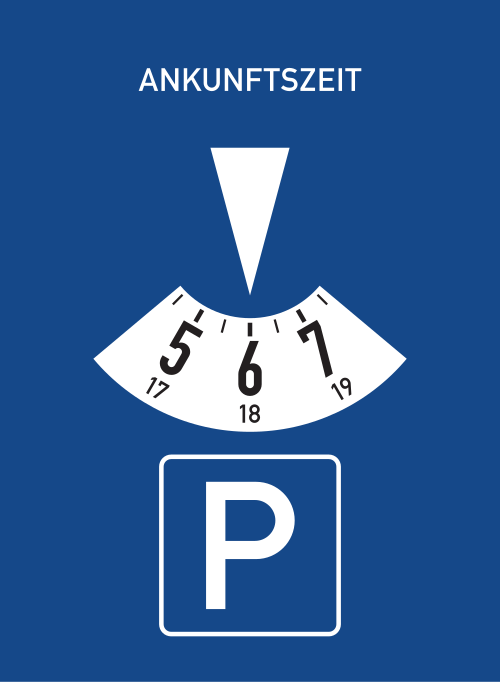
Figure 318: Parking disc
Where a parking disc is required, display it clearly and set the pointer to the next half-hour mark after your arrival.
↗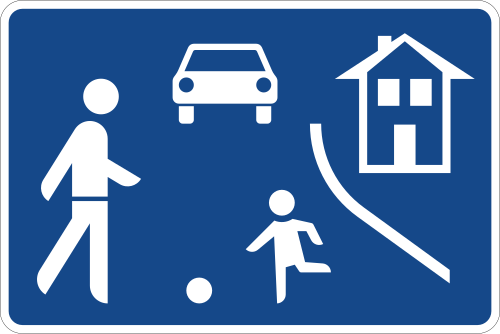
Sign 325.1: Start of traffic-calmed area
Vehicles at walking speed only; pedestrians may use the whole street and children may play everywhere. Do not endanger or hinder pedestrians; wait if
↗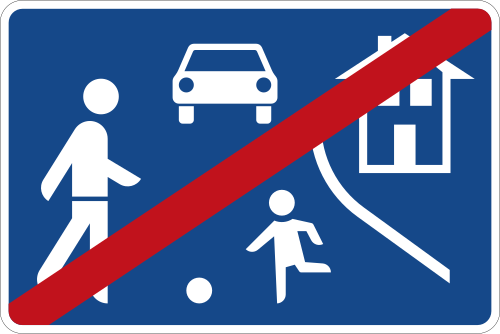
Sign 325.2: End of traffic-calmed area
The traffic-calmed area ends. When driving out, you must give way to all other road users and must not endanger anyone (§ 10 StVO).
↗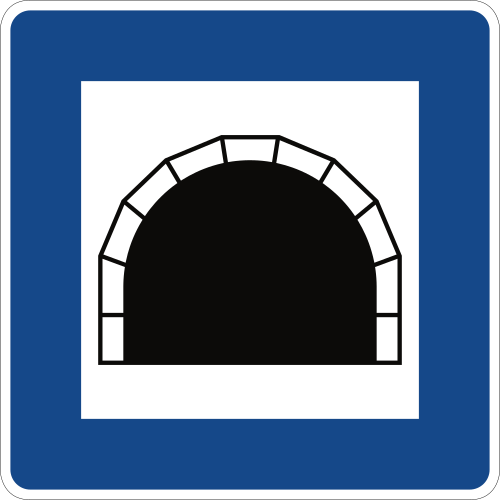
Sign 327: Tunnel
In the tunnel you must use dipped headlights and must not turn around. In a breakdown or emergency, use the emergency lay-bys where available.
↗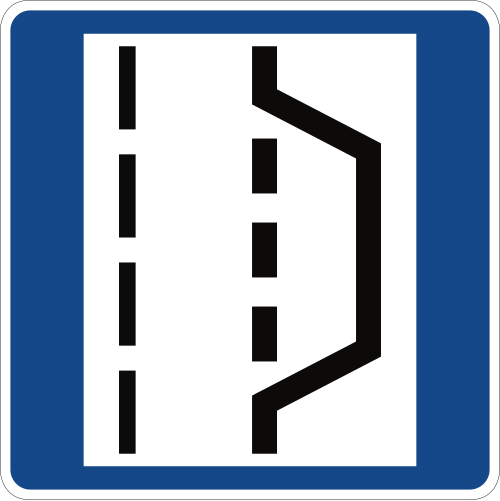
Sign 328: Emergency lay-by
You may stop in this lay-by only in an emergency or if your vehicle breaks down.
↗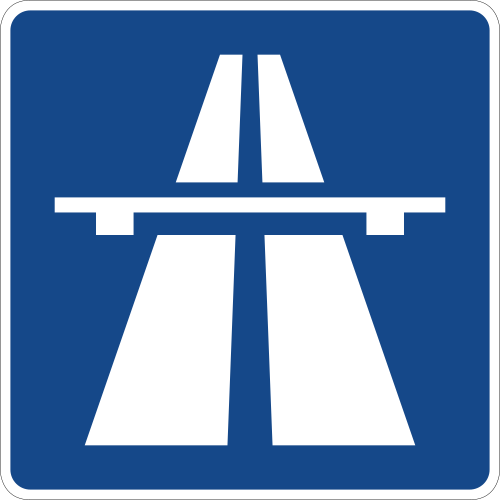
Sign 330.1: Motorway
Motorway rules apply from here: only motor vehicles with a design speed over 60 km/h, entry only at junctions, no stopping, turning or reversing. The
↗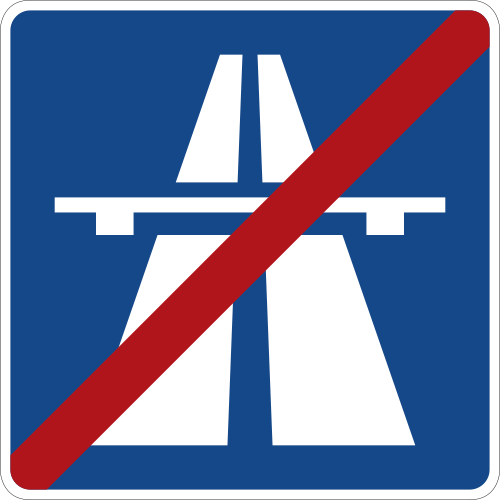
Sign 330.2: End of motorway
The motorway ends. From here, the general rules apply, e.g. a maximum of 100 km/h for cars outside towns.
↗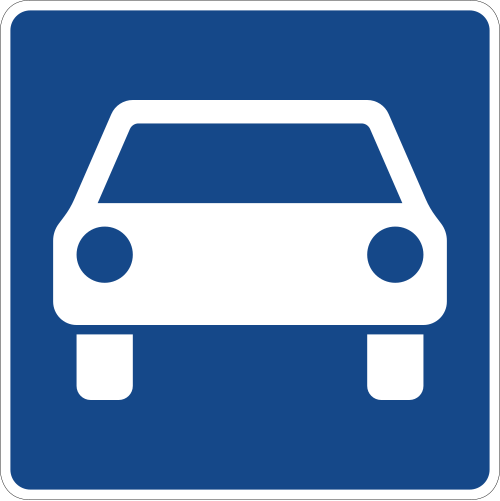
Sign 331.1: Expressway (motor road)
Expressway rules apply from here: only motor vehicles with a design speed over 60 km/h, entry only at junctions, no stopping, turning or reversing.
↗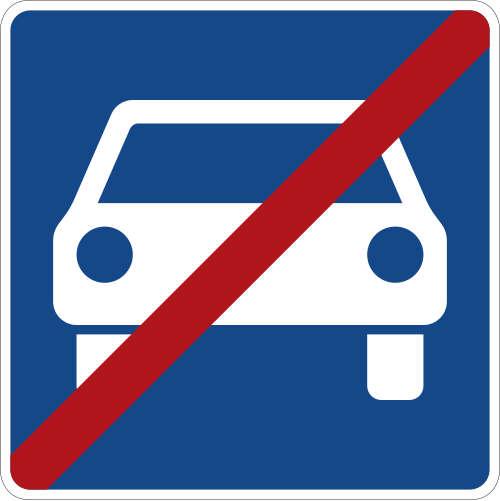
Sign 331.2: End of expressway
The expressway ends. From here, the general traffic rules apply again.
↗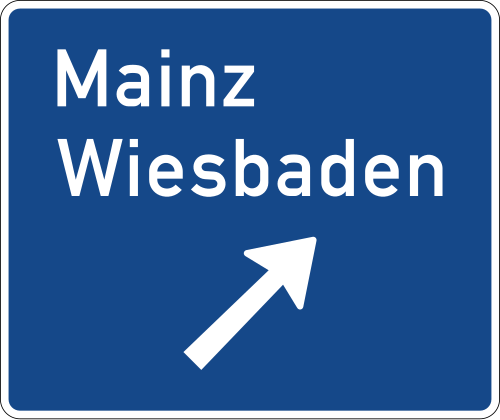
Sign 332: Motorway exit sign
Stands where the exit lane begins and shows the exit's destinations. Move onto the exit lane in good time and only slow down once you are on it.
↗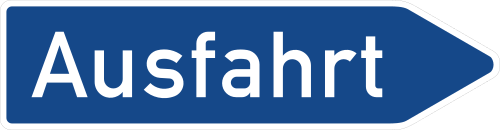
Sign 333: Motorway exit arrow
Arrow sign where the exit branches off. If you miss the exit, drive on to the next one – never stop, turn around or reverse.
↗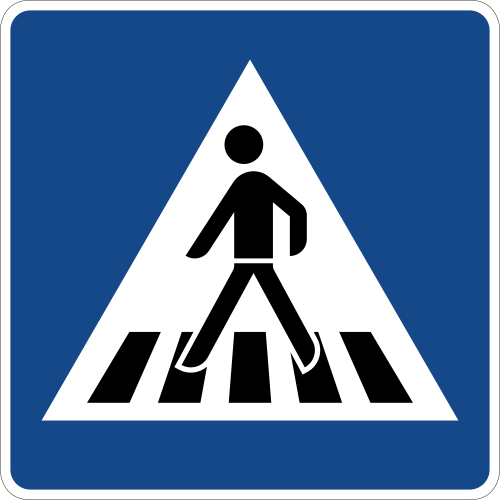
Sign 350-10: Pedestrian crossing
Marks a zebra crossing. Pedestrians who clearly want to cross have priority: approach at moderate speed, wait if necessary, do not overtake, and do no
↗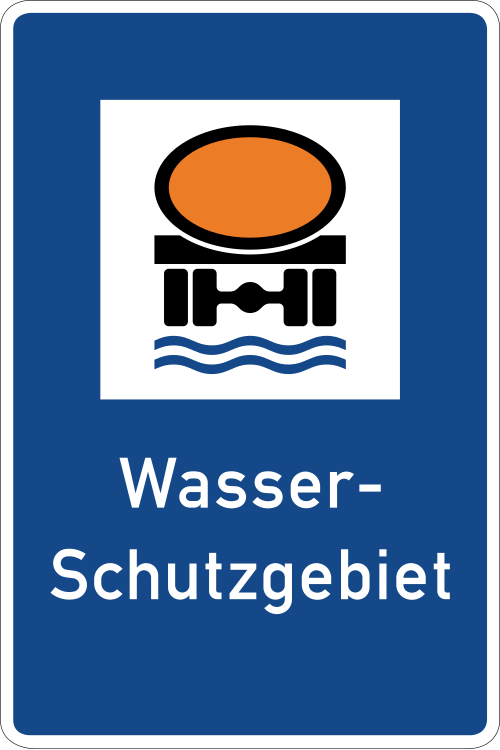
Sign 354: Water protection area
Indicates a water protection area. Drive especially carefully; if fuel or oil leaks after an accident, alert the police or fire brigade immediately.
↗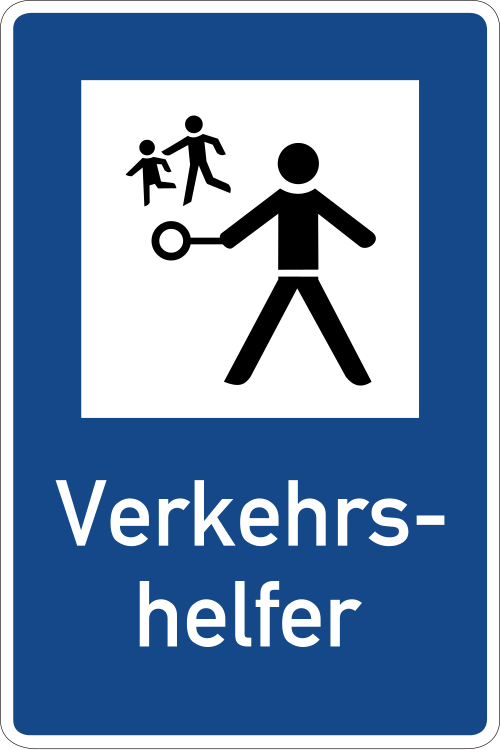
Sign 356: School crossing patrol
Indicates traffic helpers, e.g. school crossing patrols helping children across the road. Slow down, watch their signals and stop if necessary.
↗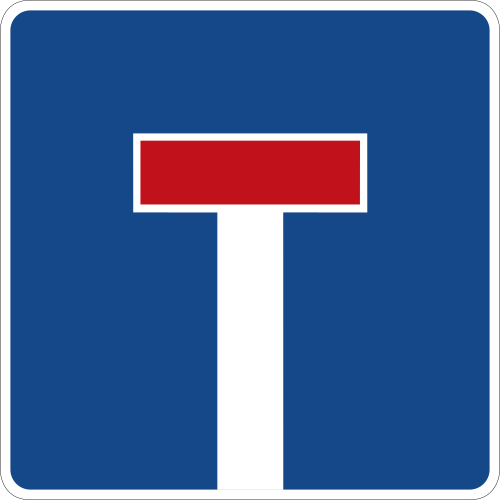
Sign 357: Dead end
This road is a dead end – there is no through route.
↗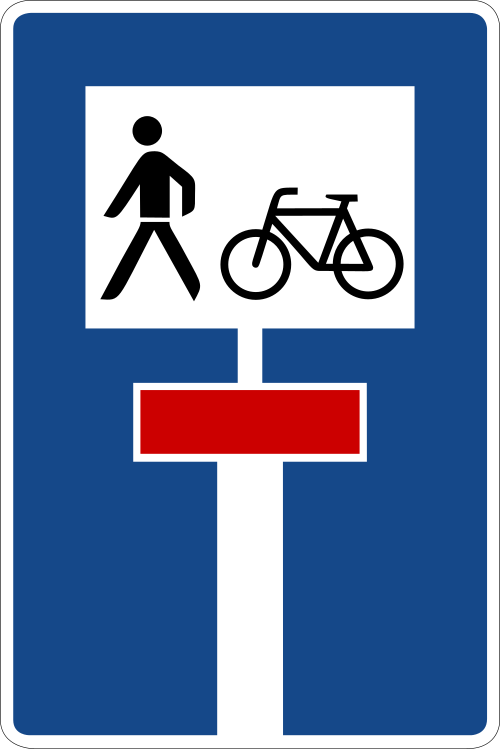
Sign 357-50: Dead end except for pedestrians and cyclists
The road is a dead end for motor vehicles; pedestrians and cyclists can continue at the end.
↗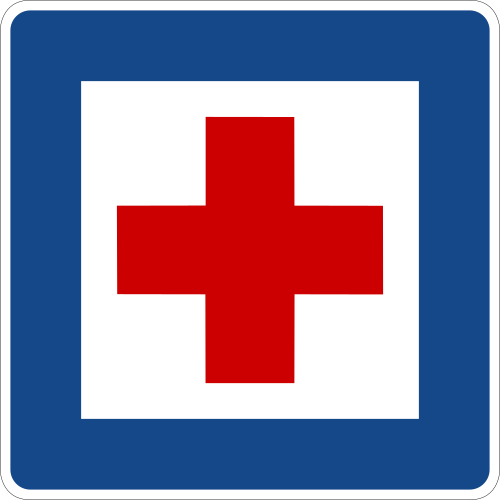
Sign 358: First aid
Indicates a place where first aid is available, e.g. an ambulance station or doctor.
↗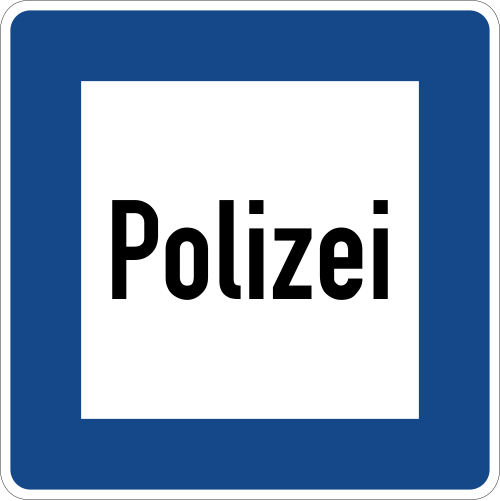
Sign 363: Police
Indicates a police station.
↗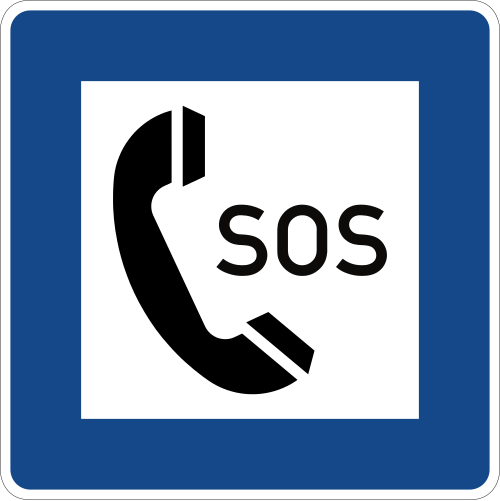
Sign 365-51: Emergency telephone
Indicates an emergency telephone you can use to call for help, e.g. on motorways.
↗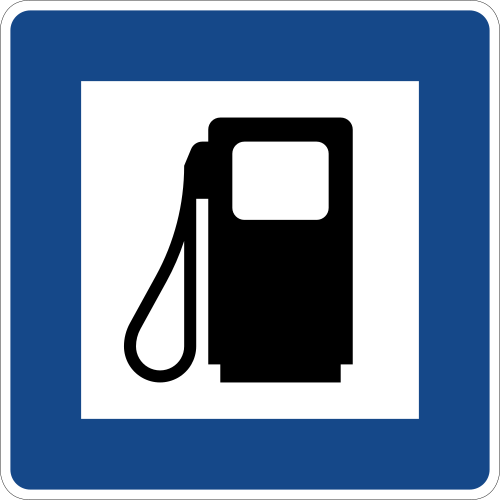
Sign 365-52: Filling station
Indicates a filling station.
↗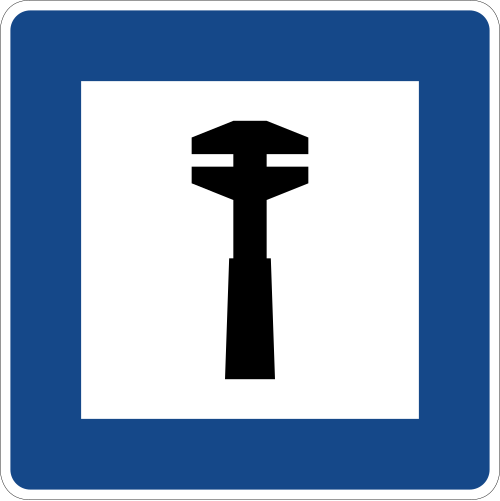
Sign 365-62: Breakdown service
Indicates a breakdown service or repair workshop.
↗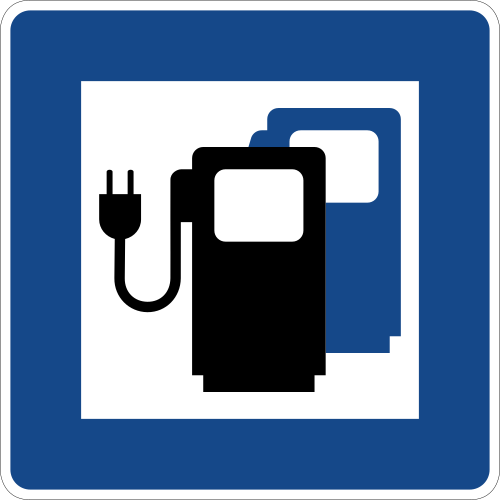
Sign 365-65: EV charging station
Indicates a charging station for electric vehicles.
↗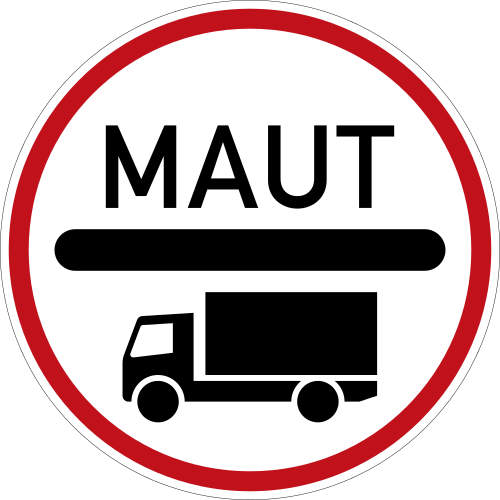
Sign 390: Toll road (Federal Trunk Road Toll Act)
Marks federal roads subject to toll. The toll is mainly paid by trucks over 3.5 t; cars pay no toll here.
↗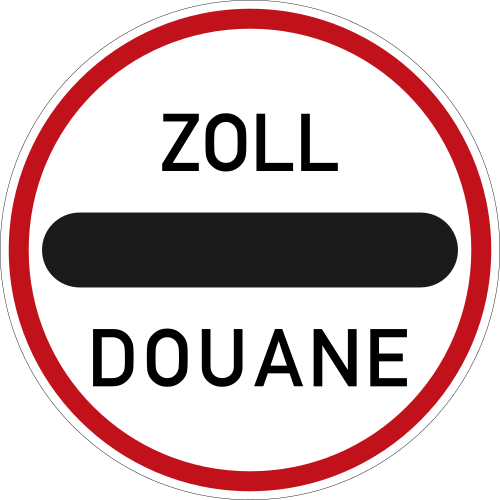
Sign 392: Customs
Announces a customs post. Stop if instructed to or if customs officers require it.
↗
Sign 394: Lamp-post ring
Marks street lamps in towns that do not stay lit all night; the red band may show when they switch off. After that, you must make a car parked there v
↗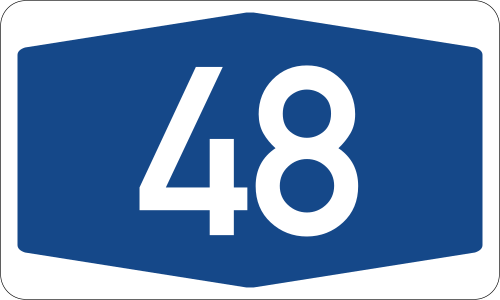
Sign 405: Motorway number
Shows the number of a motorway (here A 48) – white digits on a blue background.
↗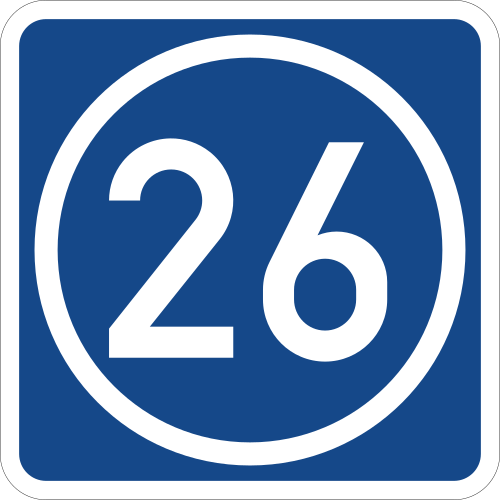
Sign 406-50: Motorway junction number
Shows the sequential number of a motorway junction (exit, interchange or triangle) – here number 26. It helps with orientation.
↗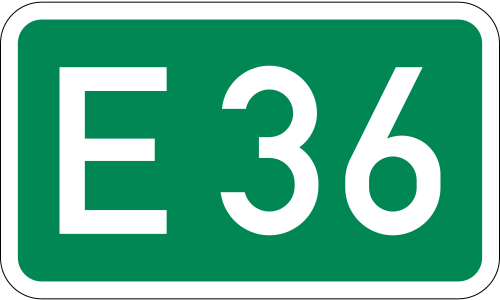
Sign 410: European route number
Shows the number of a European route (here E 36) – white text on a green background.
↗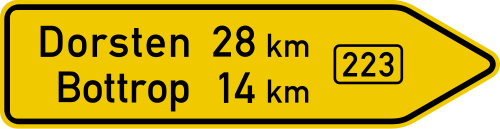
Sign 415-20: Direction sign on federal roads
Yellow arrow-shaped direction sign on federal roads: shows destinations, distances and the federal road number (here B 223) in the arrow's directi
↗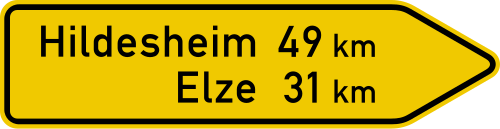
Sign 418-20: Direction sign on other main roads
Yellow arrow-shaped direction sign on other important roads: shows destinations and distances in the arrow's direction.
↗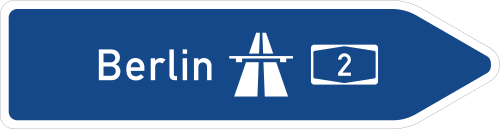
Sign 430-20: Direction sign to the motorway
Blue arrow-shaped direction sign: leads to the motorway (here the A 2 towards Berlin).
↗
Sign 432-20: Direction sign to local destinations
White arrow-shaped sign pointing to local destinations and important facilities, e.g. the railway station.
↗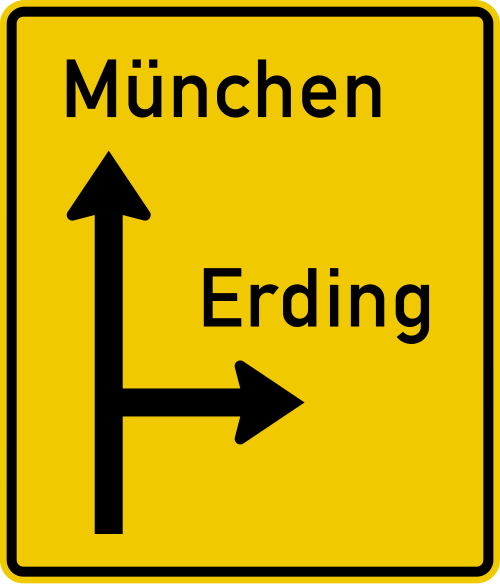
Sign 438: Advance direction sign
Shows before a junction which way the destinations lie (here: Munich straight ahead, Erding to the right), so you can get into lane in good time.
↗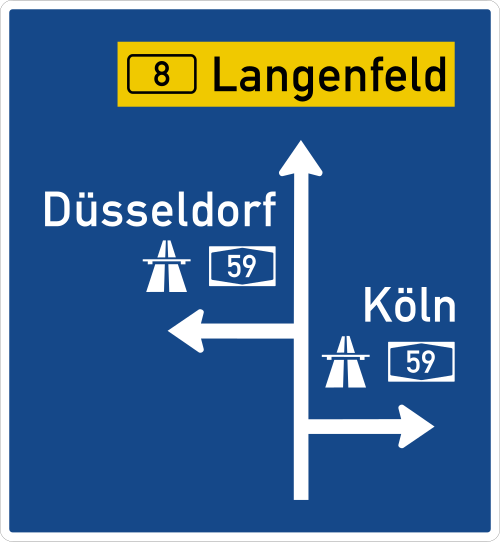
Sign 440: Advance direction sign to the motorway
Blue advance sign: shows before the junction which direction leads to which motorway destinations. Get into lane in good time.
↗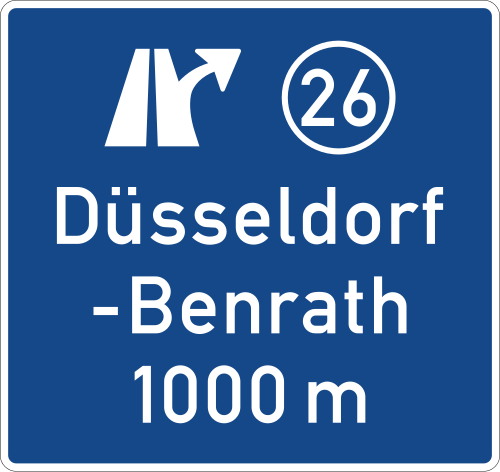
Sign 448: Motorway exit announcement
Announces a motorway exit, interchange or triangle – with number, name and distance (here exit 26 in 1,000 m).
↗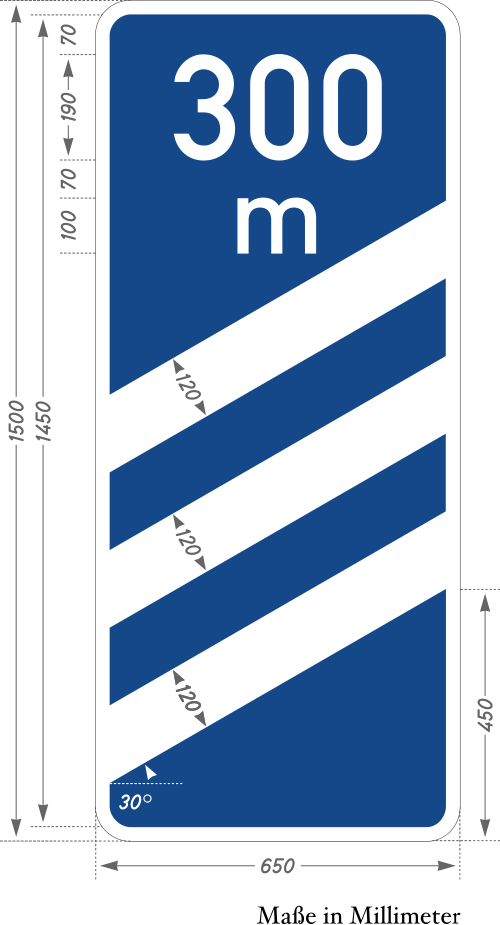
Sign 450-52: Countdown marker (300 m)
Countdown markers stand 300 m, 200 m and 100 m before a motorway junction or service area. This three-stripe marker shows 300 m.
↗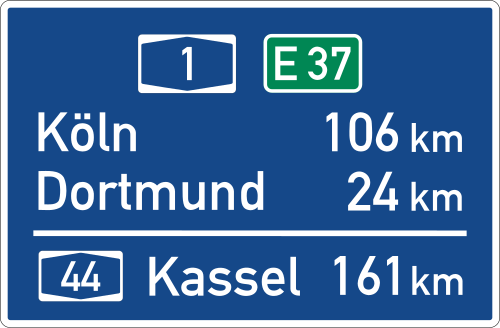
Sign 453: Distance sign
Lists destinations and the distance to each town centre. Destinations reached via a different motorway are shown below the horizontal line.
↗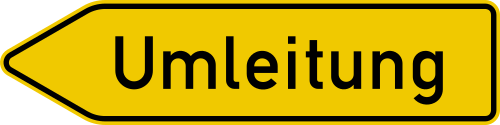
Sign 454-10: Diversion sign (pointing left)
Shows the route of a temporary diversion, e.g. because of roadworks – here to the left.
↗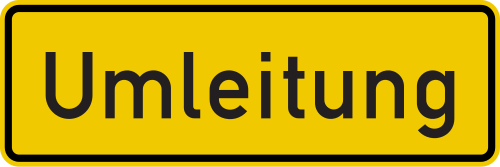
Sign 457.1: Diversion ahead
Announces a temporary diversion; a supplementary plate states the distance.
↗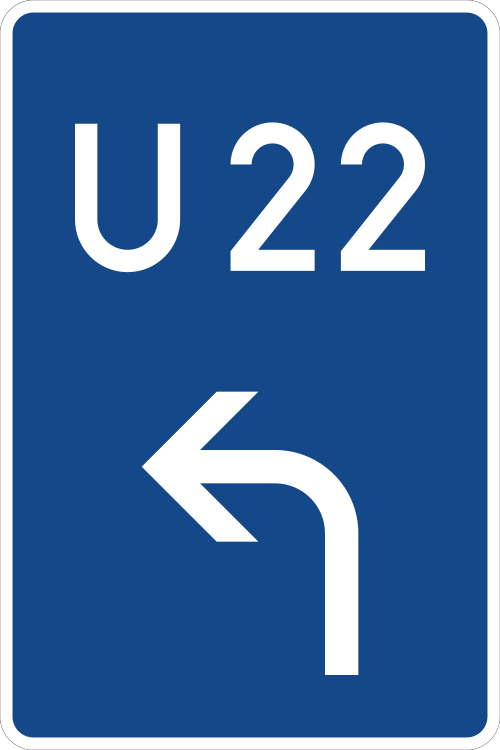
Sign 460-10: Motorway alternative route (pointing left)
Marks an alternative route on the secondary road network between two motorway junctions (here U 22, to the left). In congestion or closures, follow th
↗
Traffic device 600-30: Barrier
You must not drive onto the area behind it; traffic is guided past. Red warning lights mean the whole carriageway is closed, yellow lights mean only p
↗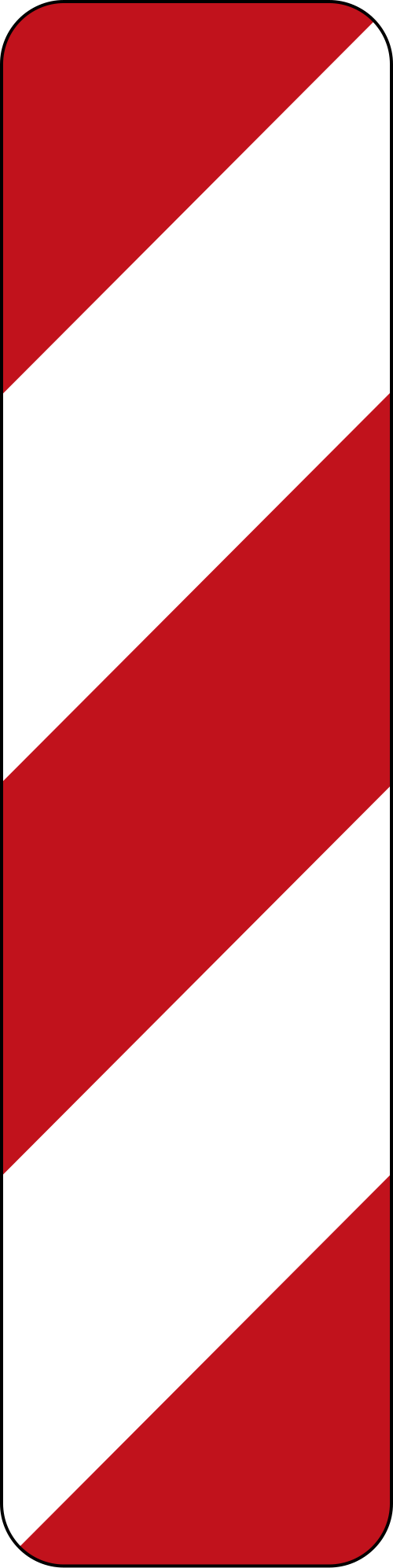
Traffic device 605-10: Marker board (right side)
Marker boards close off areas and guide traffic, e.g. at roadworks. The red and white diagonal stripes slope down towards the side on which you must p
↗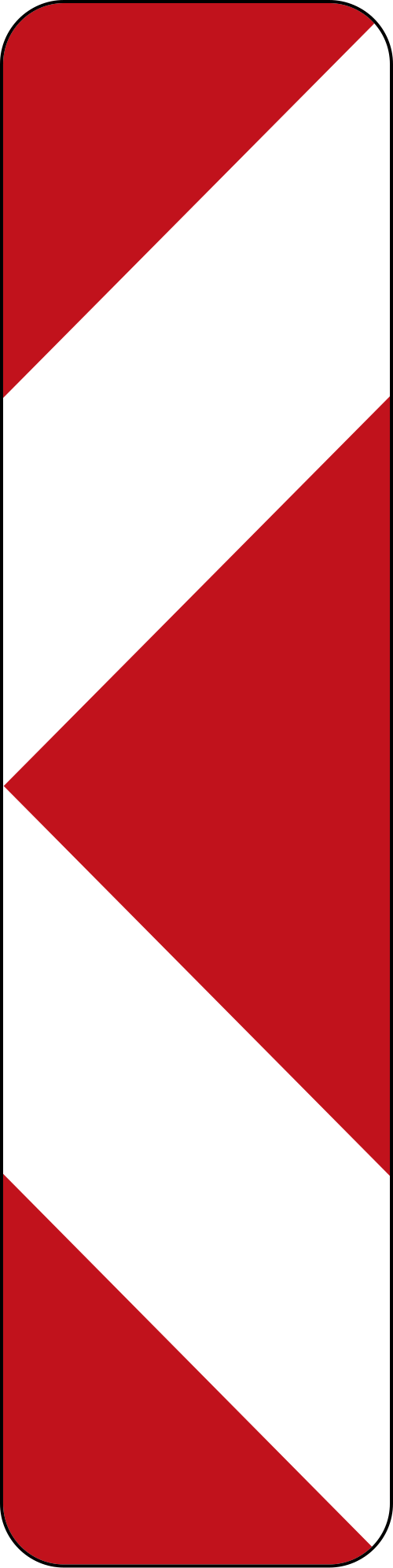
Traffic device 605-11: Chevron marker board
The chevron board closes off an area; the arrowhead shows on which side you must pass (here on the left).
↗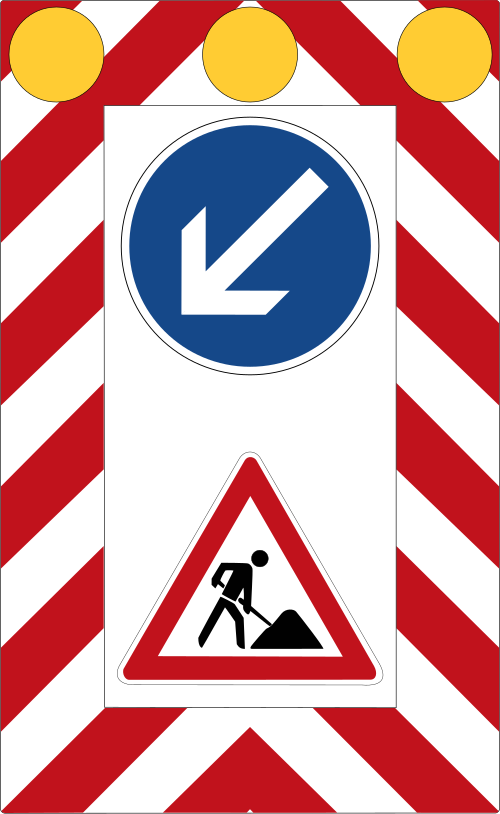
Traffic device 615: Mobile barrier board
Protects short-term or moving roadworks, usually mounted on a vehicle or trailer. You must not drive onto the area behind it; the arrow shows the side
↗
Traffic device 620-40: Delineator post (right)
Delineator posts show the course of the road. They are normally spaced 50 m apart, closer together in bends.
↗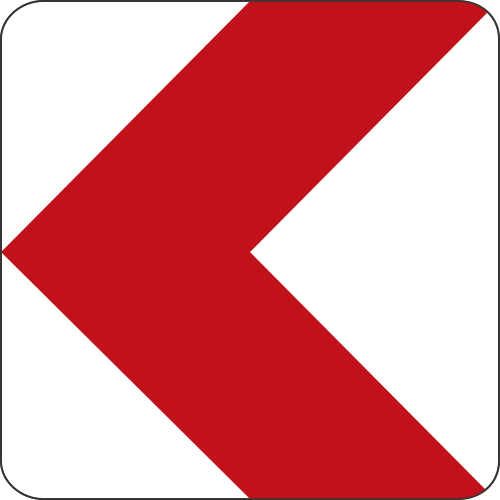
Traffic device 625-10: Bend chevron board
Shows the direction of a bend – here a left-hand bend. Reduce your speed in good time.
↗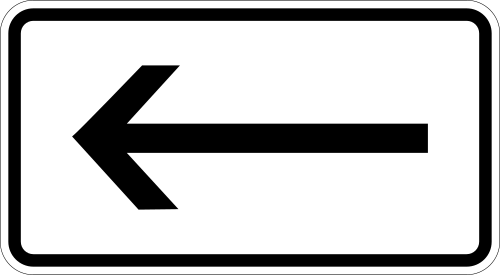
Supplementary plate 1000-10: Direction (left)
The arrow shows the direction to which the main sign applies or where the place is – here to the left, e.g. a hazard or car park on the left.
↗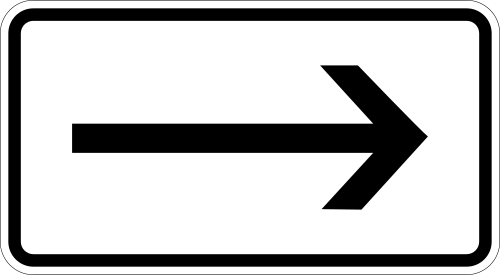
Supplementary plate 1000-20: Direction (right)
The arrow shows the direction to which the main sign applies or where the place is – here to the right, e.g. a hazard or car park on the right.
↗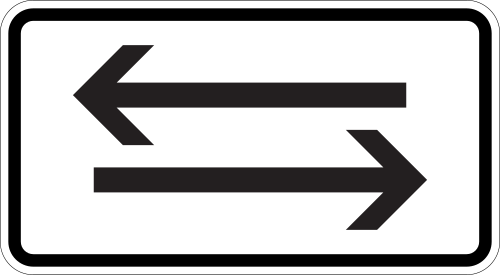
Supplementary plate 1000-30: Both directions
The main sign applies to both directions, e.g. traffic or a hazard from the left and from the right.
↗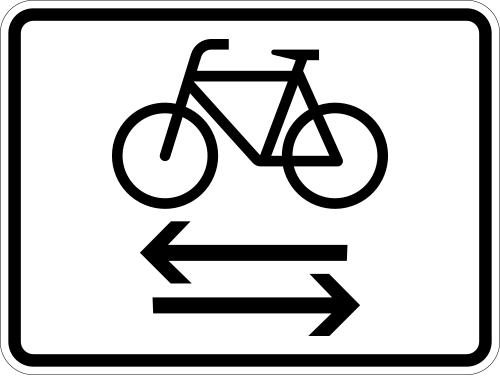
Supplementary plate 1000-32: Cyclists crossing from both sides
Watch for cyclists and e-scooters crossing from the left and right – e.g. above sign 205/206 at a two-way cycle path, or at one-way streets open to co
↗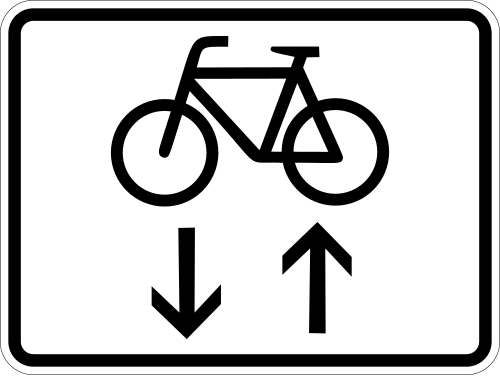
Supplementary plate 1000-33: Oncoming cyclists
Warns of cyclists coming towards you, e.g. in a one-way street where cycling in the opposite direction is allowed.
↗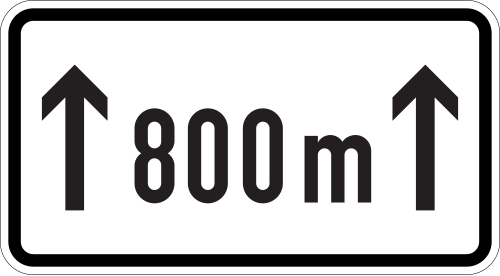
Supplementary plate 1001-30: Length of section (for 800 m)
States the length of road to which the main sign applies – here 800 m, e.g. the length of a hazard or an overtaking ban.
↗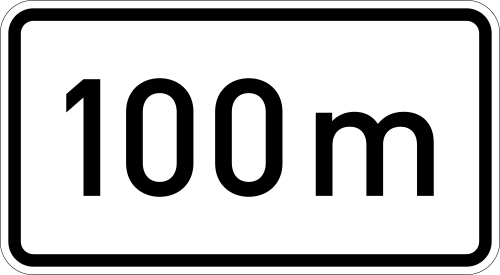
Supplementary plate 1004-30: Distance (100 m)
States the distance to the point where the main sign applies – here in 100 m, e.g. a hazard or a stop sign 100 m ahead.
↗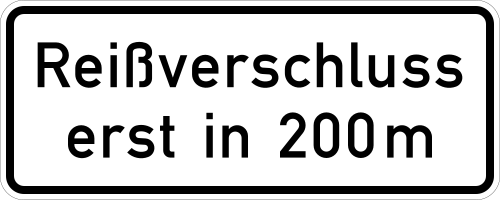
Supplementary plate 1005-30: Zip merge in 200 m
The zip merge takes place only in 200 m. Drive to the end of the closing lane and then merge in turn.
↗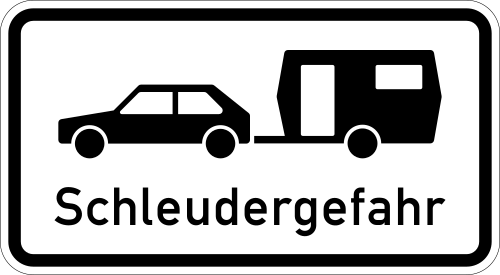
Supplementary plate 1006-30: Risk of skidding for caravans
Warns car-and-caravan or trailer combinations of an increased risk of snaking, e.g. in crosswinds or on descents. Reduce your speed noticeably.
↗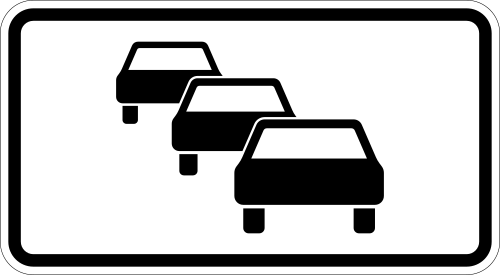
Supplementary plate 1006-38: Risk of queues
Warns that traffic queues are likely. Look well ahead, keep your distance and be prepared for traffic suddenly stopping.
↗
Supplementary plate 1007-30: Oil on road
Specifies the hazard: oil on the road makes it very slippery. Drive slowly and avoid sudden braking or steering.
↗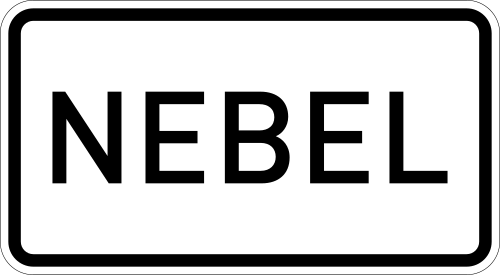
Supplementary plate 1007-61: Fog
Warns of fog. Switch on dipped headlights; if visibility is below 50 m, drive at no more than 50 km/h – the rear fog light is then also allowed.
↗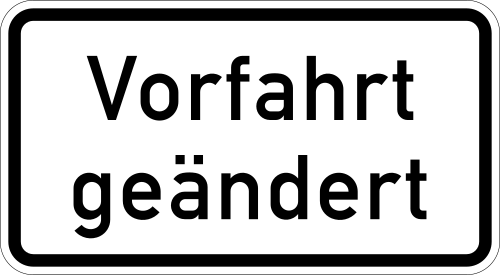
Supplementary plate 1008-30: Priority changed
The priority rules at the next junction have changed. Check the signs carefully and be aware that others may not have noticed the change.
↗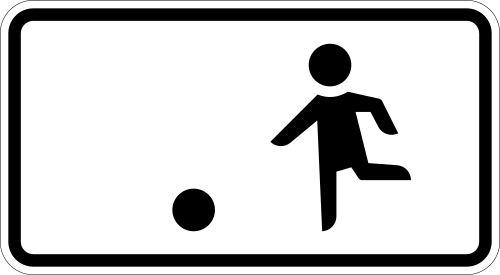
Supplementary plate 1010-10: Children may play on the road
Allows children to play on the carriageway and hard shoulder too (usually with sign 250). Expect children playing anywhere.
↗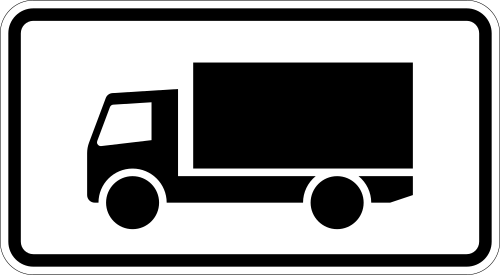
Supplementary plate 1010-51: Motor vehicles over 3.5 t
The main sign applies only to motor vehicles over 3.5 t permissible total mass (including trailers) and tractors; cars and buses are not included.
↗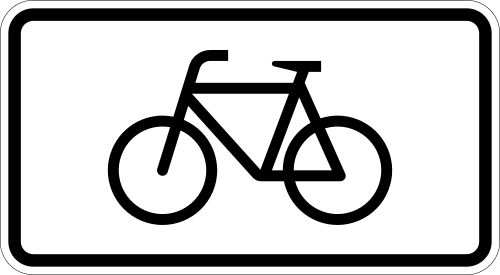
Supplementary plate 1010-52: Cyclists
The main sign applies only to cyclists.
↗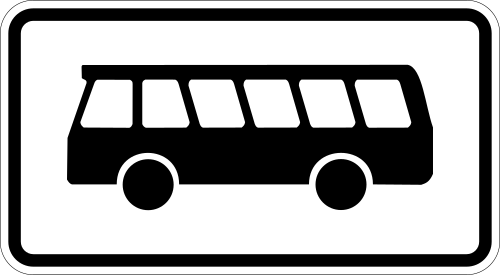
Supplementary plate 1010-57: Buses
The main sign applies only to buses and coaches.
↗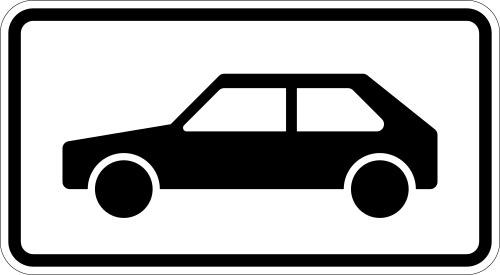
Supplementary plate 1010-58: Cars
The main sign applies only to passenger cars.
↗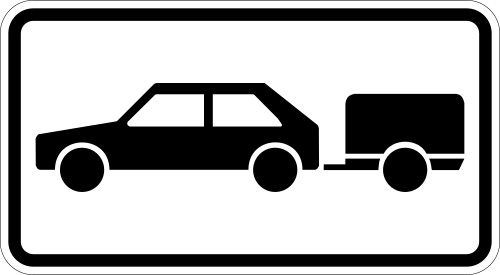
Supplementary plate 1010-59: Cars with trailers
The main sign applies only to cars towing a trailer, e.g. an overtaking ban or speed limit for car-trailer combinations.
↗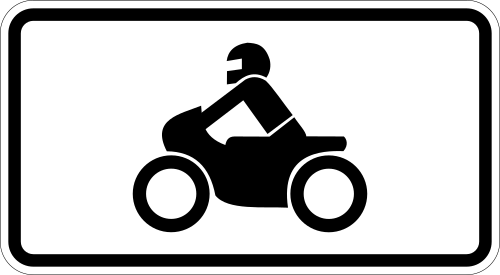
Supplementary plate 1010-62: Motorcycles and mopeds
The main sign applies only to motorcycles (including sidecars), mopeds and Mofas.
↗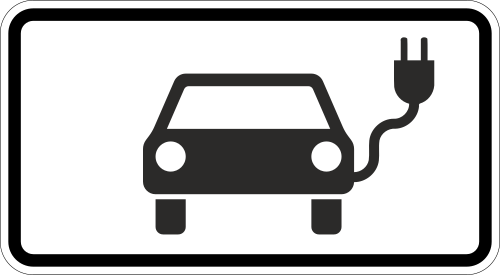
Supplementary plate 1010-66: Electric vehicles
The main sign applies only to electric vehicles (e.g. with an “E” number plate) – under sign 314, for example: parking for EVs only.
↗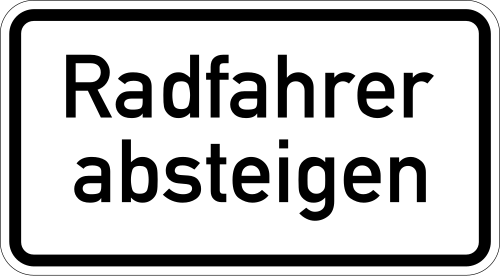
Supplementary plate 1012-32: Cyclists dismount
Cyclists must get off and push their bicycles.
↗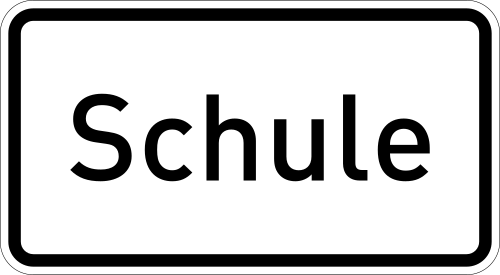
Supplementary plate 1012-50: School
Indicates a school. Expect many children; drive slowly and be ready to brake.
↗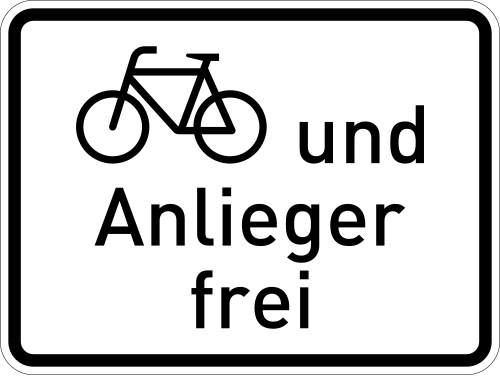
Supplementary plate 1020-12: Except cyclists and access
Cyclists and people with business in the street are exempt from the main sign's ban – e.g. residents, visitors or delivery drivers.
↗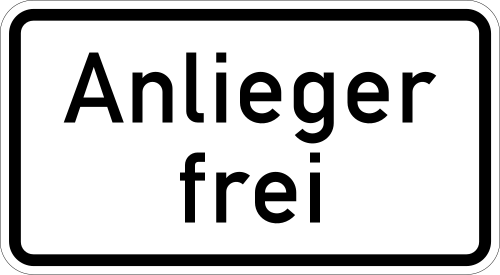
Supplementary plate 1020-30: Except for access
Access only: those with a destination on this street (residents, visitors, deliveries) may enter; driving through is prohibited.
↗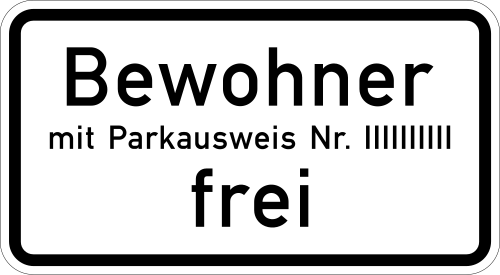
Supplementary plate 1020-32: Except residents with permit
Residents with the stated parking permit are exempt, e.g. from the stopping restriction or the need for a ticket. The permit must be clearly displayed
↗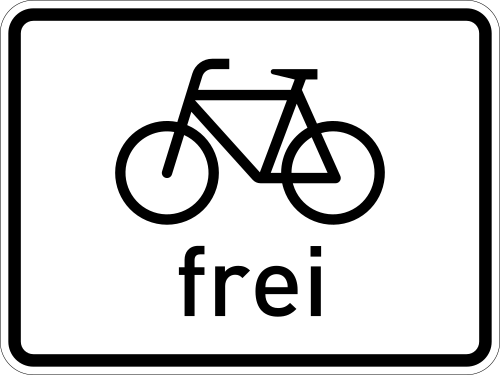
Supplementary plate 1022-10: Except cyclists
Cyclists are exempt from the main sign's ban; under sign 267, for example, they may enter the one-way street.
↗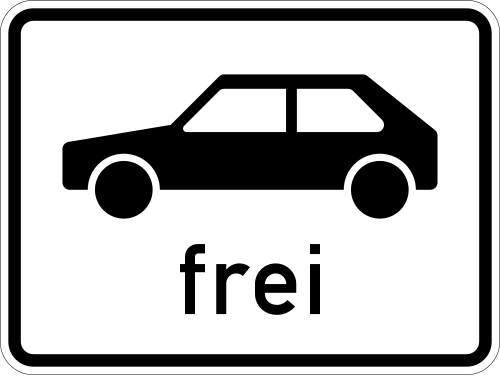
Supplementary plate 1024-10: Except cars
Passenger cars are exempt from the main sign's ban.
↗
Supplementary plate 1026-35: Except deliveries
Vehicles delivering or collecting goods are exempt from the ban – loading must be done promptly.
↗
Supplementary plate 1026-36: Except agricultural traffic
Agricultural vehicles and journeys are exempt from the ban, e.g. on farm tracks under sign 250 or 260.
↗
Supplementary plate 1026-61: Except electric vehicles
Electric vehicles are exempt from the rule of the main sign.
↗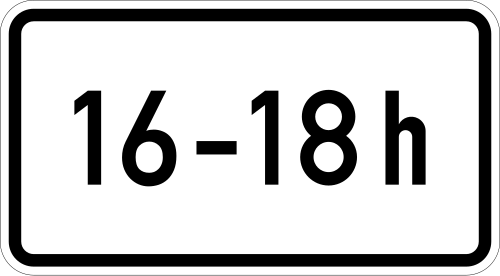
Supplementary plate 1040-30: Time restriction (4–6 pm)
The main sign applies only from 4 pm to 6 pm – with no further detail, on every day. Outside these times it does not apply.
↗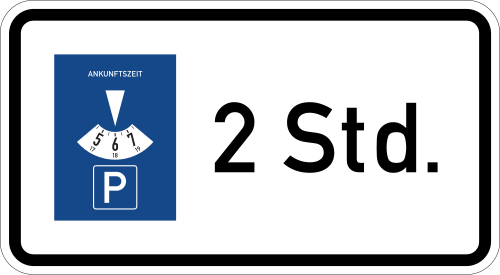
Supplementary plate 1040-32: Parking disc (2 hours)
Parking is allowed only with a clearly displayed parking disc and for no more than 2 hours. Set the disc to the next half-hour after arrival.
↗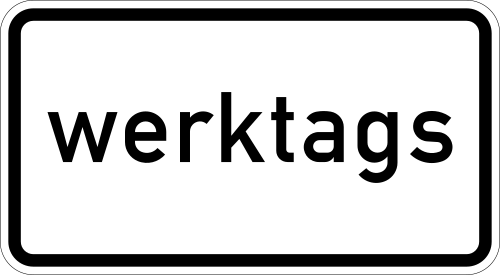
Supplementary plate 1042-30: Working days
The main sign applies only on working days – Monday to Saturday, not on Sundays and public holidays.
↗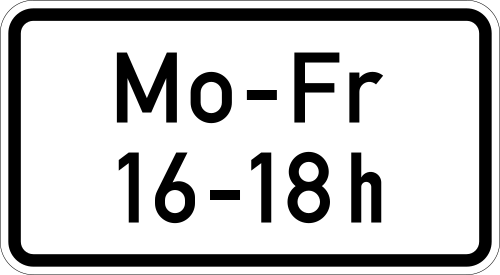
Supplementary plate 1042-33: Mon–Fri, 4–6 pm
The main sign applies only Monday to Friday, from 4 pm to 6 pm.
↗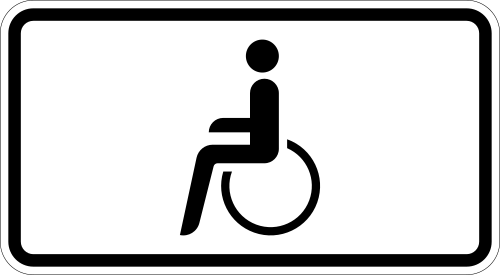
Supplementary plate 1044-10: Disabled permit holders only
Restricts e.g. parking to people with severe walking disabilities and blind people holding the corresponding parking card, which must be clearly displ
↗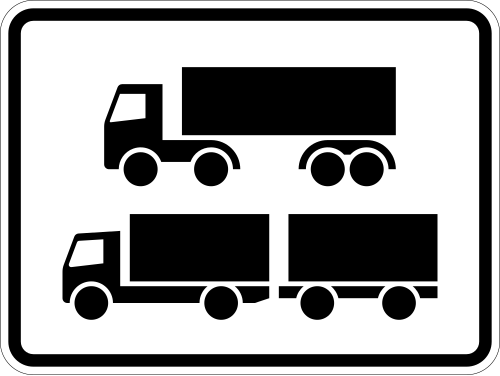
Supplementary plate 1048-15: Only articulated vehicles and road trains
The main sign applies only to articulated trucks and trucks with trailers, as shown.
↗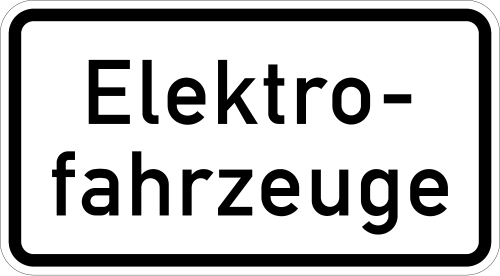
Supplementary plate 1050-33: Electric vehicles
Restricts the main sign to electric vehicles, e.g. under sign 314: parking for EVs only.
↗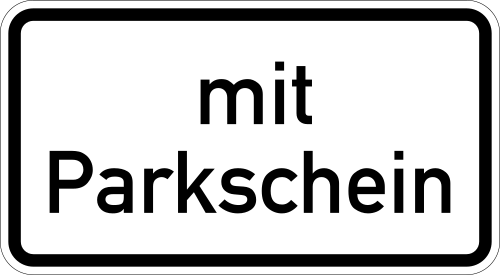
Supplementary plate 1053-31: With parking ticket
Parking is allowed only with a valid parking ticket, clearly displayed so it can be read from outside.
↗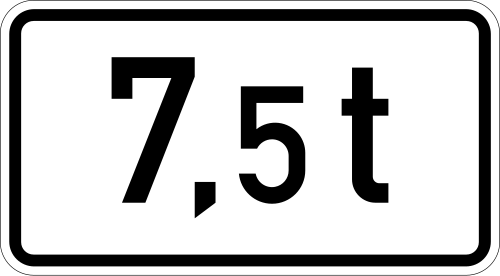
Supplementary plate 1053-33: Weight (7.5 t)
The ban applies only to vehicles whose permissible total mass including trailer exceeds 7.5 t, e.g. under sign 253 or 277.
↗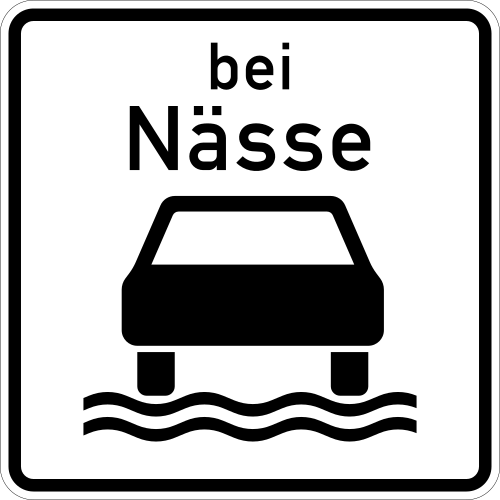
Supplementary plate 1053-35: When wet
The main sign applies only when the road is wet – e.g. the speed limit shown must then not be exceeded.
↗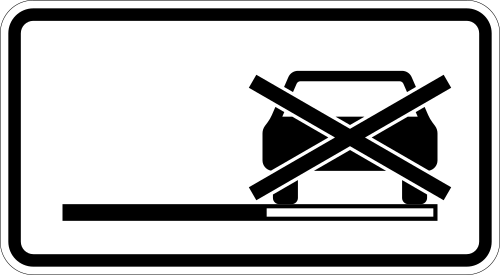
Supplementary plate 1060-31: No stopping on the hard shoulder too
The main sign's stopping ban applies not only on the carriageway but also on the hard shoulder.
↗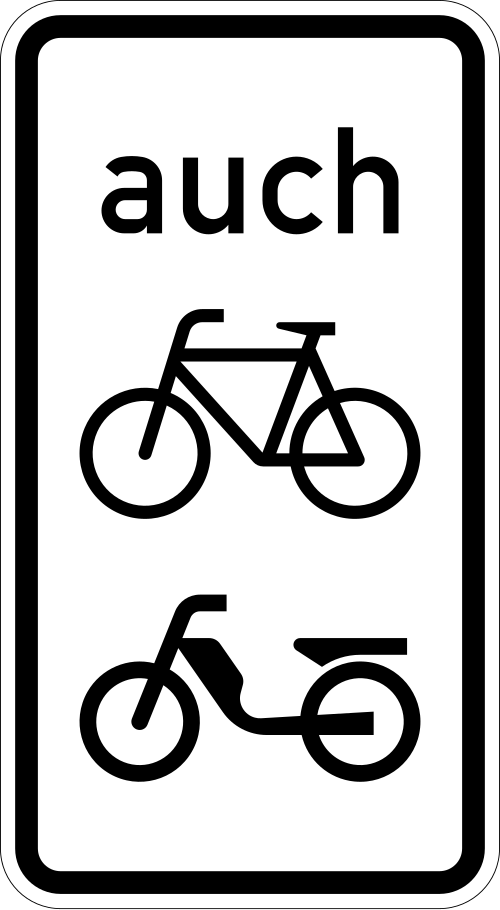
Supplementary plate 1060-11: Bicycles and mopeds too
Extends the main sign's rule so that it also applies to bicycles and Mofas.
↗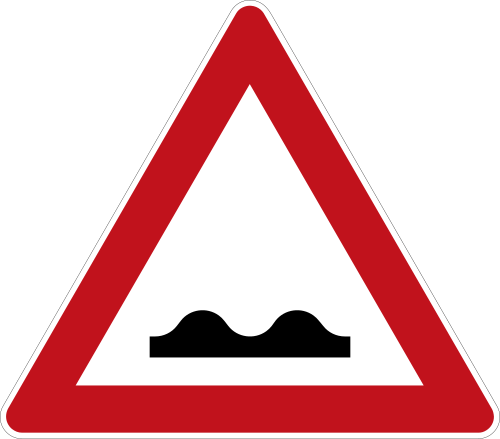
Sign 112: Uneven road
Warns of bumps, potholes or other uneven surfaces. Slow down and keep a firm grip on the steering wheel.
↗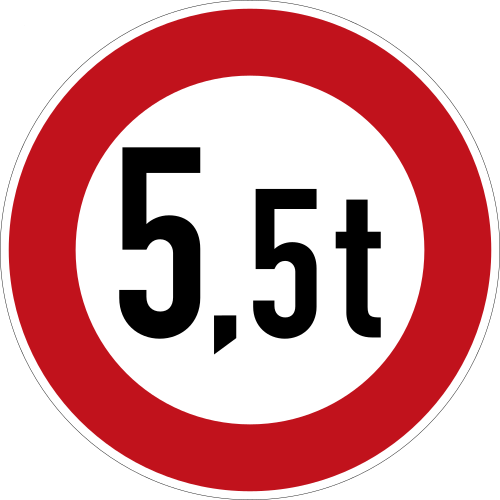
Sign 262: Actual weight limit (5.5 t)
Vehicles whose actual weight including load exceeds 5.5 t must not proceed (e.g. before bridges). For vehicle combinations, the limit applies to each
↗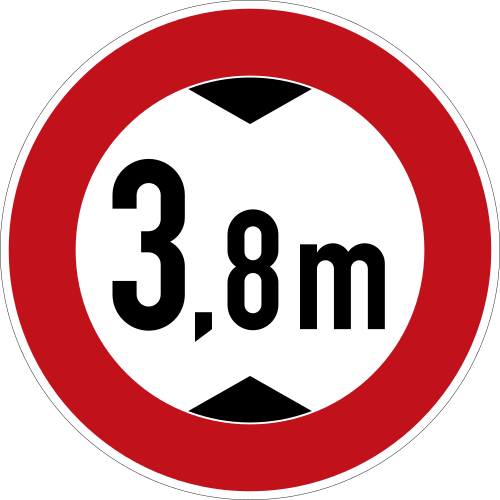
Sign 265: Actual height limit (3.8 m)
Vehicles taller than 3.8 m including load must not proceed, e.g. before underpasses. Remember roof boxes and superstructures.
↗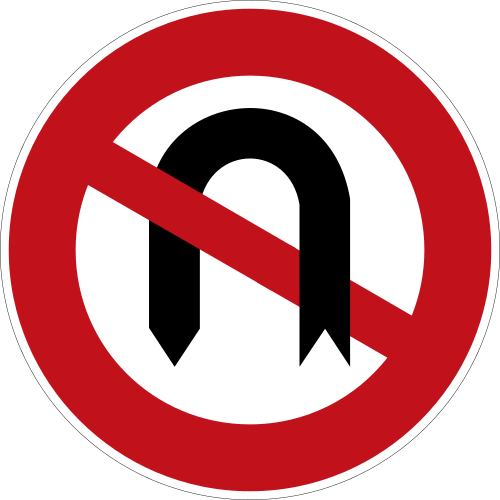
Sign 272: No U-turns
You must not make a U-turn here. Turning off is still allowed unless otherwise indicated.
↗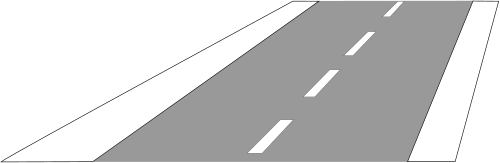
Road marking 340: Broken lane line
The broken line may be crossed if this endangers no one. A cycle lane marked this way may be driven on only when necessary, and stopping on it is proh
↗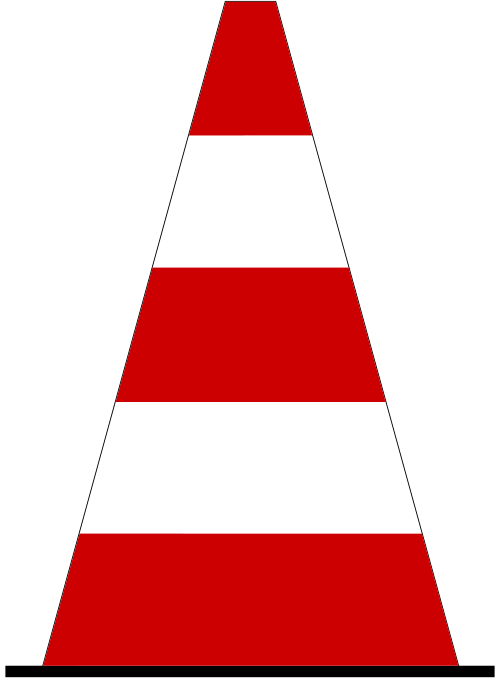
Traffic device 610: Traffic cone
Traffic cones close off areas or separate lanes, e.g. at accidents and roadworks. You must not drive onto the closed-off area.
↗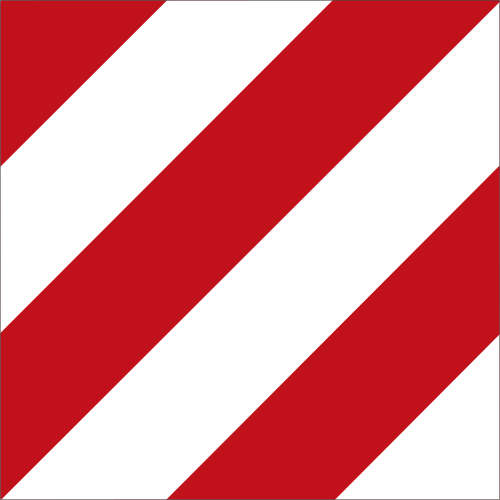
Traffic device 630: Parking warning board
Red and white striped reflective board on vehicles and trailers. It makes parked vehicles visible in the dark and can replace lighting.
↗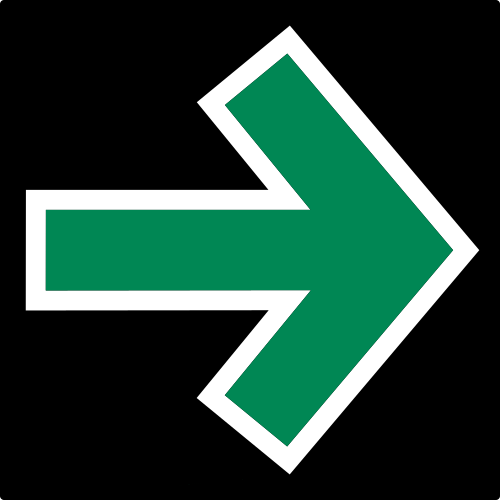
Sign 720: Green arrow (right turn on red)
At a red light you may turn right from the right-hand lane after stopping at the stop line – only if you do not hinder or endanger anyone, especially
↗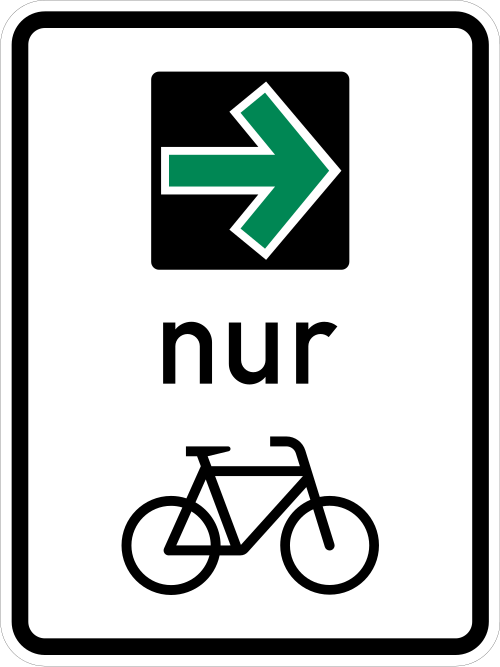
Sign 721: Green arrow for cyclists only
The green arrow applies to cyclists only: after stopping, they may turn right on red. For car drivers, the red light still applies.
↗