Pedestrians & vulnerable road users
Children, the elderly, zebra crossings, cyclists
Protect the most vulnerable
Pedestrians, cyclists and e‑scooter riders have no crumple zone. Even at 50 km/h, a pedestrian often does not survive a collision. That is why, with children, elderly and vulnerable people, the rule is: slow down, be ready to brake – any danger must be ruled out (§ 3 (2a) StVO).
How children experience traffic
- They are small: can't see over cars and are easily missed
- They often misjudge speed and distance
- Their field of view is narrower than an adult's
- They act spontaneously: friends, ball or pet come first
- They copy adults – even at red lights
- Take extra care: schools, playgrounds, bus stops, residential areas
Elderly people and people with disabilities
- Older people often walk slower and need more time
- Their hearing or eyesight may be reduced
- White cane or guide dog: the person is blind
- Yellow armband with three black dots: person with a disability
- Don't honk – it startles; better stop and wait
- Wheelchair users have the same priority at zebra crossings
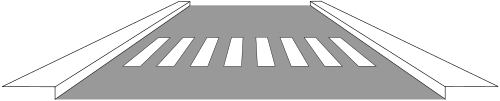
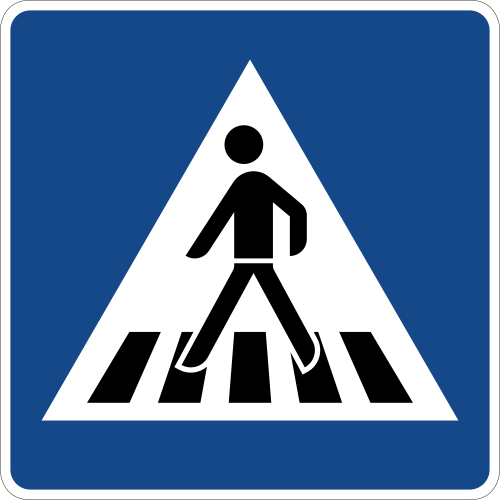
Zebra crossing (sign 293)
- Let pedestrians and wheelchair users cross who clearly want to
- Approach only at moderate speed
- No overtaking at a zebra crossing
- No stopping: on the crossing and 5 m before it
- In a jam, don't drive onto the crossing
- Cyclists riding across have no priority – still take care
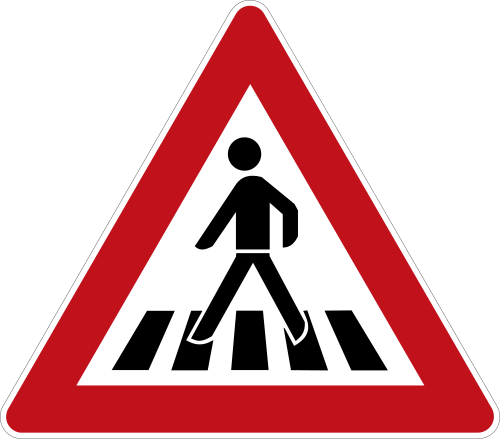
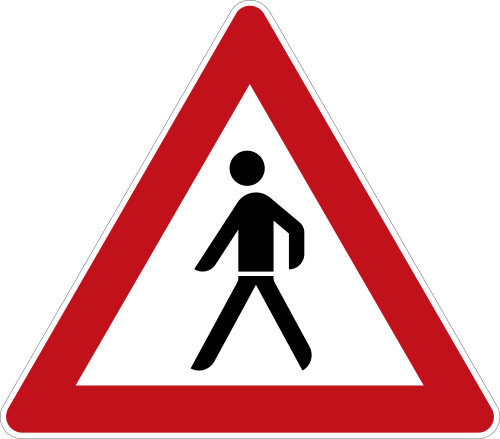
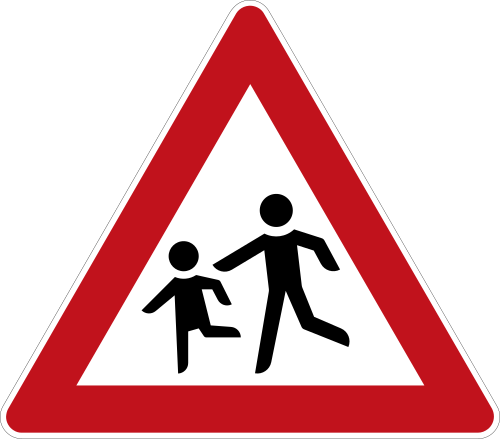
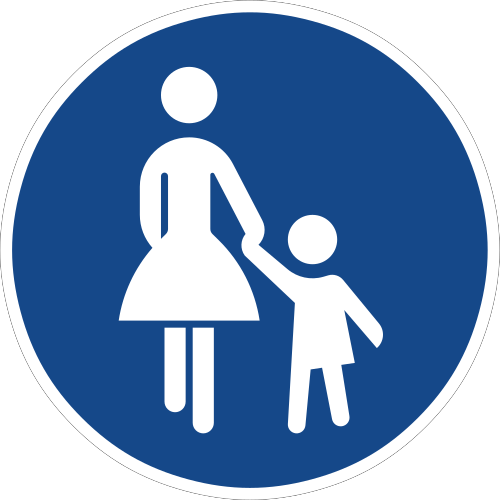
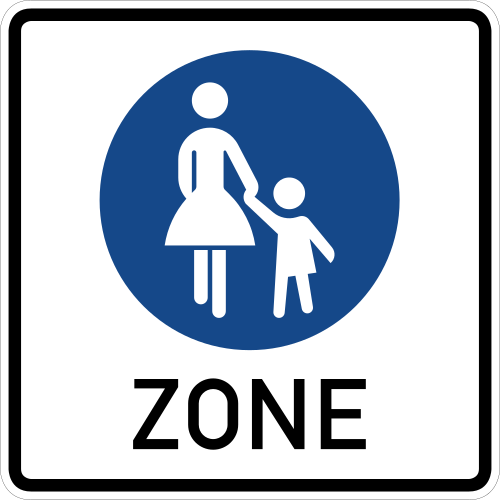
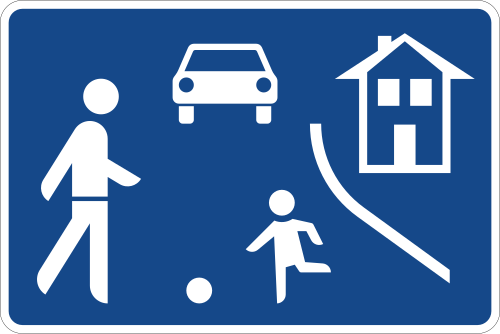
Signs about pedestrians
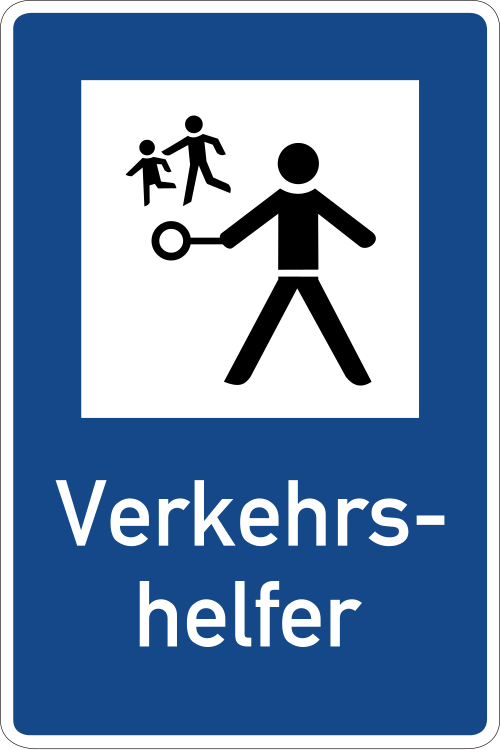
Turning: pedestrians first
You turn left. The pedestrian is crossing the road you are turning into. The pedestrian goes first – even without a zebra crossing (§ 9 (3) StVO). Wait until they are safely across, then go. The same applies when turning right.
This source question references an image or scene that is not yet supplied. Do not use it for scored practice.
Cyclists and e‑scooters
- Overtaking distance: at least 1.5 m in town, 2 m outside
- If there isn't enough room, stay behind
- Cyclists may ride side by side if nobody is hindered
- Expect swerving around potholes and drain covers
- E‑scooters: from age 14, one person only, bike lane first
- E‑scooters must not be ridden on the pavement
Remember: the Dutch reach
Open the driver's door with your right hand. Your upper body and head then turn backwards automatically and you see approaching cyclists. Passengers on the right use their left hand. One quick look prevents dangerous “dooring” crashes (§ 14 StVO: get in and out without endangering others).
Child at the kerb
If a child is standing at the kerb looking the other way, it may run out at any moment. Lift off, be ready to brake, stop if necessary. Never rely on the child staying put – not even if an adult is nearby.
You want to overtake a cyclist outside a built‑up area. What is the minimum lateral distance?
- 1 m
- 1.5 m
- 2 m
Check answer
2 m
Outside towns at least 2 m, in towns at least 1.5 m – this also applies to pedestrians and e‑scooter riders.
A person with a white cane is standing at the kerb. How do you behave correctly?
- I honk so that they notice me
- I drive slowly and ready to brake
- I stop if they clearly want to cross the road
Check answer
I drive slowly and ready to brake
I stop if they clearly want to cross the road
The white cane shows the person is blind. Honking only startles. Drive slowly and let them cross safely.
Zebra crossing & bus stop
Drive along a street with a zebra crossing and a bus. Let pedestrians cross and pass the bus correctly.
This specific scenario is not implemented in the web edition yet. drive_zebra_bus