Weather & road surface
Rain, ice, fog and crosswinds
Grip is not guaranteed
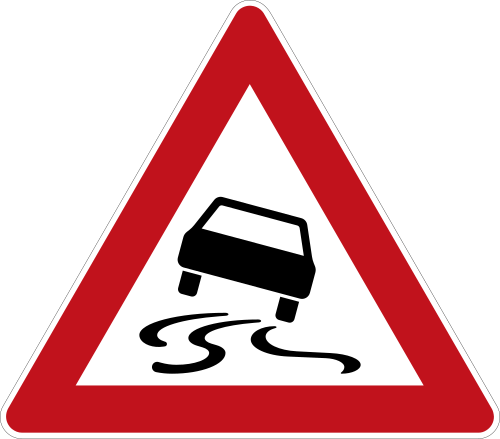
Each tyre touches the road over an area roughly the size of a postcard. Rain, snow, ice or leaves reduce grip sharply – braking distances grow, bends become critical. So: adapt speed and distance to the road surface, steer gently, brake gently. ABS and ESP help but cannot cancel physics.
When does it get slippery?
- First rain after a dry spell: dust and rubber form a greasy film
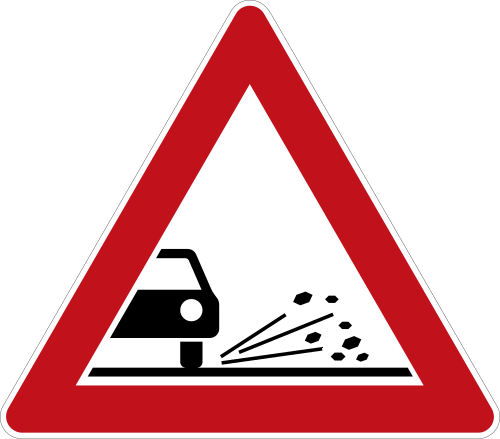
- Wet leaves, mud from fields, loose chippings
- Bridges, forest clearings and shady spots freeze first
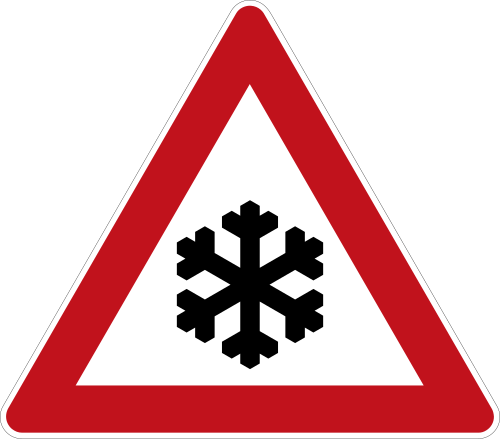
- Temperatures around 0 °C: risk of black ice and frost
- Wet road markings, tram rails and manhole covers
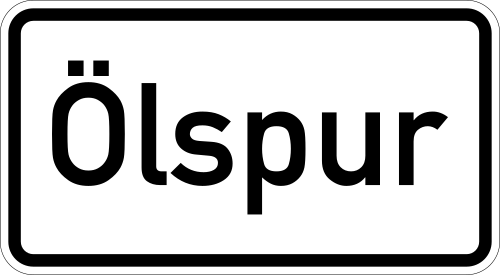
- Oil spills after accidents or breakdowns
Aquaplaning
With lots of water, a wedge of water builds under the tyres – the car floats. Signs: the steering suddenly feels light, the engine may rev up. Then: press the clutch (manual), don't brake, keep the wheel straight until the tyres grip again. Prevention: slow down, enough tread, avoid water‑filled ruts.
Winter tyre obligation
In black ice, snow, slush, ice or frost, you need tyres with the Alpine symbol (mountain with snowflake). Tyres marked only M+S have not been sufficient since 1 October 2024. Offence: from €60 and 1 point. Also: scrape all windows fully clear and remove snow from the roof.
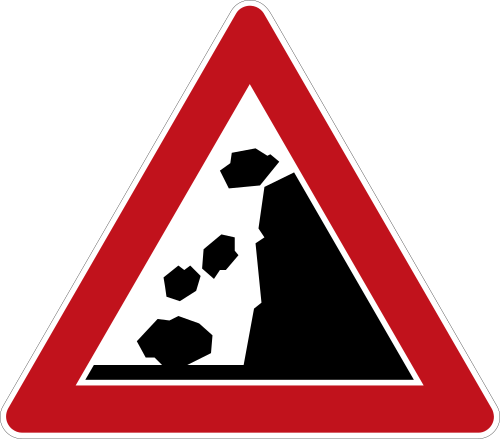
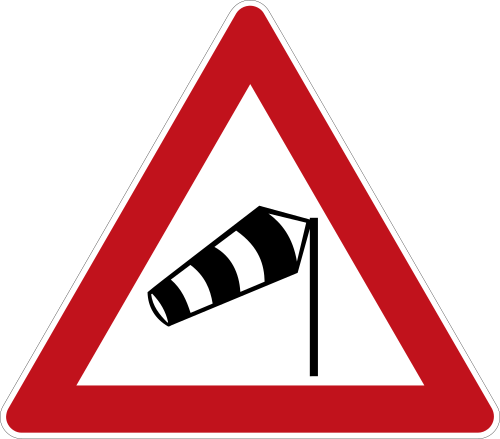
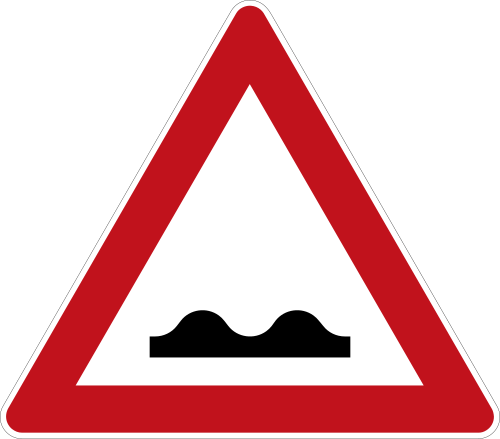
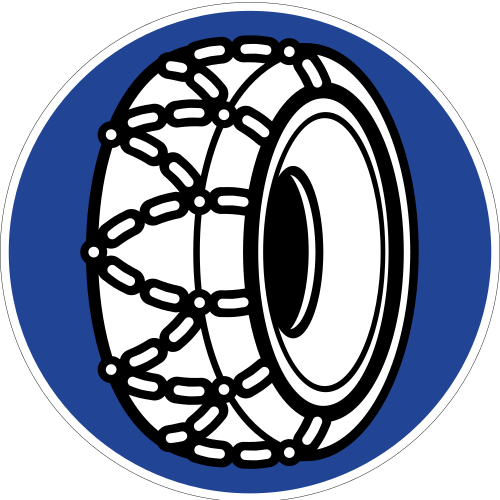
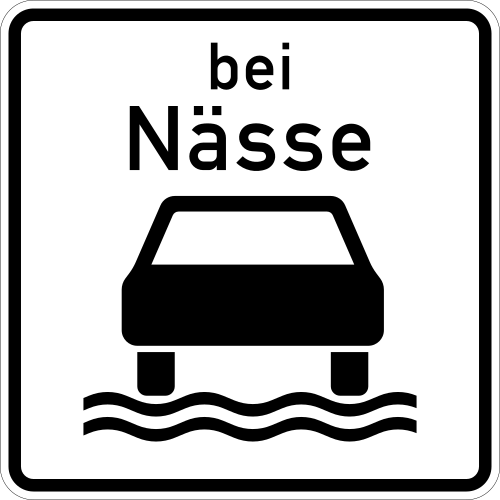
Signs for weather and road surface
Fog: driving in grey
If fog, snowfall or rain cuts visibility below 50 m, you may drive at most 50 km/h. Delineator posts stand 50 m apart: if you can't see the next one, visibility is shorter. Use dipped beam, not main beam – otherwise you dazzle yourself. Increase your distance and don't blindly follow tail lights.
Using fog lights correctly
Front fog lights
- Allowed in fog, snow or rain that seriously limits visibility
- No fixed visibility threshold
- Switch off when visibility is good
Rear fog light
- Only in fog with visibility below 50 m
- Then at most 50 km/h
- Dazzles drivers behind – switch off as soon as it clears
Crosswinds
Gusts hit your car mainly on bridges, in forest clearings, in gaps between buildings and when overtaking trucks. Tall vehicles like vans and SUVs, roof boxes and trailers offer more surface to the wind. Then: hold the wheel firmly, slow down, expect to be pushed sideways and leave enough lateral room.
Bridges freeze first
On bridges, the road cools from above and below. It can be icy here even though the road before it was dry.
This source question references an image or scene that is not yet supplied. Do not use it for scored practice.
Remember: the road sets the pace
Not the sign but the road surface and visibility set your speed. In the wet, at least double your distance; on ice, far more. On ice, braking distance can be several times the normal value.
How can you recognise aquaplaning?
- The steering suddenly feels light
- The engine speed suddenly rises
- The brakes start to squeal
Check answer
The steering suddenly feels light
The engine speed suddenly rises
When the tyres float, resistance disappears: the steering feels light and driven wheels may spin – the engine revs up.
Which tyres meet the winter tyre obligation on snowy roads?
- Tyres with the Alpine symbol (mountain with snowflake)
- Tyres marked only M+S
- Summer tyres with at least 4 mm tread
Check answer
Tyres with the Alpine symbol (mountain with snowflake)
Only tyres with the Alpine symbol (3PMSF) are allowed. Tyres marked only M+S no longer count since 1 October 2024.