Darkness & poor visibility
Glare, dusk and wildlife
At night you see less – and later
In the dark, your eyes perceive contrast, colours and distances less well. Pedestrians and cyclists appear late in your headlights. Fatigue and alcohol make vision even worse. Dusk is especially treacherous: your eyes are still adjusting, and many people are still driving without lights.
Visibility in the dark (guide values)
- Dipped beam often lights the road only 50–75 m ahead
- Pedestrian in dark clothes: often visible only from about 25 m
- In light clothes: from about 40 m
- With reflectors: from about 140 m
- Stopping distance at 80 km/h: about 88 m – beyond dipped beam
Remember: stopping distance ≤ visible distance
Drive only so fast that you can stop within the distance you can see (§ 3 StVO). At night with dipped beam on country roads, that often means well below 100 km/h.
Dazzled? Here's what to do
If oncoming traffic dazzles you with main beam: look at the right edge of the road, slow down, don't flash back. The glare lingers for seconds. Clean windows (inside too!) and anti‑reflective glasses help. Tinted glasses and sunglasses are a no‑go at night.
Main beam or dipped beam?
Main beam
- Outside towns on empty roads in the dark
- Dip for oncoming traffic
- Dip when following closely
- Dip whenever others would be dazzled
Dipped beam
- In towns on lit streets
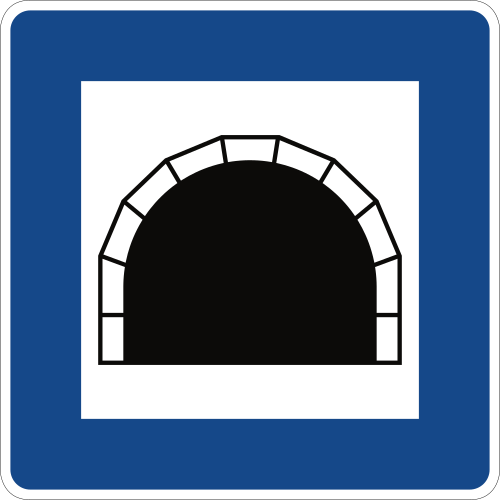
- In tunnels
- With oncoming traffic and in queues
- In daytime fog, snow or rain
Dusk and daytime running lights
Switch your lights on early. Daytime running lights are not enough at dusk, in the dark or in tunnels – on many cars the rear lights stay off, so you are invisible from behind. Automatic lights sometimes react too late in fog: check for yourself.
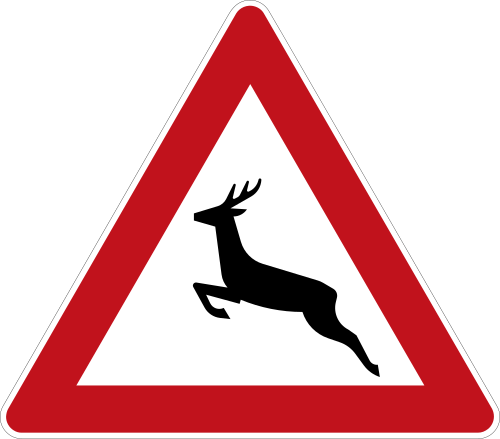
Wildlife crossing
Especially at dusk and dawn, near forest edges and fields – and after the clocks change. If an animal appears: dip your lights, honk, brake. No risky swerving! If a collision is unavoidable: brake hard and hold the steering wheel firmly. Where there is one animal, others often follow.
After a collision with wildlife
- Hazard lights on, put on your hi‑vis vest
- Secure the scene with the warning triangle
- Call the police (110) – even if the animal ran off
- Don't touch the animal and never take it with you
- Get a wildlife accident certificate for your insurer
Night‑time aids and warnings

Eyes in the headlights
If eyes light up at the roadside: dip your lights, honk and brake at once. Main beam makes wild animals freeze.
This source question references an image or scene that is not yet supplied. Do not use it for scored practice.
At night, a vehicle with main beam comes towards you. How do you behave correctly?
- I look at the right edge of the road
- I switch on my main beam so the other driver dips
- I reduce my speed
Check answer
I look at the right edge of the road
I reduce my speed
Looking down to the right protects against glare, lower speed makes up for poorer vision. Flashing back endangers both drivers.
Practise night driving
Switch correctly between main and dipped beam in the simulator and react to oncoming traffic and wildlife.
This specific scenario is not implemented in the web edition yet. drive_night