Road use & lanes
Keep right, change lanes, merge
Keep to the right
Vehicles must use the carriageway – pavements, cycle paths and verges are off limits. Keep as far right as reasonably possible, but not on the very edge. Especially important: with oncoming traffic, in bends, before crests, at blind spots and when you are being overtaken (§ 2 StVO).
Cycle lanes, advisory lanes, bus lanes
- Cycle path and cycle lane (solid line): don't drive or stop on them
- Advisory cycle lane (dashed line): cross only when necessary
- Stopping on advisory cycle lanes is forbidden
- Bicycle street: max. 30 km/h, cars only if a plate allows
- Bus lane (sign 245): only for buses and permitted vehicles
Choosing a lane
In towns (cars up to 3.5 t)
- Free choice of lane on multi‑lane roads
- Traffic on the right may then be faster
- Don't keep switching lanes
Outside towns
- Use the right‑hand lane
- Left lanes only for overtaking
- Overtaking on the right is generally forbidden
Changing lanes
- Check interior and door mirrors
- Indicate in good time
- Shoulder check into the blind spot
- Change only if nobody is endangered
- Move across smoothly and steadily
- Switch off the indicator
Zipper merge
If a lane ends or is blocked, drive to its end and then merge alternately right at the narrowing (§ 7 (4) StVO). If you are in the continuing lane, let one vehicle in ahead of you each time. Merging too early wastes space and makes the jam longer.
Lanes, markings, special paths
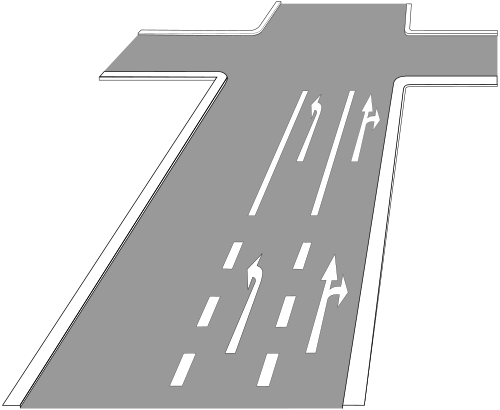 Road marking 297: Lane arrows
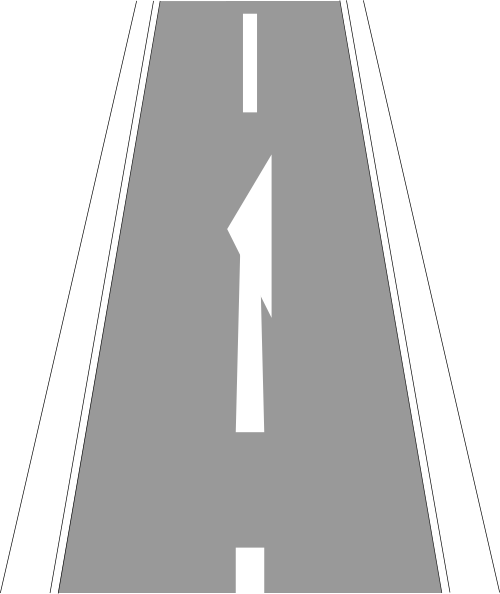 Road marking 297.1: Advance warning arrow
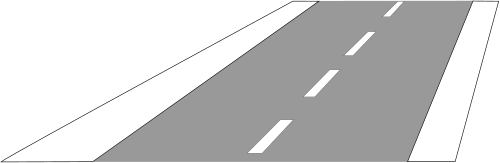 Road marking 340: Broken lane line
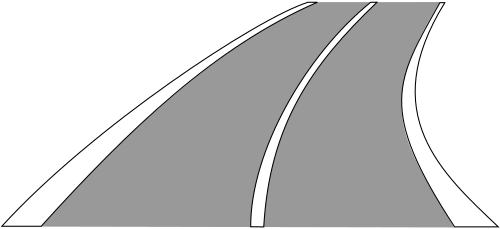 Road marking 295: Solid line (lane or edge line)
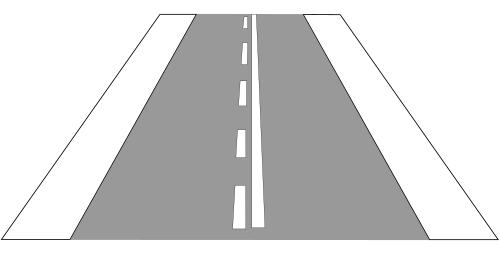 Road marking 296: One-sided solid line
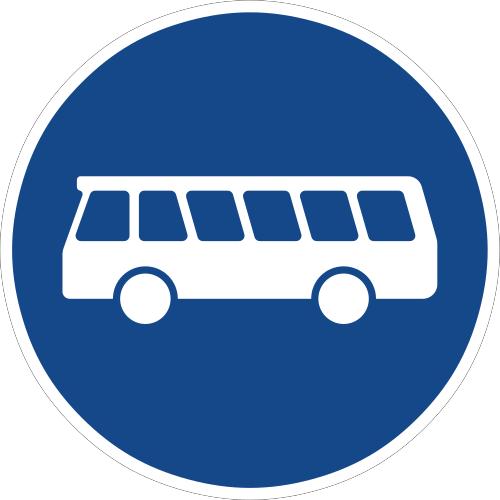 Sign 245: Bus lane
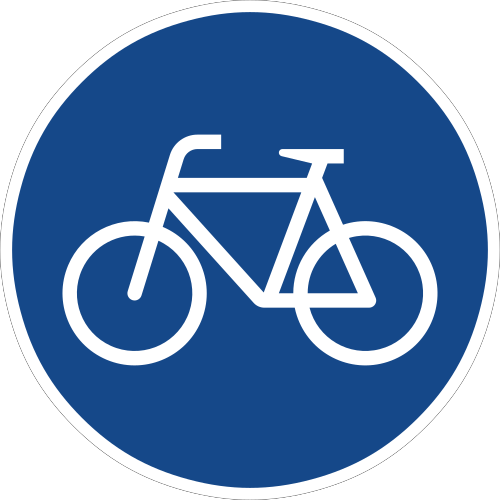 Sign 237: Cycle path
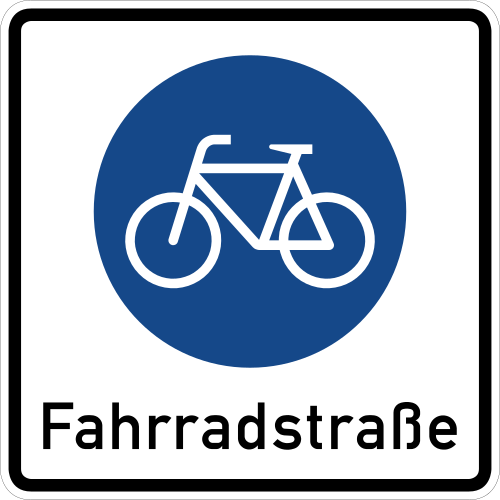 Sign 244.1: Start of cycle street
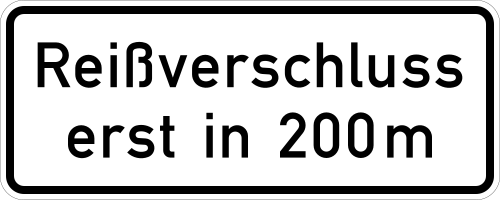 Supplementary plate 1005-30: Zip merge in 200 m
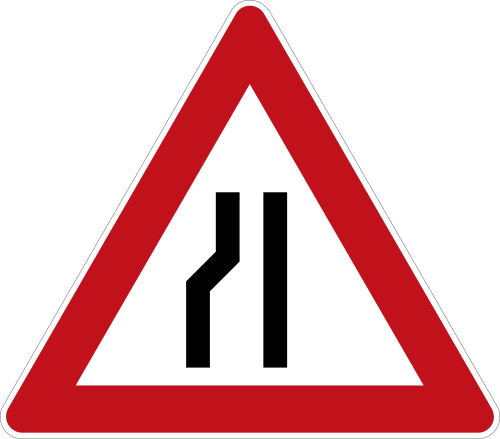 Sign 121-20: Road narrows on the left
Pulling away from the kerb
When pulling away from the kerb or out of a parking space, you must let moving traffic pass and must not endanger anyone (§ 10 StVO). So: mirror, indicator, shoulder check – and only go when it is really clear.
Leaving properties and field tracks: everyone else first
Anyone entering the road from a property, car park, field or forest track or a traffic‑calmed area must let everyone pass – including pedestrians on the pavement. Any danger must be ruled out; if necessary, get someone to guide you.
Remember: M – S – S
Before every lane change and every pull‑away: Mirror – Signal – Shoulder check. Only the shoulder check shows the blind spot – that is where cyclists, motorcycles and even whole cars disappear.
A lane ends. How do you behave correctly in a zipper merge?
- I move to the continuing lane as early as possible
- I drive to the end of the lane and then merge alternately
- In the continuing lane, I let one vehicle merge in front of me
Check answer
I drive to the end of the lane and then merge alternately
In the continuing lane, I let one vehicle merge in front of me
Merge only right before the narrowing – alternately, one after the other.
You are pulling out of a driveway onto the road. Whom must you let pass?
- Pedestrians on the pavement
- Vehicles on the road
- Nobody, if nobody is coming from the right
Check answer
Pedestrians on the pavement
Vehicles on the road
Anyone leaving a property must give way to everyone – right before left does not apply here (§ 10 StVO).
Practise lane changes
Practise the full sequence in the simulator: mirror, signal, shoulder check, change – without endangering anyone.
This specific scenario is not implemented in the web edition yet. drive_lane_change