Stopping & parking
Where, how long – and how safely
Stopping or parking?
Stopping
- A deliberate stop not forced by traffic
- For example: briefly letting someone out
- Waiting at lights or in a jam is not stopping
Parking
- You leave your vehicle
- or you stop for longer than 3 minutes
- Where stopping is banned, parking is banned too
No stopping
- At narrow and blind spots, in sharp bends
- On acceleration and deceleration lanes and on level crossings
- On zebra crossings and up to 5 m before them
- Up to 10 m before lights and priority signs if you'd hide them
- On Autobahns and expressways – including the hard shoulder
- On advisory cycle lanes and in fire brigade access routes
- At sign 283 (no stopping at all)
No parking
- Up to 5 m before and after junctions
- Up to 15 m before and after bus stop signs
- In front of driveways, on narrow roads also opposite them
- In front of lowered kerbs
- On priority roads outside towns
- Near St Andrew's crosses: 5 m in towns, 50 m outside
- At sign 286 – stopping up to 3 minutes is still allowed
No‑stopping zones and parking rules
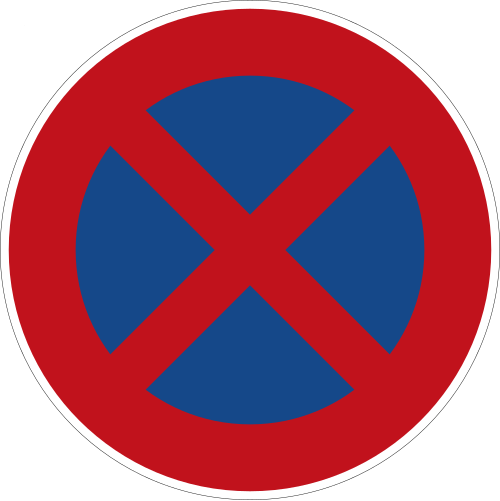 Sign 283: No stopping
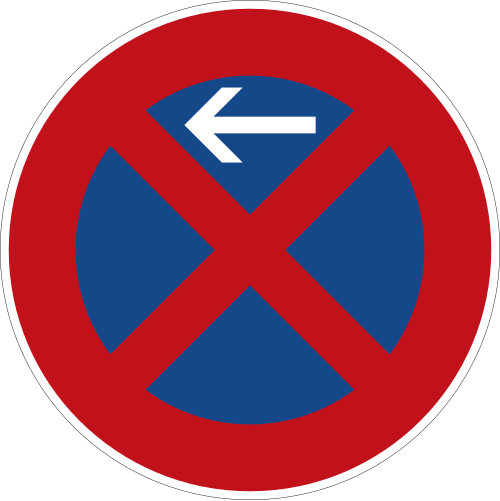 Sign 283-10: No stopping (start)
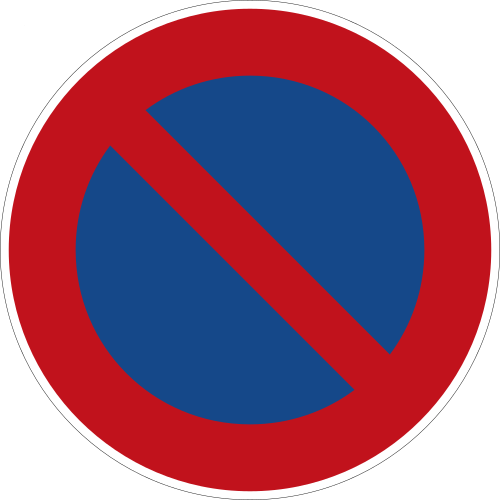 Sign 286: Restricted stopping
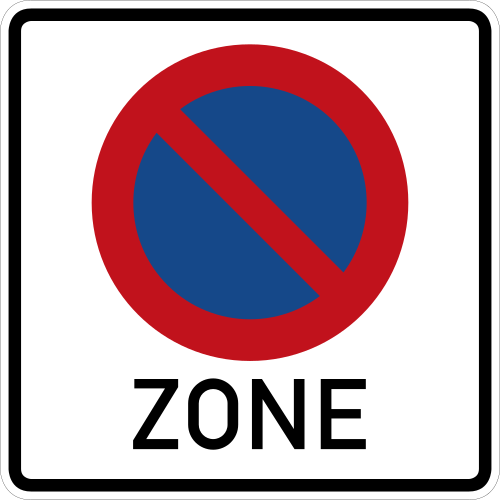 Sign 290.1: Start of restricted stopping zone
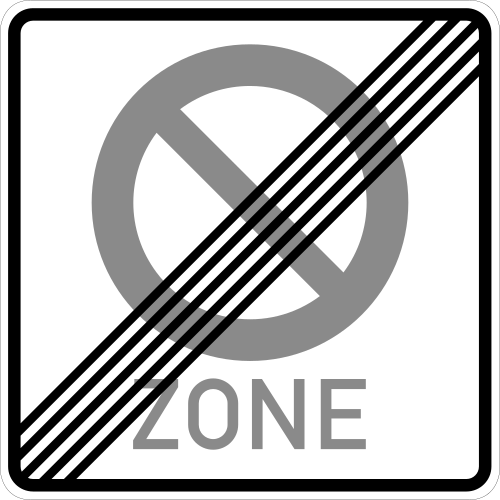 Sign 290.2: End of restricted stopping zone
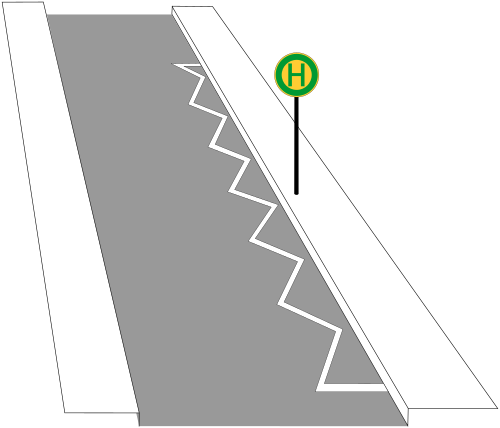 Road marking 299: Zigzag line (no stopping/parking)
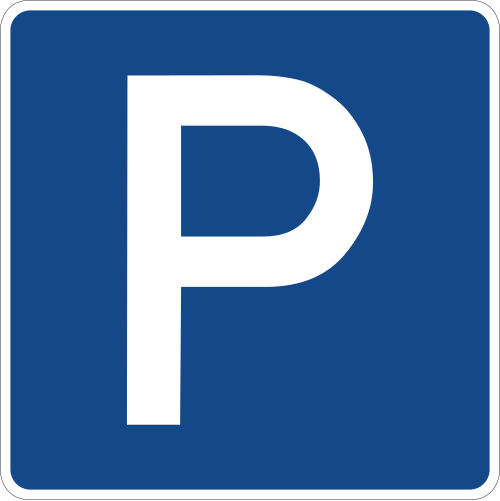 Sign 314: Parking
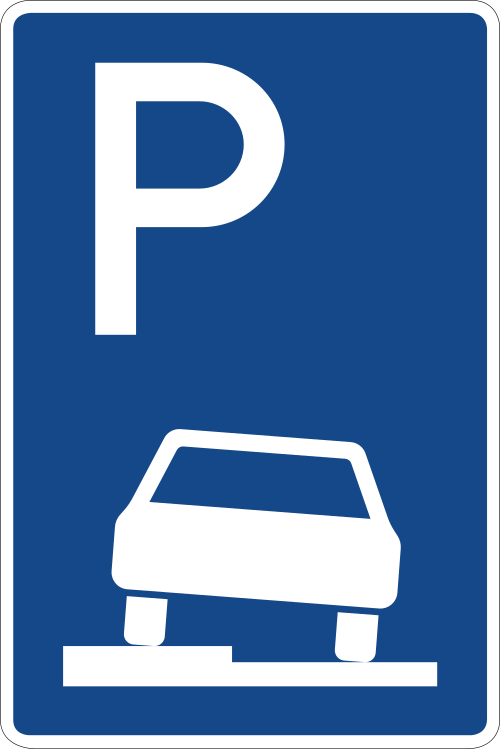 Sign 315-50: Parking half on the pavement
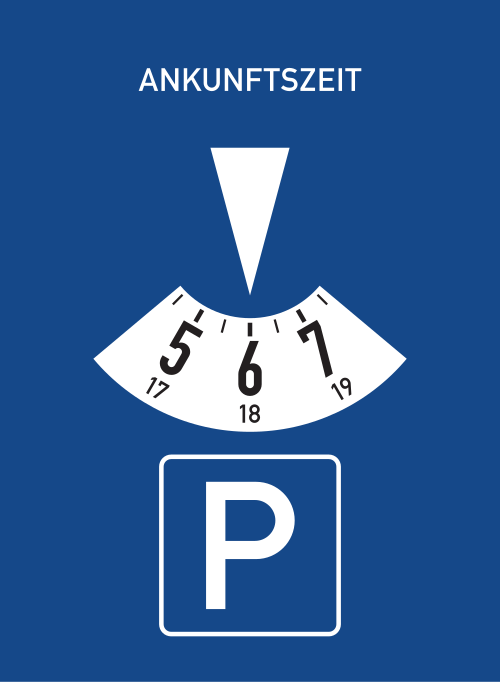 Figure 318: Parking disc
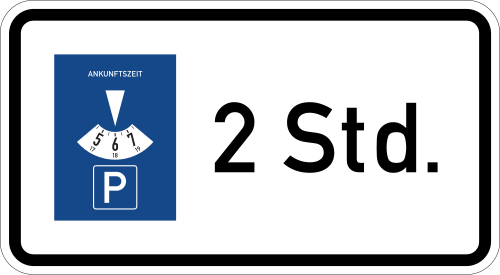 Supplementary plate 1040-32: Parking disc (2 hours)
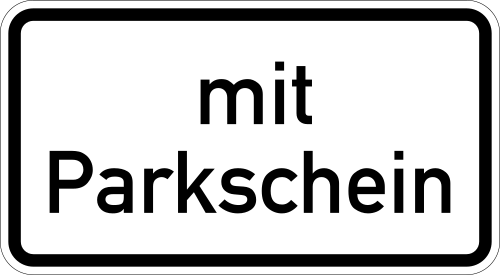 Supplementary plate 1053-31: With parking ticket
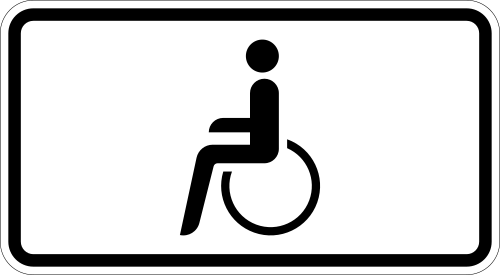 Supplementary plate 1044-10: Disabled permit holders only
How and where to park correctly
Park on the right at the edge of the road or in the parking lane, saving space and never double‑parked. On the left only in one‑way streets or if there are rails on the right. On the pavement only if sign 315 or markings allow it. Keep driveways and emergency routes clear.
Remember: the parking disc
Set it to the next half‑hour mark after you arrive. Example: arrival 9:10 → set 9:30. The permitted parking time counts from that mark.
Parking up and getting out safely
- Engine fully off – start‑stop doesn't count
- Apply the parking brake, engage a gear or select P
- On a slope: turn the wheels towards the kerb
- Open the door with your far hand, mirror and shoulder check
- Close windows, lock up, no valuables on view
- At night outside towns: light your vehicle with parking lights
Lights when parking in towns
In towns at night, a parking light on the traffic side is enough. If street lighting makes your car clearly visible, you need no light of your own. Watch out for the red‑and‑white lamp‑post ring (sign 394): this lamp does not burn all night – then you must light your car yourself.
Close to the kerb, clear of the bus stop
Well parked: close to the kerb, space‑saving – and at least 15 m from the bus stop sign.
This source question references an image or scene that is not yet supplied. Do not use it for scored practice.
You arrive at 2:05 pm at a car park that requires a parking disc. Which time do you set?
- 2:00 pm
- 2:05 pm
- 2:30 pm
Check answer
2:30 pm
You always set the next half‑hour mark after arrival – here 2:30 pm.
Where is parking forbidden?
- Up to 5 m before and after junctions
- Up to 15 m before and after bus stop signs
- Up to 20 m after every traffic light
Check answer
Up to 5 m before and after junctions
Up to 15 m before and after bus stop signs
5 m at junctions and 15 m at bus stops are fixed rules. There is no general 20 m rule after traffic lights.
Parallel parking
Park into a parallel space in the simulator – with no more than two corrections and at most 30 cm from the kerb.
Take a free drive↗