Turning, U‑turns, reversing
When you turn, others go first
Turning in five steps
- Check behind and indicate in good time
- Position: right turn at the right edge, left turn at the centre
- In one‑way streets, turn left from the left edge
- Reduce speed
- Second check with shoulder glance – watch for cyclists on the right
- Respect priority, then turn briskly
Who goes first when you turn
- Oncoming vehicles (when turning left)
- Pedestrians crossing the road you are turning into
- Cyclists and e‑scooters going the same way – also on cycle paths
- Trams going the same way
- Buses and others in marked special lanes
Turning right on green
You have green and want to turn right. First, the cyclist to your right goes straight on. Then the pedestrian crosses the road you are turning into – they have green parallel to you. Only then do you turn. Green does not mean a free run for turning traffic.
This source question references an image or scene that is not yet supplied. Do not use it for scored practice.
Blind spot when turning right
Cyclists can be beside or behind you on the right without showing in your mirror. So always do a shoulder check before turning. Better to wait once too often: many serious cycling crashes in towns happen when vehicles turn right.
Turning left with oncoming traffic
When two left‑turning vehicles meet, they turn in front of each other – unless markings or the traffic situation require otherwise. If you must wait inside the junction, keep your wheels straight: if someone hits you from behind, you won't be pushed into oncoming traffic.
U‑turns and reversing
U‑turns, reversing and turning into a property require the highest duty of care: any danger to others must be ruled out – if necessary, get someone to guide you (§ 9 (5) StVO). Both are forbidden on Autobahns and expressways, including slip roads. Sign 272 prohibits U‑turns.
A camera doesn't replace looking
Reversing cameras and parking sensors help – but small children, posts or cyclists can disappear in blind areas. Turn around, use all mirrors and reverse only very slowly.
Mandatory directions
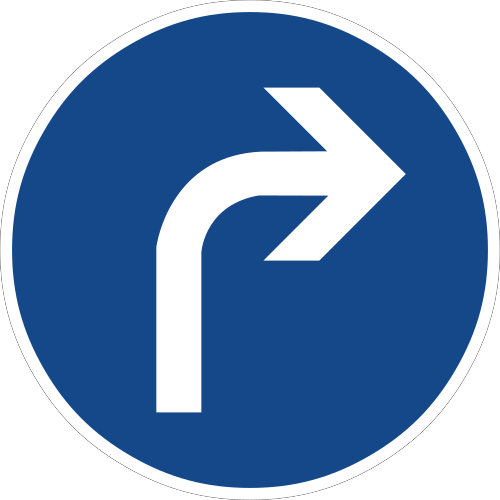 Sign 209: Mandatory direction – turn right
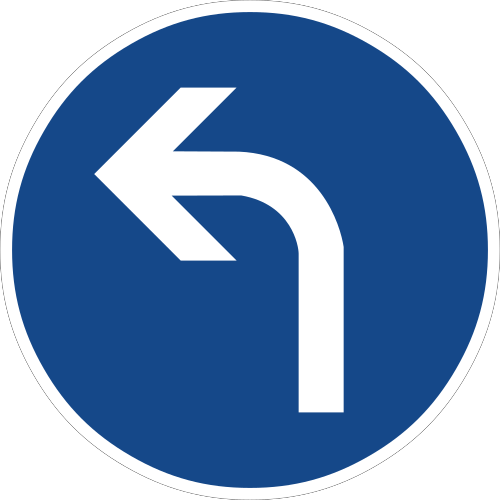 Sign 209-10: Mandatory direction – turn left
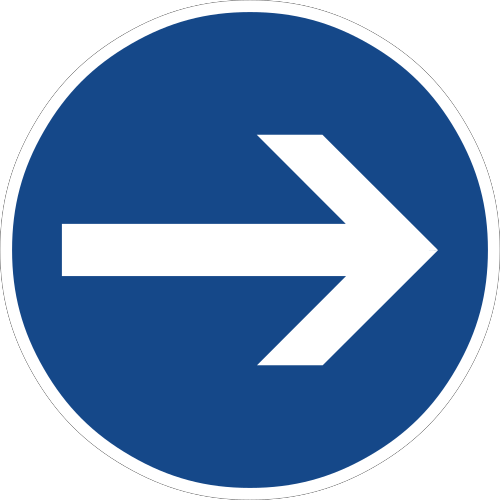 Sign 211: Mandatory direction – turn right here
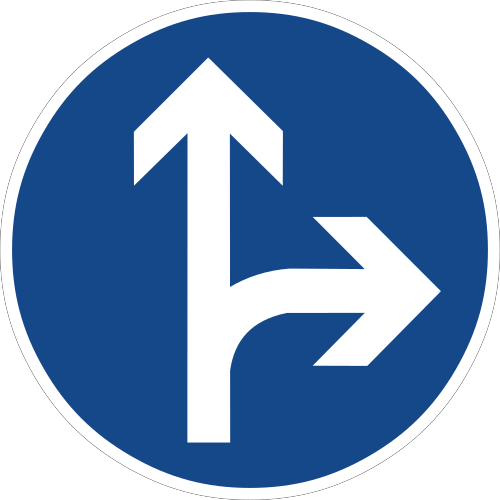 Sign 214: Mandatory direction – straight ahead or right
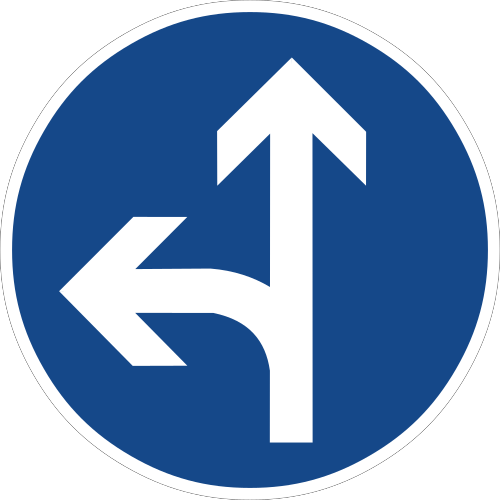 Sign 214-10: Mandatory direction – straight ahead or left
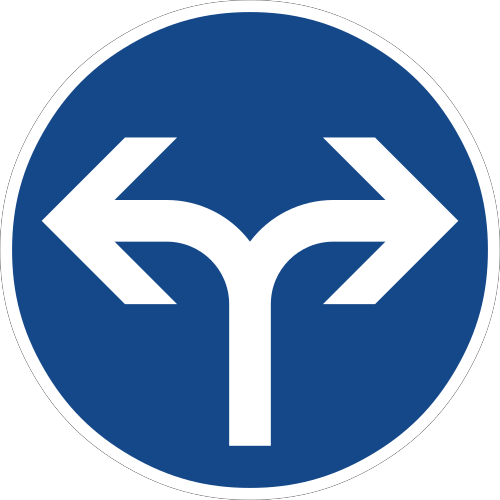 Sign 214-30: Mandatory direction – right or left
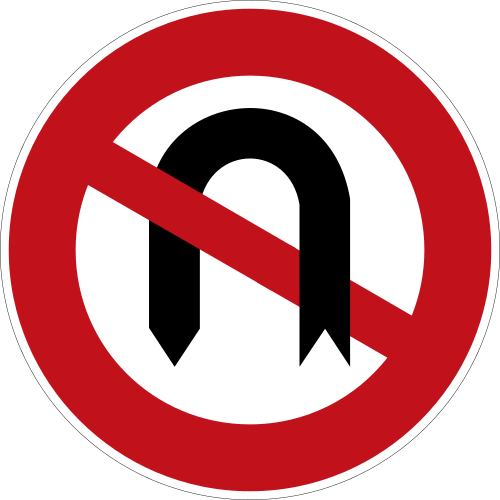 Sign 272: No U-turns
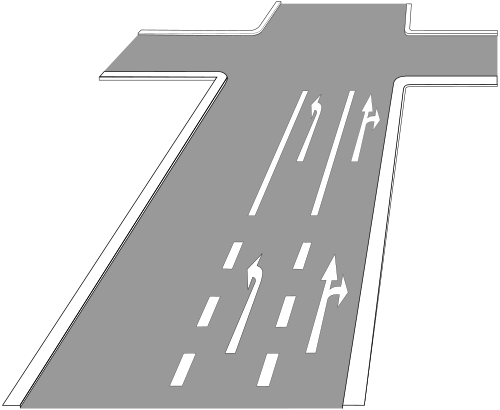 Road marking 297: Lane arrows
You are turning right. A cyclist on the cycle path to your right is going straight on. What is correct?
- I let the cyclist go straight on first
- I turn in front of the cyclist because I have priority on the road
- Before turning, I do a shoulder check for more cyclists
Check answer
I let the cyclist go straight on first
Before turning, I do a shoulder check for more cyclists
Cyclists going the same way have priority – also on the cycle path (§ 9 (3) StVO). Others often follow.
What applies to reversing?
- Any danger to others must be ruled out
- It is allowed on the Autobahn hard shoulder
- If necessary, I get someone to guide me
Check answer
Any danger to others must be ruled out
If necessary, I get someone to guide me
Reversing requires the utmost care. On Autobahns it is forbidden everywhere – including the hard shoulder.
Practise left turns
Position correctly, wait with straight wheels and let oncoming traffic pass.
This specific scenario is not implemented in the web edition yet. drive_left_turn
Reversing around a corner
The basic exam manoeuvre: reverse to the right around a corner – close to the kerb, looking all around.
This specific scenario is not implemented in the web edition yet. gfa_reverse_corner