Level crossings, trams & buses
Rails come first – and so do passengers
The train always has priority
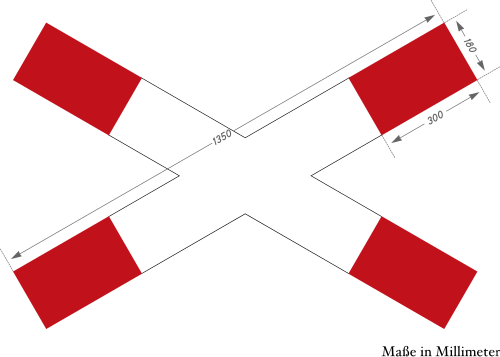
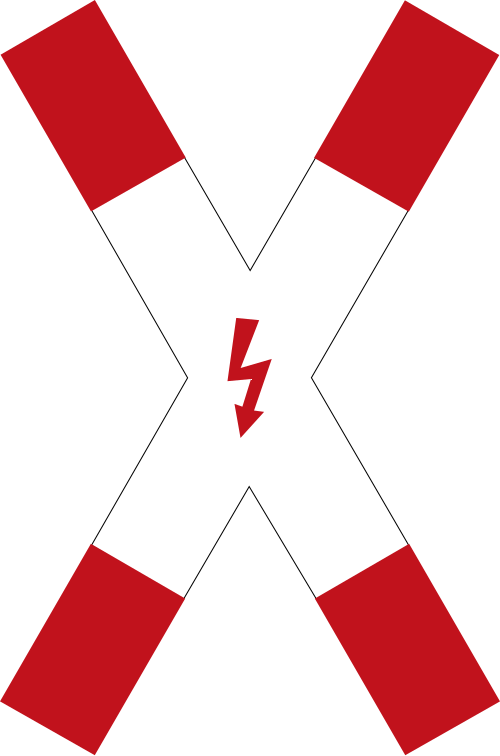
At level crossings with a St Andrew's cross, rail vehicles have priority (§ 19 StVO). A train cannot swerve and often needs 1,000 m or more to stop. So approach at moderate speed and only cross if you can clear the crossing quickly and without stopping.
Wait before the St Andrew's cross if …
- a train is approaching
- red flashing lights or a yellow or red light signal show
- the barriers are lowering or closed
- a railway employee signals you to stop
- the train sounds its whistle
- If there is a stop line, wait before it
Level crossing signs
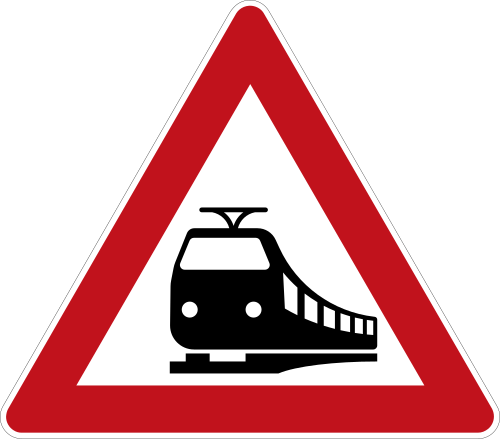
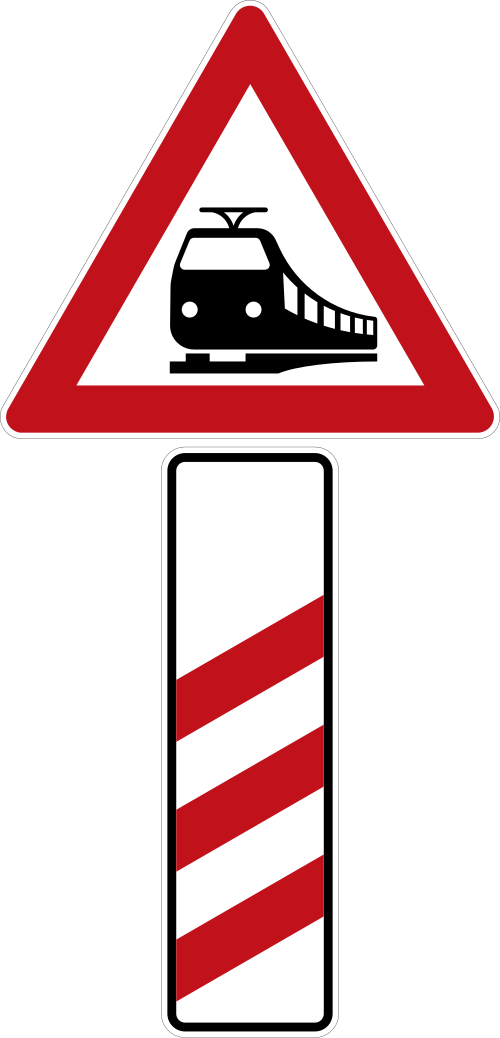
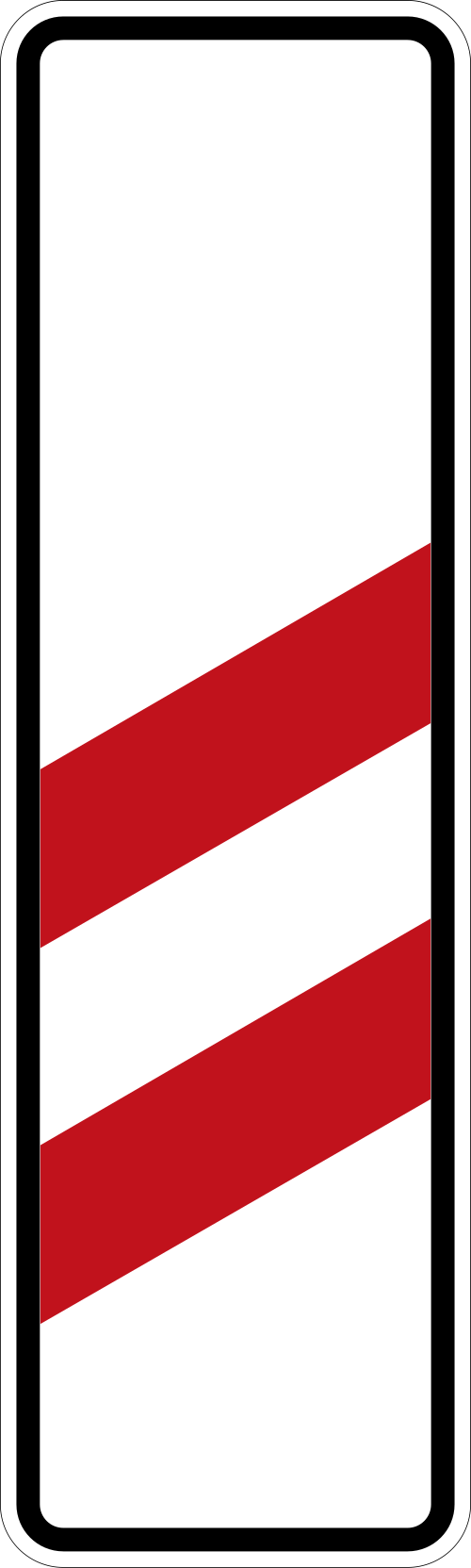
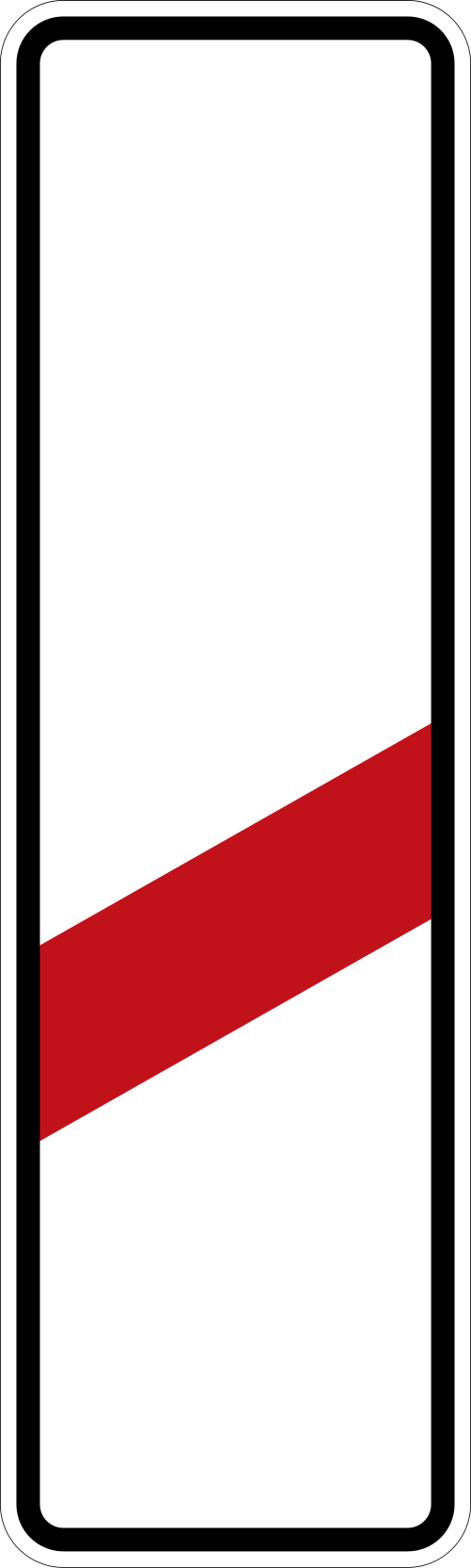
Countdown markers show the distance
Outside towns, countdown markers announce the crossing: three stripes about 240 m, two stripes about 160 m, one stripe about 80 m before it. From sign 151 or 156, motor vehicles may not overtake motor vehicles. Parking is banned up to 5 m before and after the St Andrew's cross in towns, 50 m outside.
Stuck on the tracks?
Get everyone out at once and move well away from the tracks – don't try to save the car. Call 112. Barriers are built to give way: they won't trap you. And: never drive around barriers – even if they seem to have been down “forever”.
Red light means wait
Red flashing lights, barrier down – you wait before the St Andrew's cross until the barrier is fully up. Tip: switch off your engine.
This source question references an image or scene that is not yet supplied. Do not use it for scored practice.
Turning left in front of the tram?
You want to turn left and a tram is coming towards you. The tram goes first – anyone turning left must let oncoming vehicles pass, including rail vehicles (§ 9 (3) StVO). You wait and turn afterwards.
This source question references an image or scene that is not yet supplied. Do not use it for scored practice.
Trams
- Trams are overtaken on the right
- On the left only in one‑way streets or if the right is too narrow
- Driving on the tracks: let the tram through where possible
- Tram stop without island: pass on the right only at walking speed
- Passengers must not be endangered – wait if necessary
Bus at a stop
With hazard lights
- Bus approaching the stop: don't overtake
- Bus stationary: pass only at walking speed
- This also applies to oncoming traffic
- Keep your distance, wait if necessary
Without hazard lights
- Pass carefully
- Expect pedestrians to cross suddenly
- Brake or stop if necessary
- Let the scheduled bus pull away from the stop
A school bus is stopped at a stop with its hazard lights on. You are approaching from the opposite direction. What do you do?
- I drive on normally – the rule only applies to vehicles behind
- I pass only at walking speed
- I expect children to run across the road
Check answer
I pass only at walking speed
I expect children to run across the road
Walking speed also applies to oncoming traffic on the same carriageway. Children often run out in front of or behind the bus.
When must you wait before the St Andrew's cross?
- When red flashing lights are on
- When the barriers are lowering
- Only when the train is already visible
Check answer
When red flashing lights are on
When the barriers are lowering
Red lights and lowering barriers always mean wait – a train can arrive faster than you think.
Mastering level crossings
Recognise countdown markers and the St Andrew's cross, wait correctly at the barrier and move on only when the way is clear.
This specific scenario is not implemented in the web edition yet. drive_rail_crossing