Traffic lights, police & blue lights
When lights and people control traffic
The traffic light phases
- Green: go – but respect priority when turning
- Amber: wait before the junction for the next signal
- Red: stop before the stop line
- Red and amber: green is coming – don't move yet
- Green arrow in the light: go in the direction of the arrow
- Flashing amber: caution – follow signs and rules
- Running a red for over 1 s: €200, 2 points, 1‑month ban
Green for both – who goes first?
You and red both have green. You want to turn left; red goes straight on. Anyone turning left must let oncoming vehicles pass: 1. Red, 2. You. Edge forward to the middle of the junction and wait there.
This source question references an image or scene that is not yet supplied. Do not use it for scored practice.
Red with green arrow sign
Your light is red, with the green arrow sign next to it. You must stop at the stop line first. Then you may carefully turn right – but only without hindering anyone. Red has green: 1. Red, 2. You.
This source question references an image or scene that is not yet supplied. Do not use it for scored practice.
Green arrow, light warning, stop line

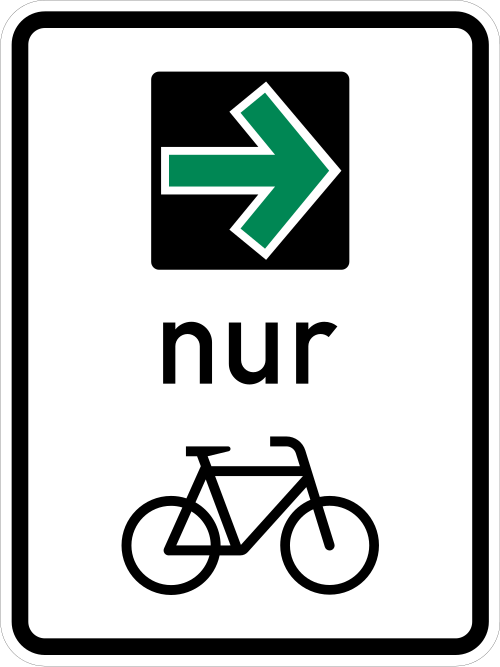
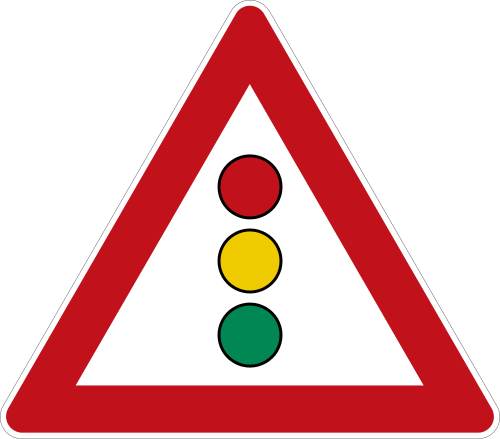
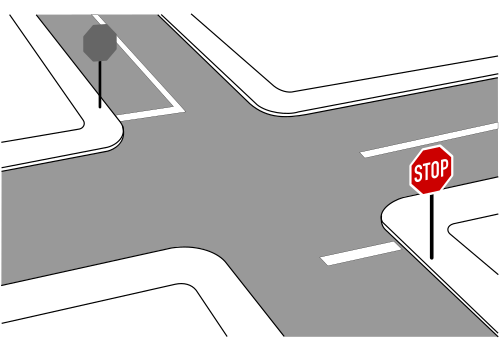
Green arrow sign or green arrow light?
Green arrow sign (next to red)
- Required: stop at the stop line first
- Only from the right‑hand lane
- Pedestrians and cyclists with green have priority
- Nobody may be hindered
Green arrow light (in the signal)
- Go in the direction of the arrow
- No mandatory stop
- Still watch for pedestrians and cyclists
Police signals
- Police override traffic lights, signs and priority rules
- Arm raised vertically: wait before the junction, those inside clear it
- Officer's chest or back facing you: stop!
- Officer's side facing you: go
- “Stop – Police” or “Please follow”: obey the instruction
The police officer directs traffic
The officer's chest or back faces you and green: for both of you, that means stop. Red sees the officer's side and may go: 1. Red. You and green wait for the next signal.
This source question references an image or scene that is not yet supplied. Do not use it for scored practice.
Blue lights and flashing amber
Blue lights with siren: everyone must make way immediately – pull over, stop if necessary. Blue lights alone warn, e.g. at accident scenes: drive carefully, but there are no special rights over you. Flashing amber lights warn of hazards – e.g. roadworks, tow trucks or extra‑wide vehicles.
Ambulance from the left
Normally you would have priority here – the ambulance comes from your left. But it is driving with blue lights and siren. Then the rule is: make way immediately. 1. Ambulance, 2. You.
This source question references an image or scene that is not yet supplied. Do not use it for scored practice.
A police officer's chest is facing you and your light shows green. What applies?
- I stop – the officer's signal takes precedence
- I go – the green light has priority
- I continue slowly and carefully
Check answer
I stop – the officer's signal takes precedence
Police signals and instructions override all other rules – including traffic lights.
A vehicle with blue lights and siren is approaching from behind. What do you do?
- I make way immediately
- I speed up to stay ahead of it
- I brake fully at once, wherever I am
Check answer
I make way immediately
Make way immediately – but sensibly: pull over, indicate, don't stop abruptly in the middle of a junction.
Traffic lights and green arrow
Stop at the stop line, react correctly to amber and use the green arrow – with the mandatory stop.
This specific scenario is not implemented in the web edition yet. drive_traffic_lights