Warning signs
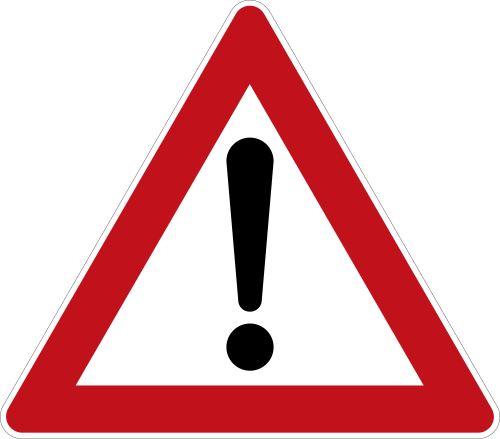
Red‑bordered triangle: caution, danger!
Warning signs: trouble ahead
Warning signs are triangles with a red border, point up. They don't prohibit anything but demand adapted speed and readiness to brake. Outside towns they usually stand 150–250 m before the hazard, in towns usually just before it. A plate can state a different distance (“in … m”) or the length of the section (“for … m”).
Road layout
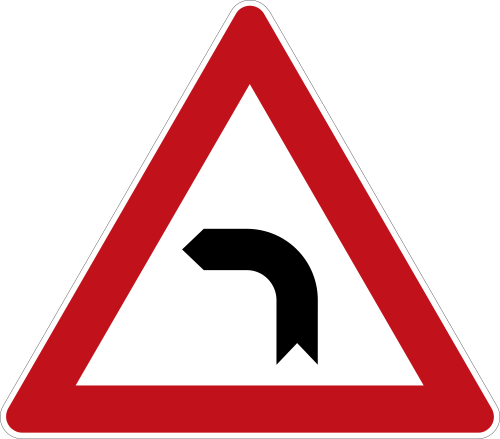 Sign 103-10: Bend to the left
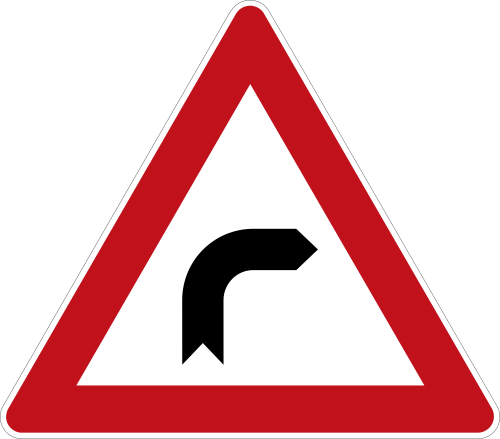 Sign 103-20: Bend to the right
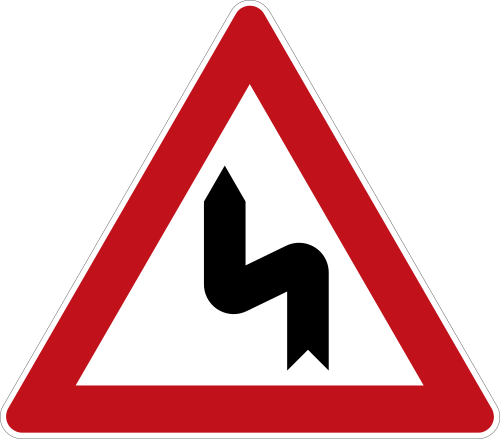 Sign 105-10: Double bend, first to the left
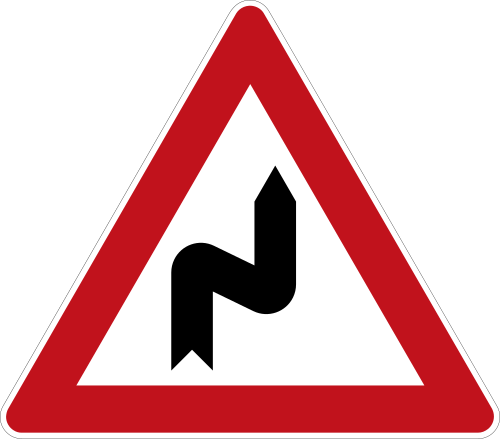 Sign 105-20: Double bend, first to the right
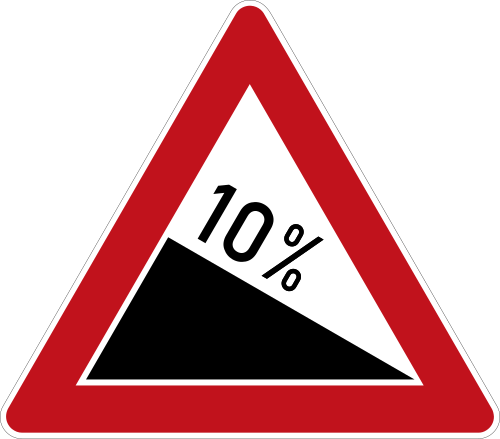 Sign 108-10: Steep descent (10 %)
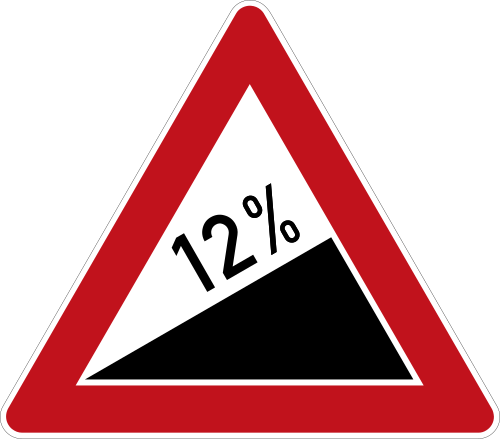 Sign 110-12: Steep ascent (12 %)
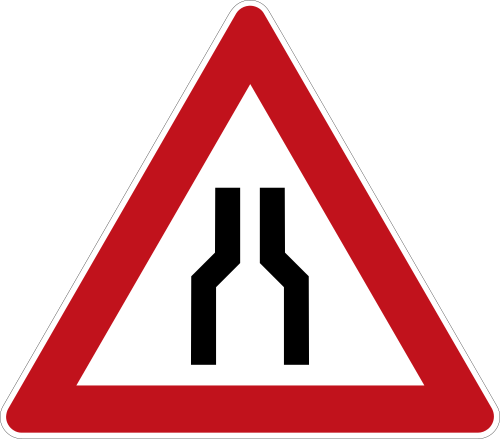 Sign 120: Road narrows
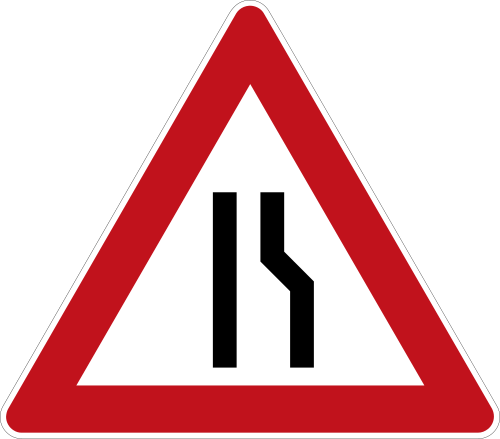 Sign 121-10: Road narrows on the right
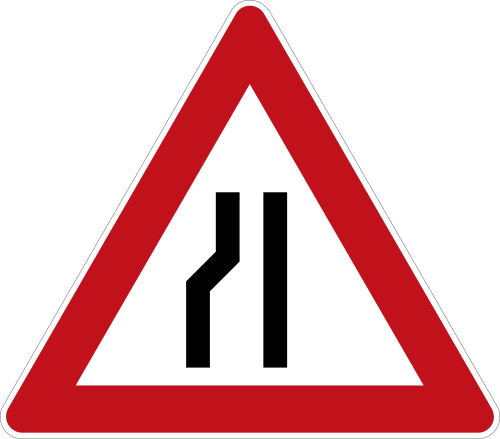 Sign 121-20: Road narrows on the left
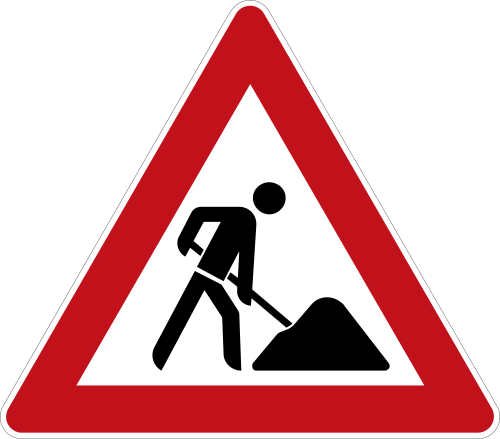
Road surface, weather, surroundings
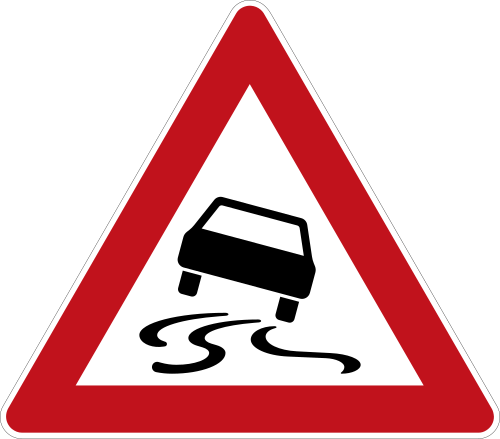
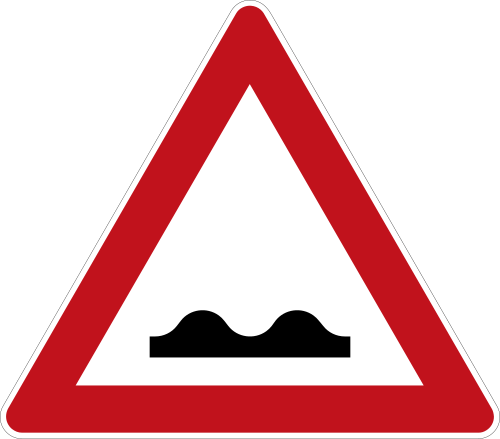
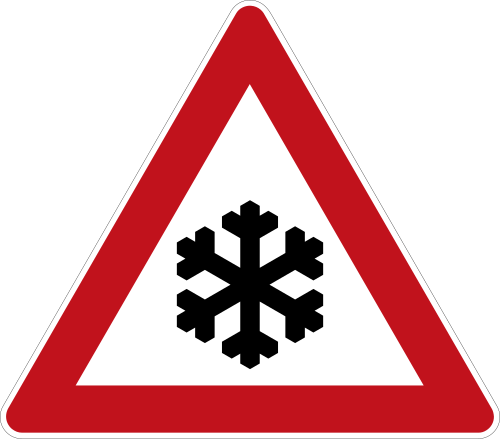
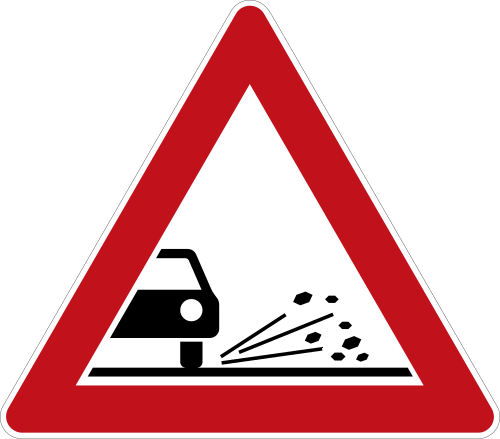
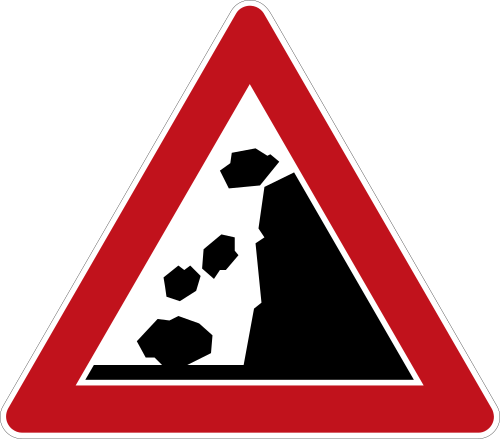
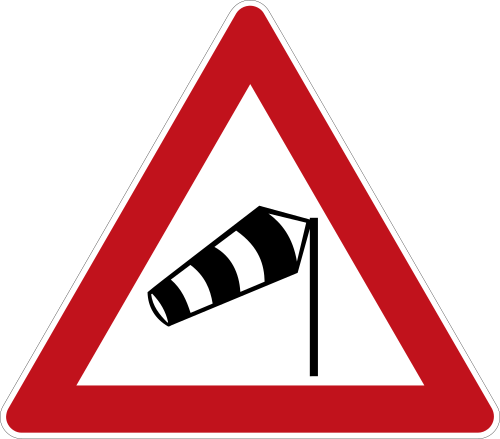
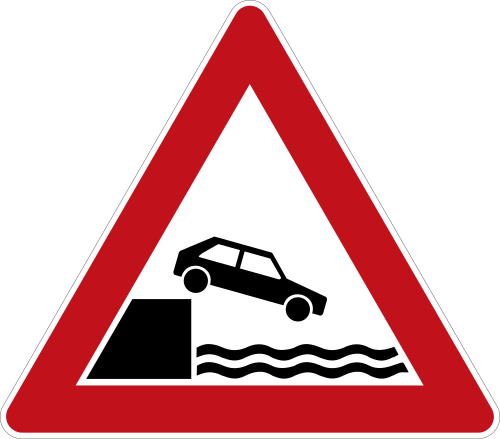
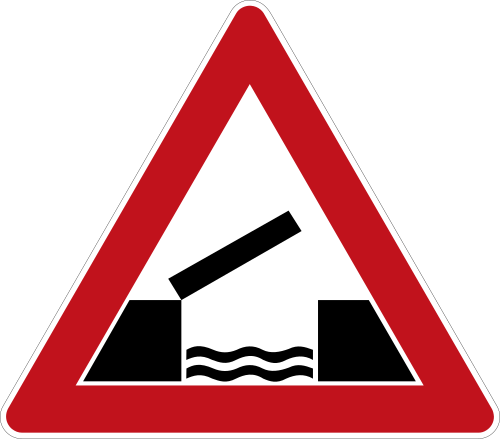
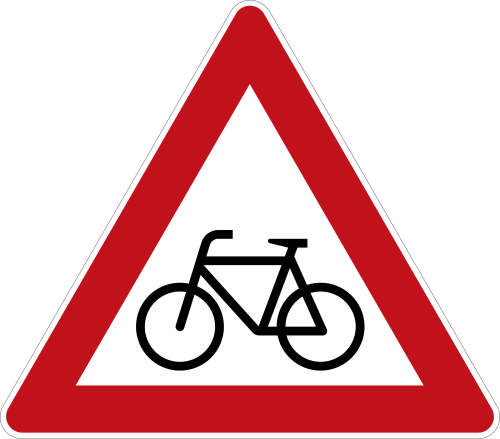
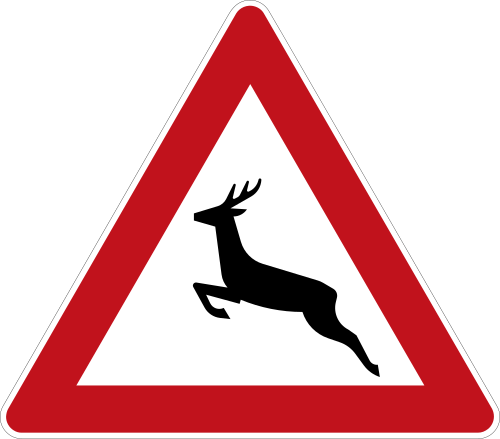
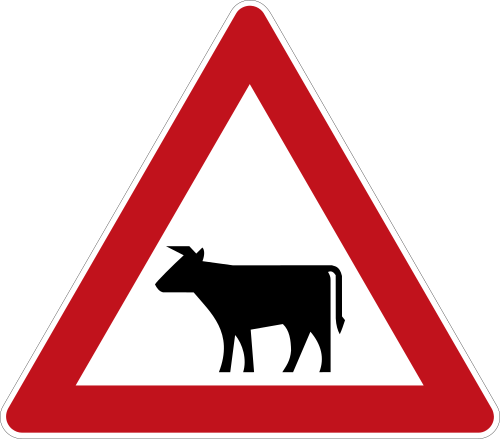
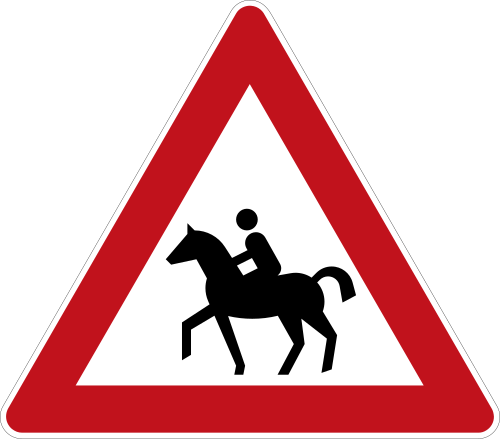
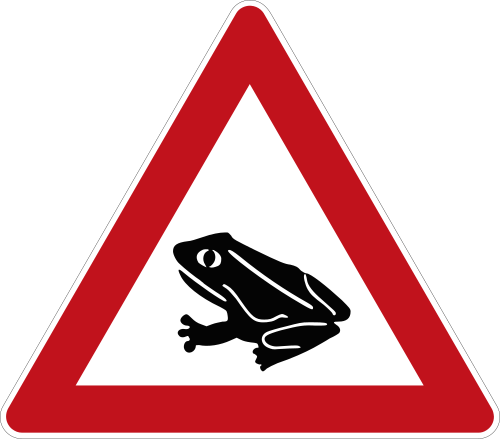
People and animals
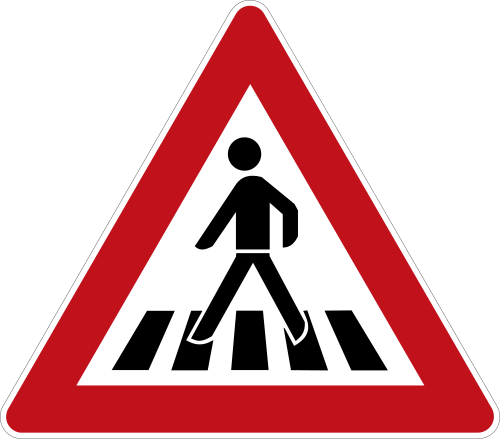
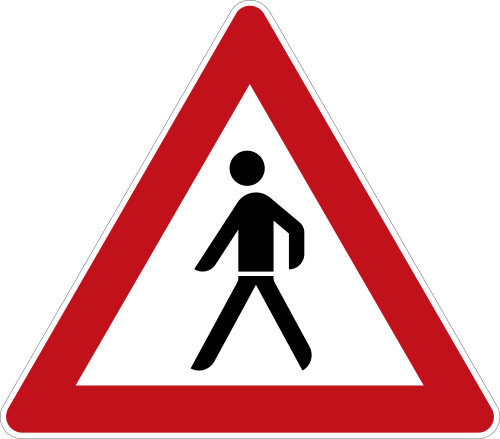
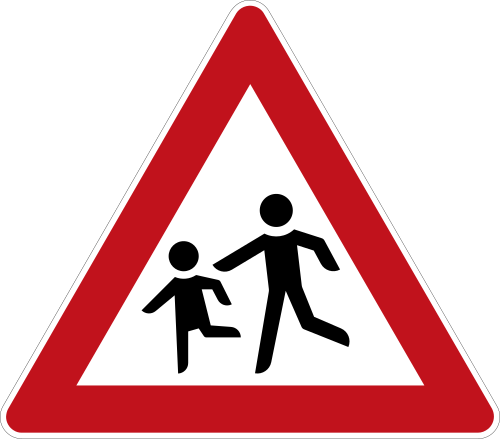
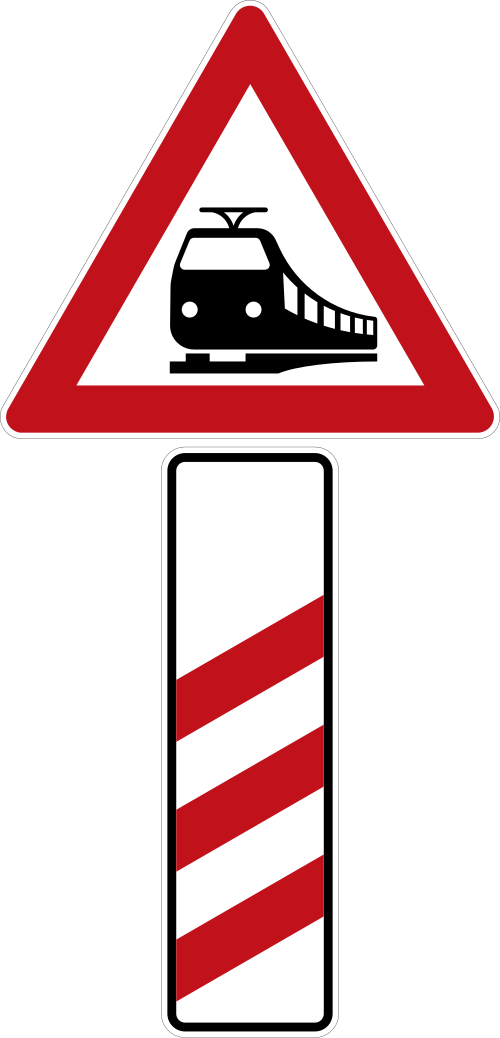
Traffic, junctions, railways
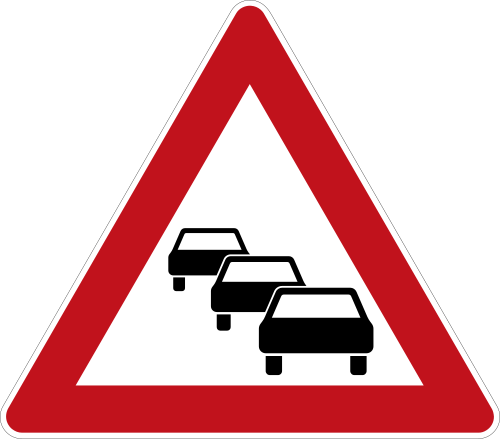
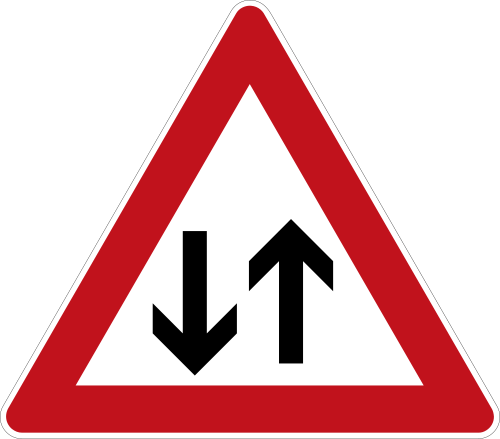
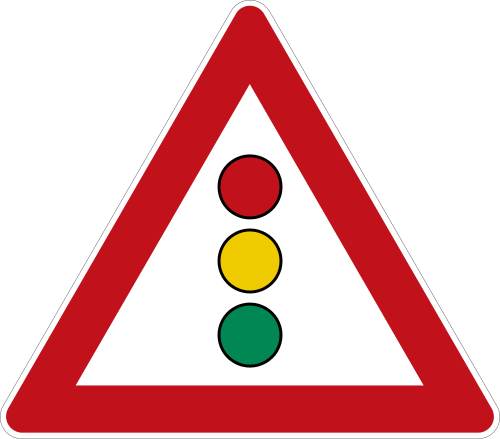
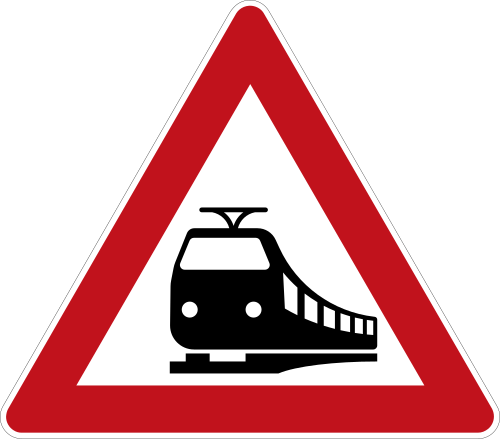
What the signs actually ask of you
- 10 % downhill: 10 m descent per 100 m – shift down early
- Uphill: change to a lower gear in good time
- Risk of skidding: brake gently, steer gently
- Children: slow down, be ready to brake
- Oncoming traffic: two‑way traffic from here – keep right
- Traffic jam: slow down, hazard lights at the end of the queue
- Riverbank: the road leads right up to the water
Remember: the point tells you what to do
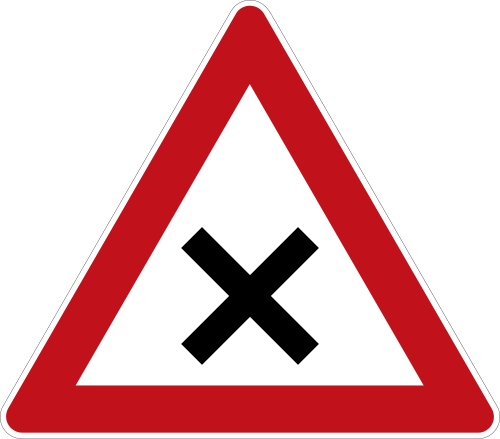
Point up (warning sign): caution, danger – adapt your speed. Point down (sign 205): give way. And: sign 102 only warns – it announces that right before left applies at the next junction.
Downhill ahead
On long descents use a lower gear: engine braking protects the brakes and prevents them from overheating.
This source question references an image or scene that is not yet supplied. Do not use it for scored practice.
A warning sign shows “10 % downhill”. What is correct?
- The road drops 10 m over 100 m
- The speed limit is reduced by 10 %
- I change to a lower gear in good time
Check answer
The road drops 10 m over 100 m
I change to a lower gear in good time
10 % means a 10 m drop per 100 m. A lower gear lets you use engine braking.
Where are warning signs usually placed outside towns?
- Right at the hazard
- About 150 to 250 m before the hazard
- At least 500 m before the hazard
Check answer
About 150 to 250 m before the hazard
Outside towns, warning signs usually stand 150–250 m before the hazard. A plate shows any different distance.
Spot hazards early
Warning signs announce risks – in the simulator you practise spotting the hazard behind them in time.
Hazard trainer↗