Regulatory signs
Prohibitions, mandatory signs, speed, zones
Orders and prohibitions
Regulatory signs are mostly round: red border = prohibition, blue background = mandatory. They apply from the sign onwards. Section restrictions such as speed limits or overtaking bans do not end automatically at junctions, but at an end sign, after the length stated on a plate – or, when paired with a warning sign, where the hazard clearly ends.
Traffic bans
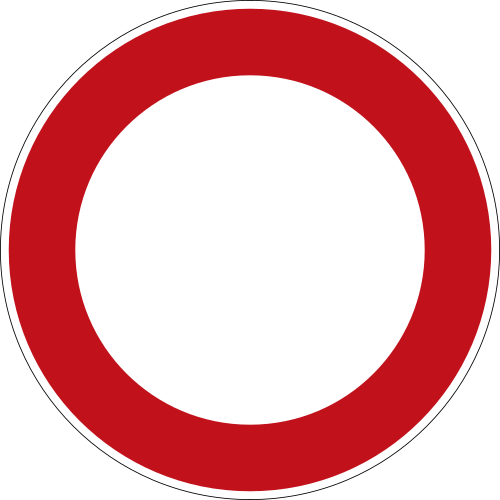 Sign 250: No vehicles
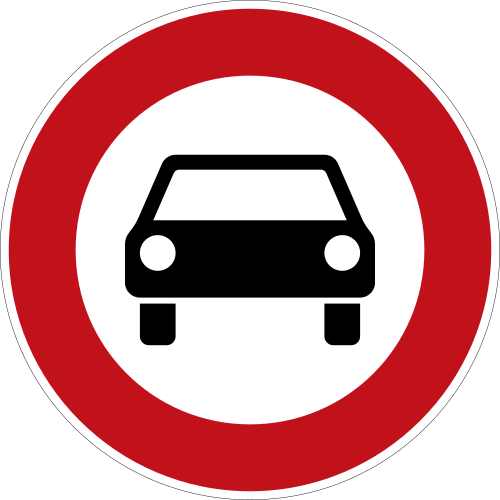 Sign 251: No motor cars
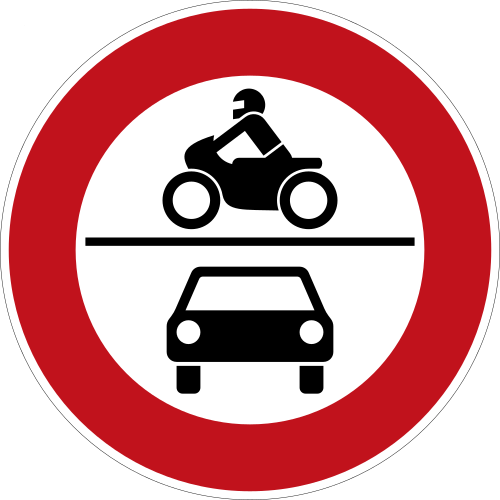 Sign 260: No motor vehicles
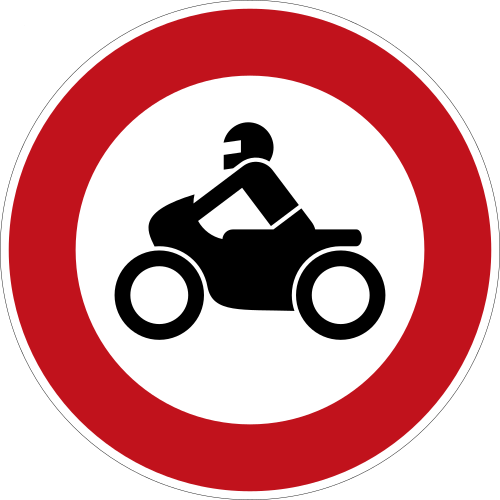 Sign 255: No motorcycles
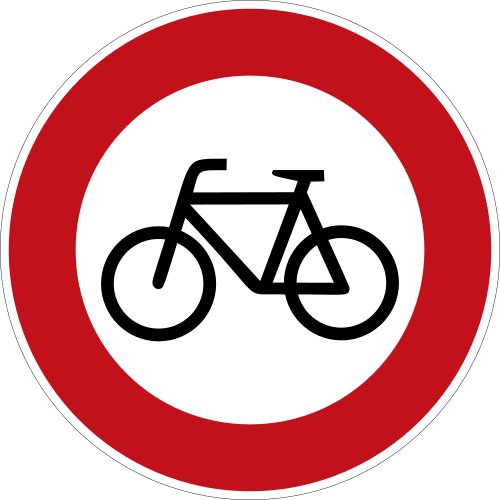 Sign 254: No cycling
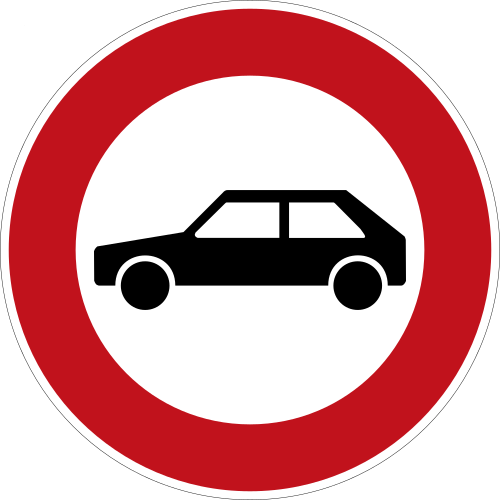 Sign 257-55: No cars
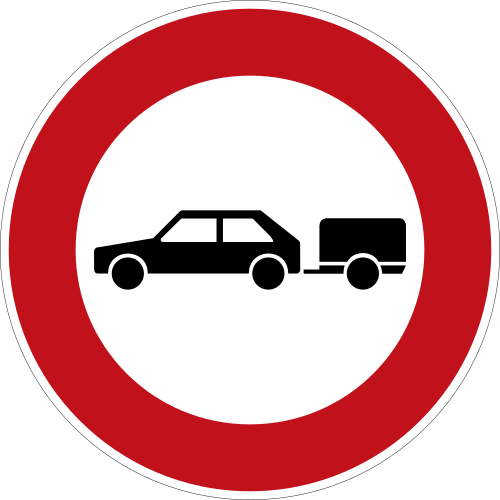 Sign 257-56: No cars towing trailers
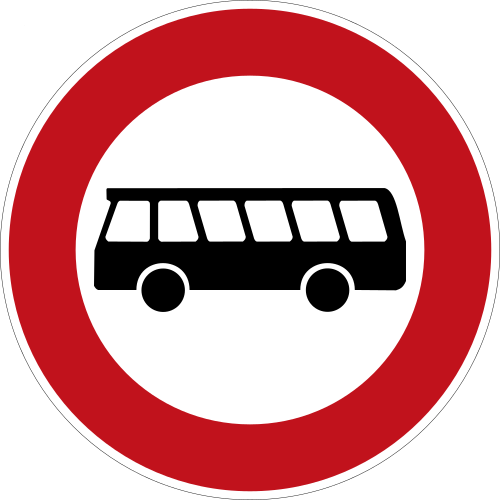 Sign 257-54: No buses
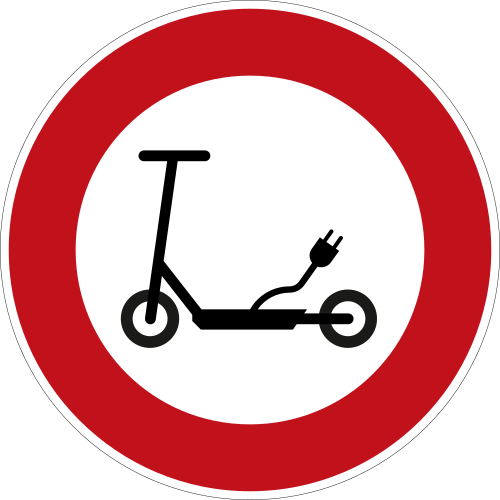 Sign 257-59: No e-scooters
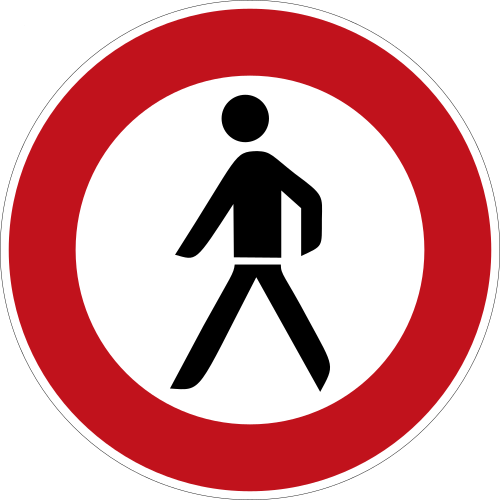 Sign 259: No pedestrians
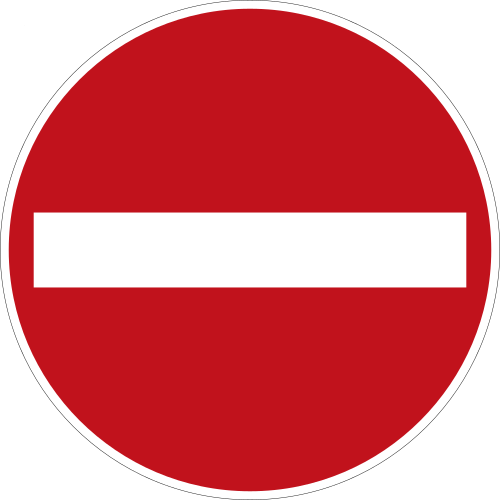 Sign 267: No entry
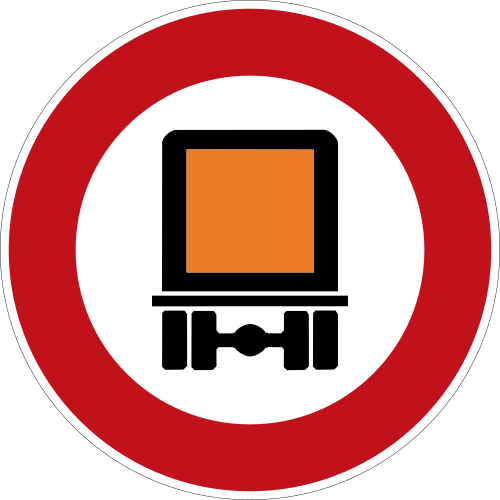 Sign 261: No vehicles carrying dangerous goods
Sign 250 or 267?
250 (white disc, red border)
- No vehicles of any kind
- Bicycles and motorcycles may be pushed
- Exceptions only via plates
267 (red with white bar)
- No entry – only from this side
- Usually at the end of a one‑way street
- Cyclists only if a plate allows it
Weight and dimensions
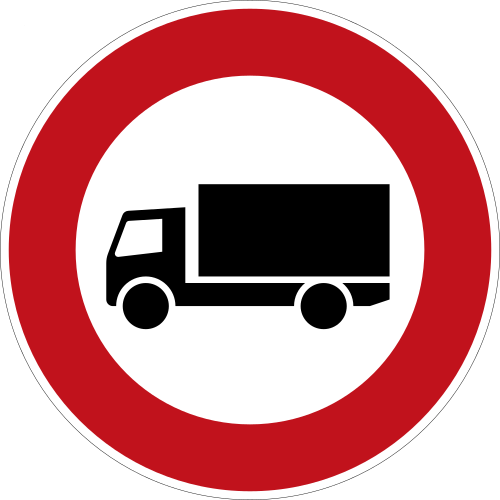 Sign 253: No goods vehicles over 3.5 t
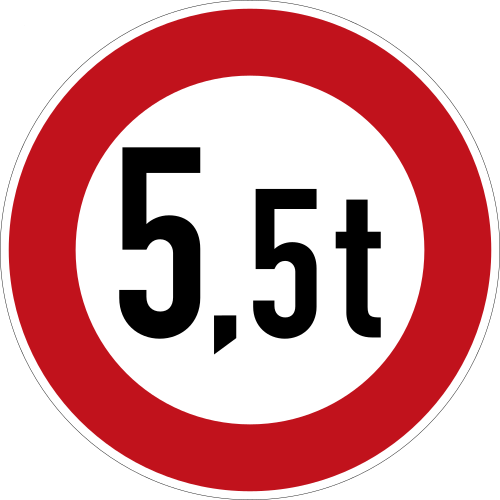 Sign 262: Actual weight limit (5.5 t)
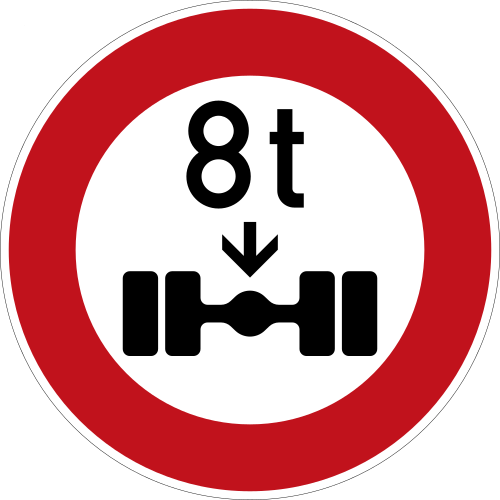 Sign 263-8: Actual axle load limit (8 t)
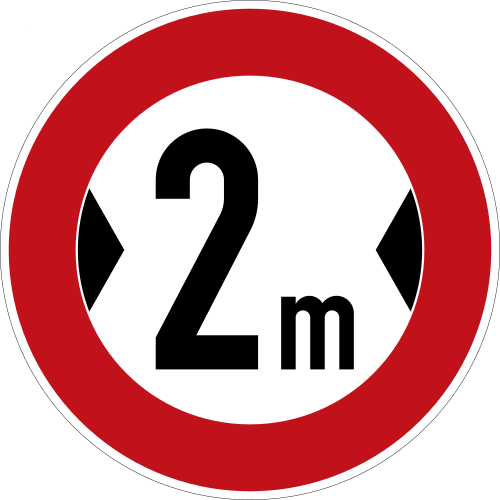 Sign 264-2: Actual width limit (2 m)
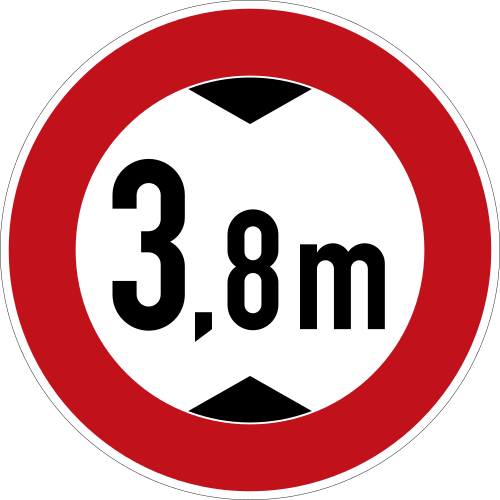 Sign 265: Actual height limit (3.8 m)
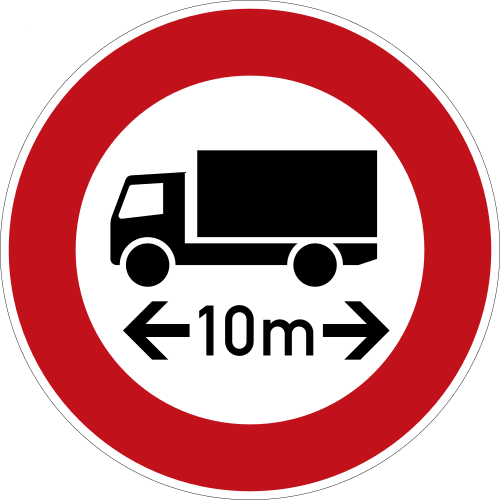 Sign 266-10: Actual length limit (10 m)
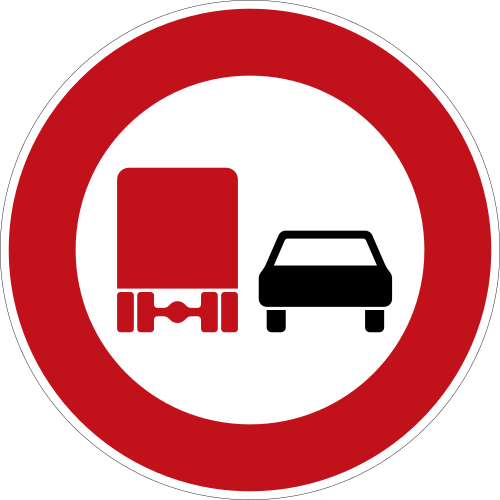 Sign 277: No overtaking for trucks over 3.5 t
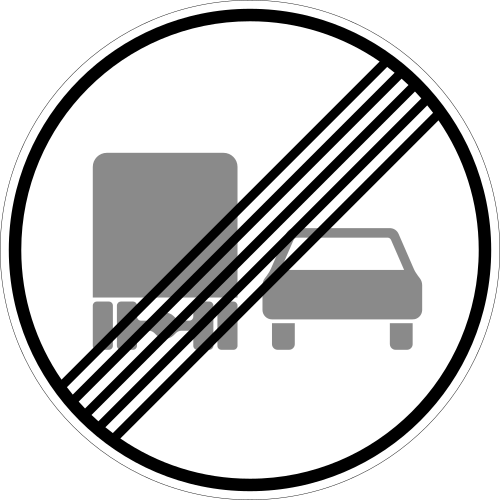 Sign 281: End of no-overtaking zone for trucks over 3.5 t
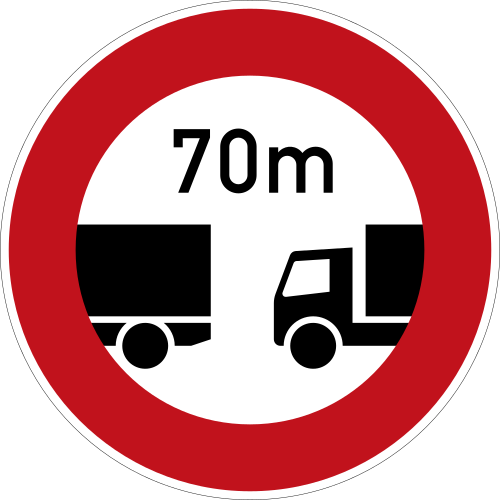 Sign 273-70: Minimum distance 70 m
Reading weights and dimensions correctly
- 253: no motor vehicles over 3.5 t permissible total mass
- Cars and buses are exempt from sign 253
- 253 with a “7.5 t” plate: applies only above 7.5 t
- 262: actual mass – for combinations, each vehicle separately
- 263: actual axle load
- 264, 265, 266: width, height, length – including the load
- Height: count roof boxes and bikes on the roof
Speed and overtaking
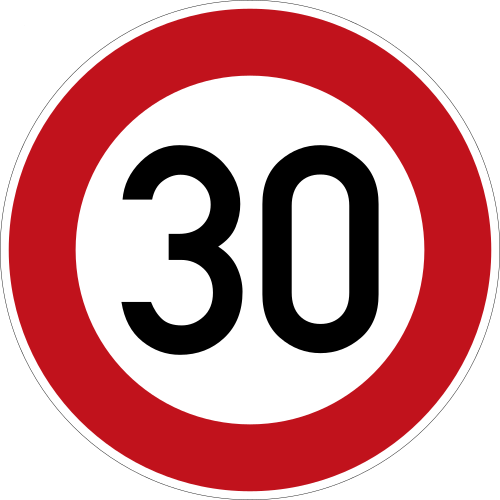 Sign 274-30: Speed limit 30 km/h
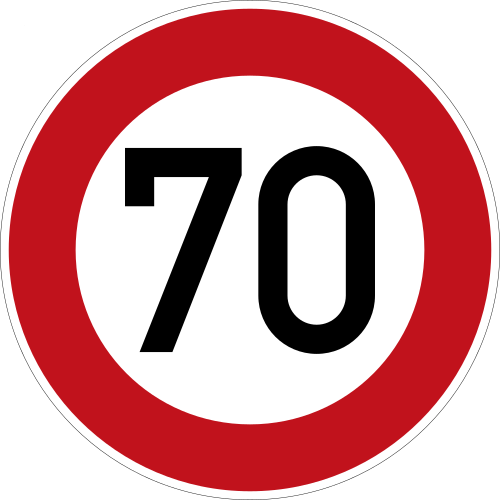 Sign 274-70: Speed limit 70 km/h
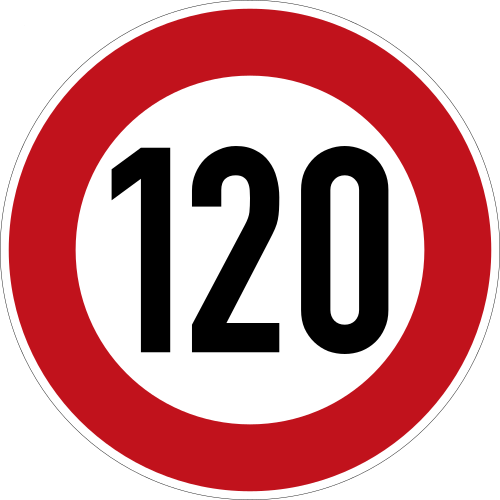 Sign 274-120: Speed limit 120 km/h
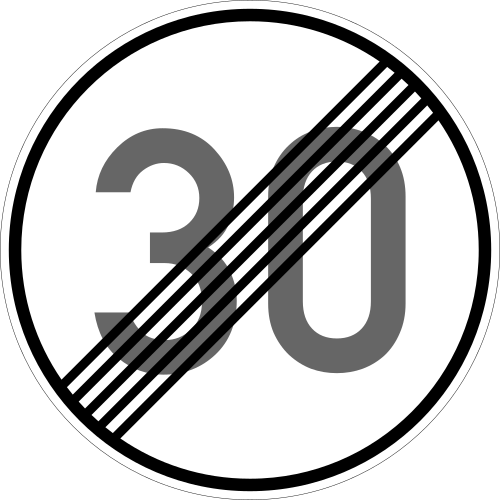 Sign 278-30: End of 30 km/h speed limit
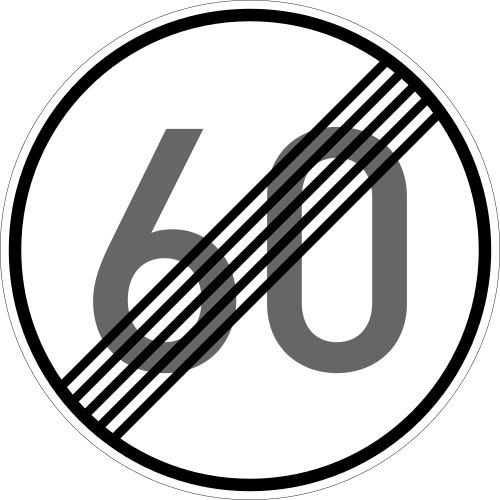 Sign 278-60: End of 60 km/h speed limit
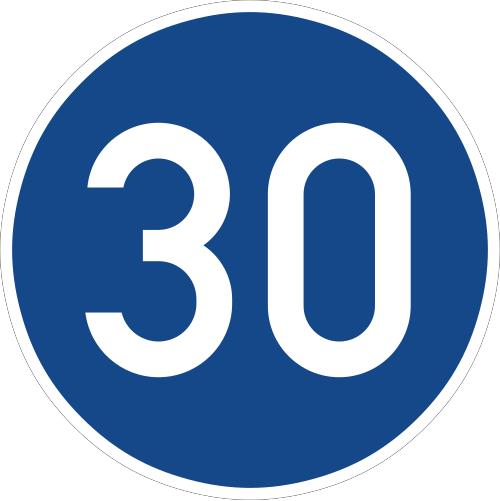 Sign 275-30: Minimum speed 30 km/h
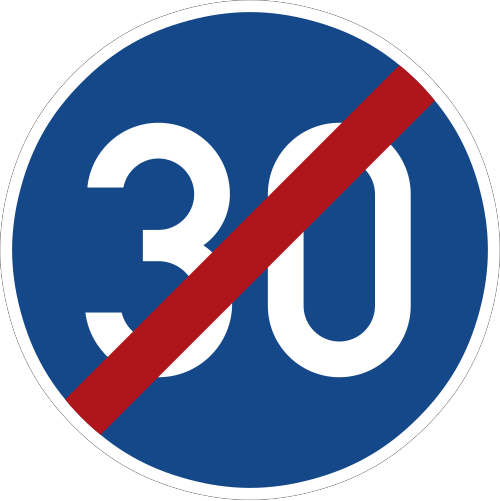 Sign 279-30: End of minimum speed 30 km/h
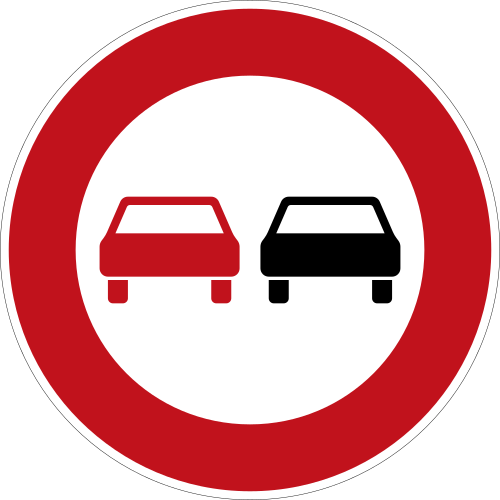 Sign 276: No overtaking
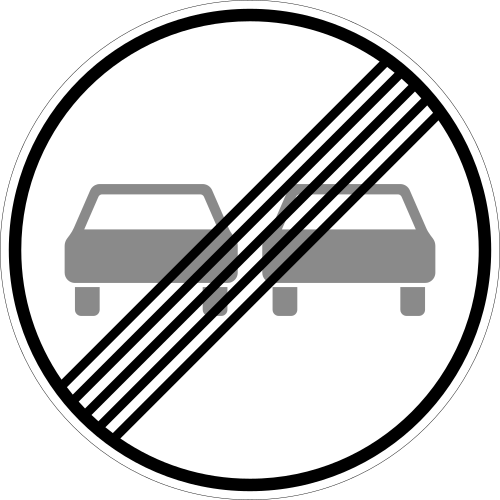 Sign 280: End of no-overtaking zone
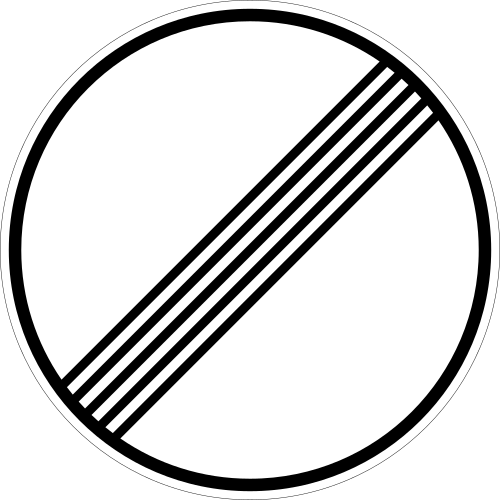 Sign 282: End of all restrictions
Speed limits and overtaking bans
- 274 applies from the sign until cancelled by 278 or 282
- With a “when wet” plate: only on a wet road
- 30 zone: usually right before left, valid until the zone ends
- 275: minimum speed – slower vehicles may not use that lane
- 276: no overtaking of multi‑track motor vehicles
- At 276 allowed: overtaking cyclists, mopeds, solo motorcycles
Mandatory signs and directions
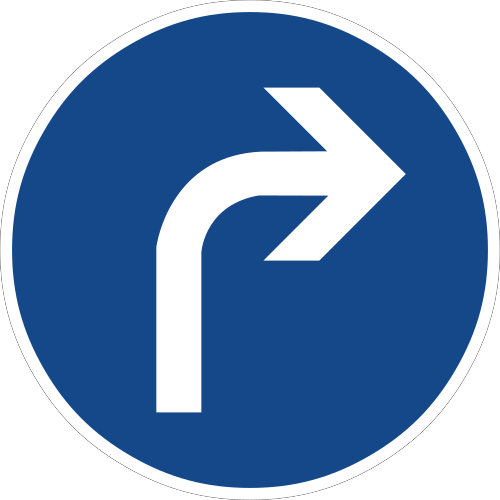 Sign 209: Mandatory direction – turn right
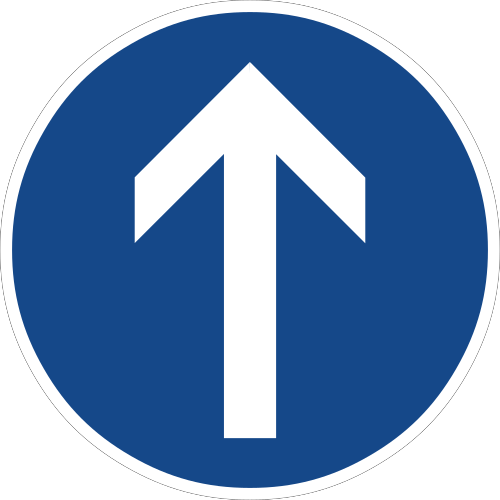 Sign 209-30: Mandatory direction – straight ahead
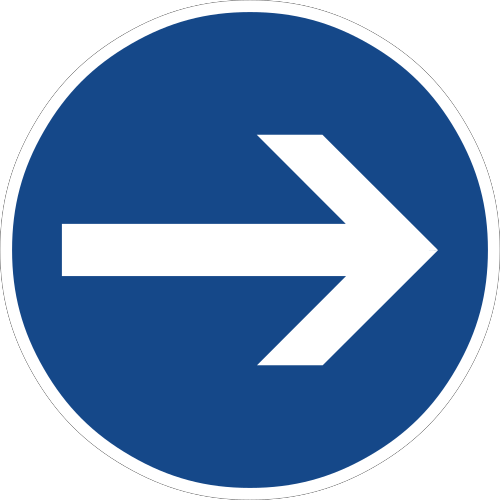 Sign 211: Mandatory direction – turn right here
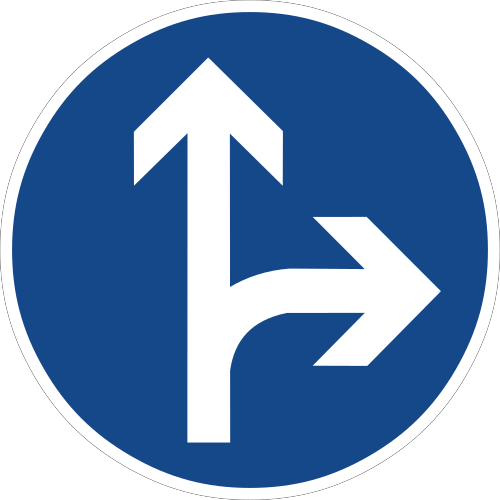 Sign 214: Mandatory direction – straight ahead or right
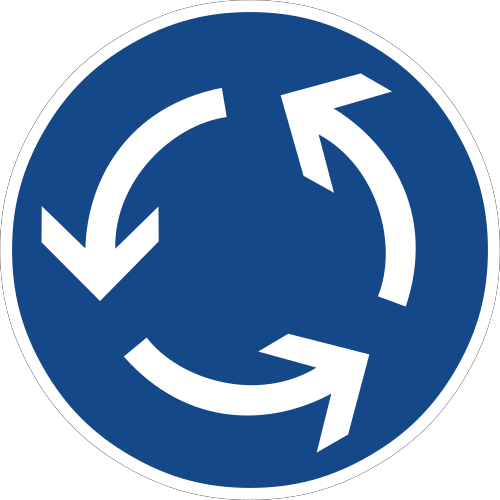 Sign 215: Roundabout
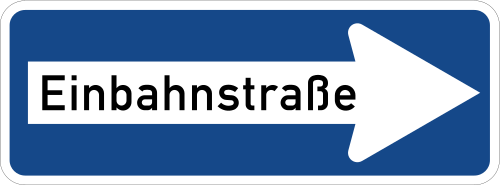 Sign 220-20: One-way street (pointing right)
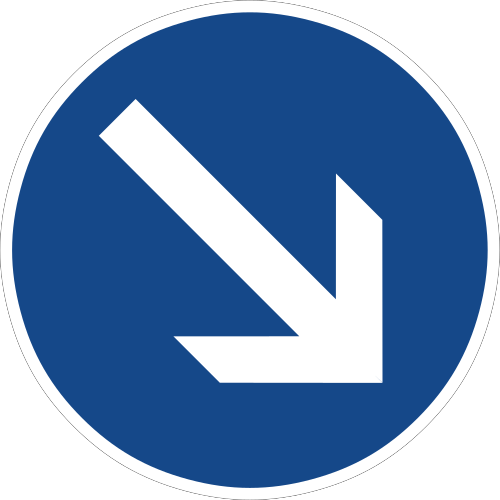 Sign 222: Keep right
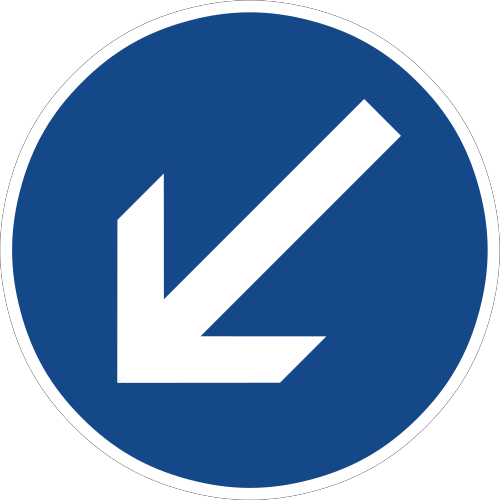 Sign 222-10: Keep left
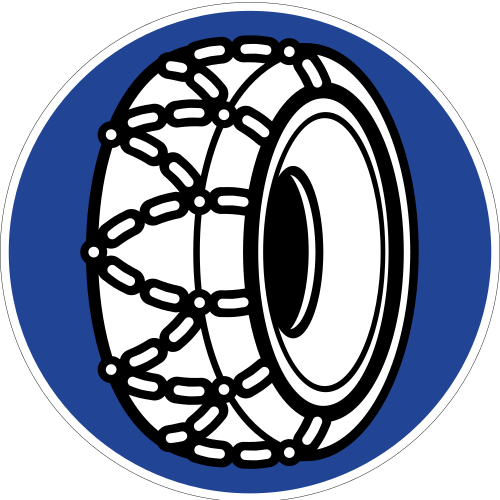 Sign 268: Snow chains required
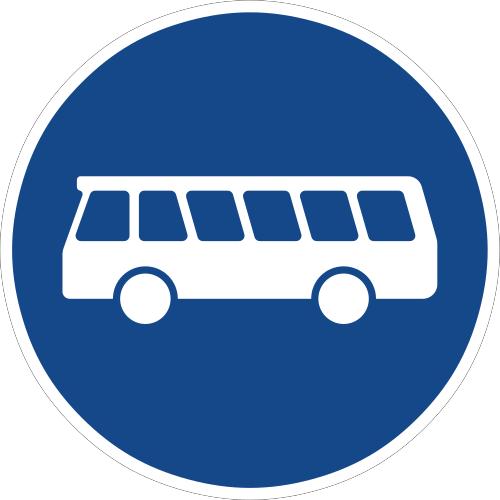 Sign 245: Bus lane
Special paths and zones
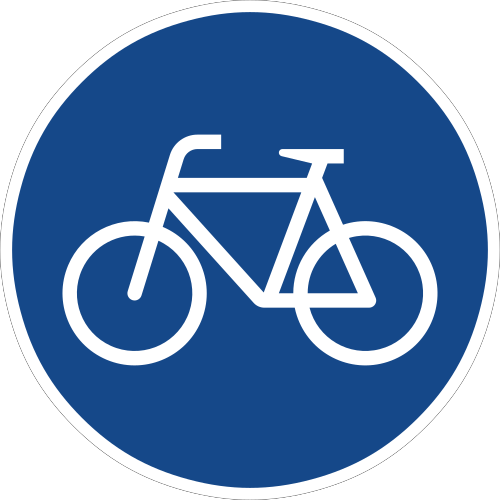 Sign 237: Cycle path
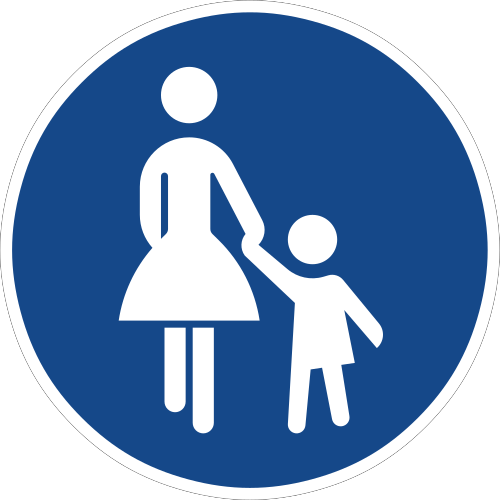 Sign 239: Footpath
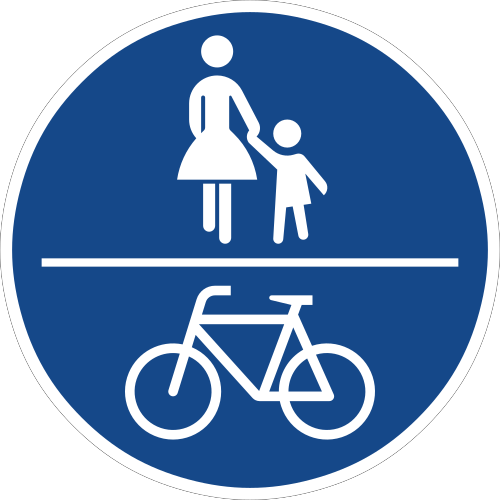 Sign 240: Shared pedestrian and cycle path
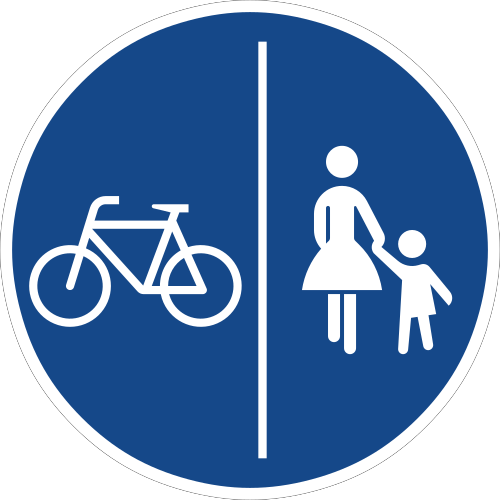 Sign 241-30: Segregated cycle and pedestrian path
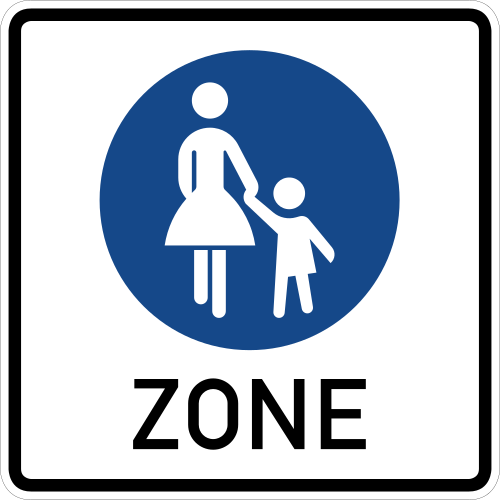 Sign 242.1: Start of pedestrian zone
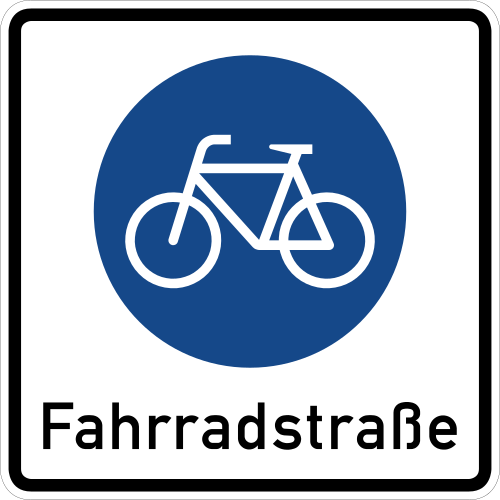 Sign 244.1: Start of cycle street
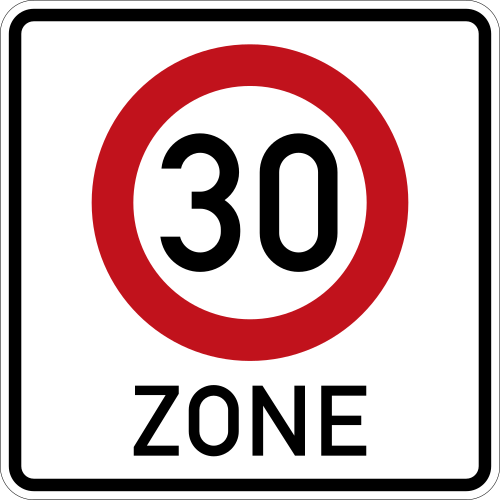 Sign 274.1: Start of 30 km/h zone
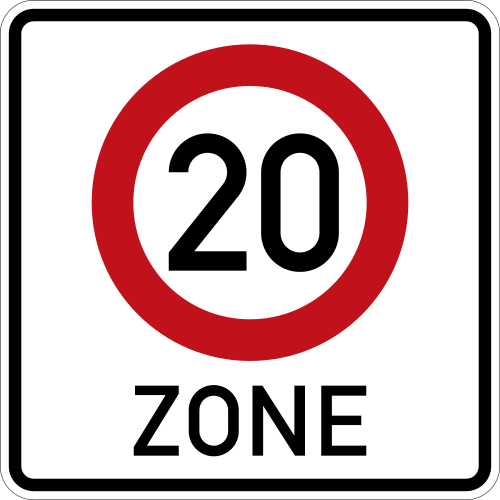 Sign 274.1-20: Start of 20 km/h zone
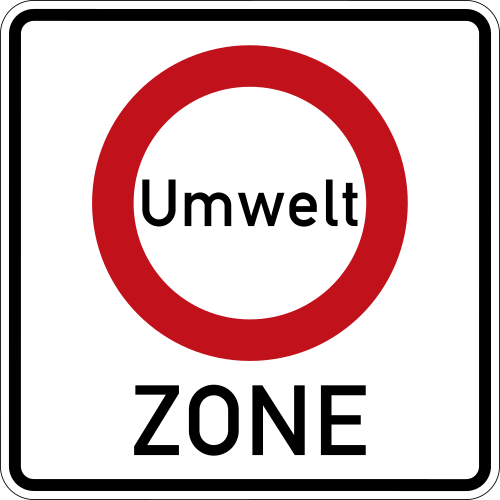 Sign 270.1: Start of low-emission zone
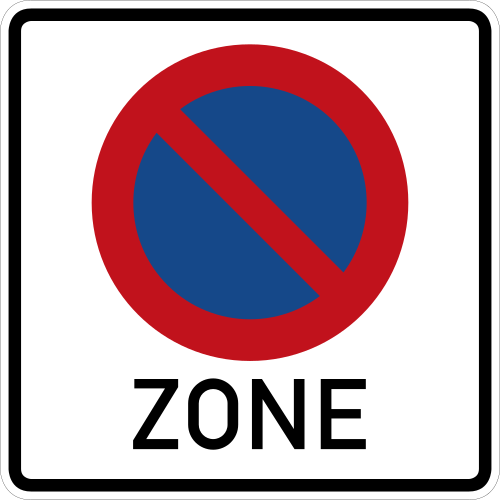 Sign 290.1: Start of restricted stopping zone
Remember: red forbids, blue commands
Red border: this is forbidden. Blue background: this is mandatory. Grey with a diagonal stripe: a restriction ends. And with zone signs, the rule applies to the whole area – until the matching end sign.
An overtaking ban (sign 276) is in force. Whom may you still overtake in your car?
- A cyclist
- A tractor
- A motorcycle without a sidecar
Check answer
A cyclist
A motorcycle without a sidecar
Sign 276 only bans overtaking multi‑track motor vehicles and motorcycles with sidecars. A tractor is multi‑track.
Before an underpass, a sign limits height to 3.8 m. Your van is 2.9 m tall with a 1 m high load on the roof. May you drive through?
- Yes – the sign only applies to the vehicle without load
- No – vehicle and load together are 3.9 m high
- Yes – if I drive slowly in the middle
Check answer
No – vehicle and load together are 3.9 m high
Height limits apply to the vehicle including its load. 3.9 m is too high.