Start with a small working list
Vorfahrt: priority at a junction. Abbiegen: turning. Fahrstreifen: traffic lane. Schulterblick: checking over your shoulder. Rückwärtsfahren: reversing. Anfahren: moving off. Bremsbereit: ready to brake. These short translations are learning aids, not complete legal definitions.
Learn a phrase rather than an isolated word
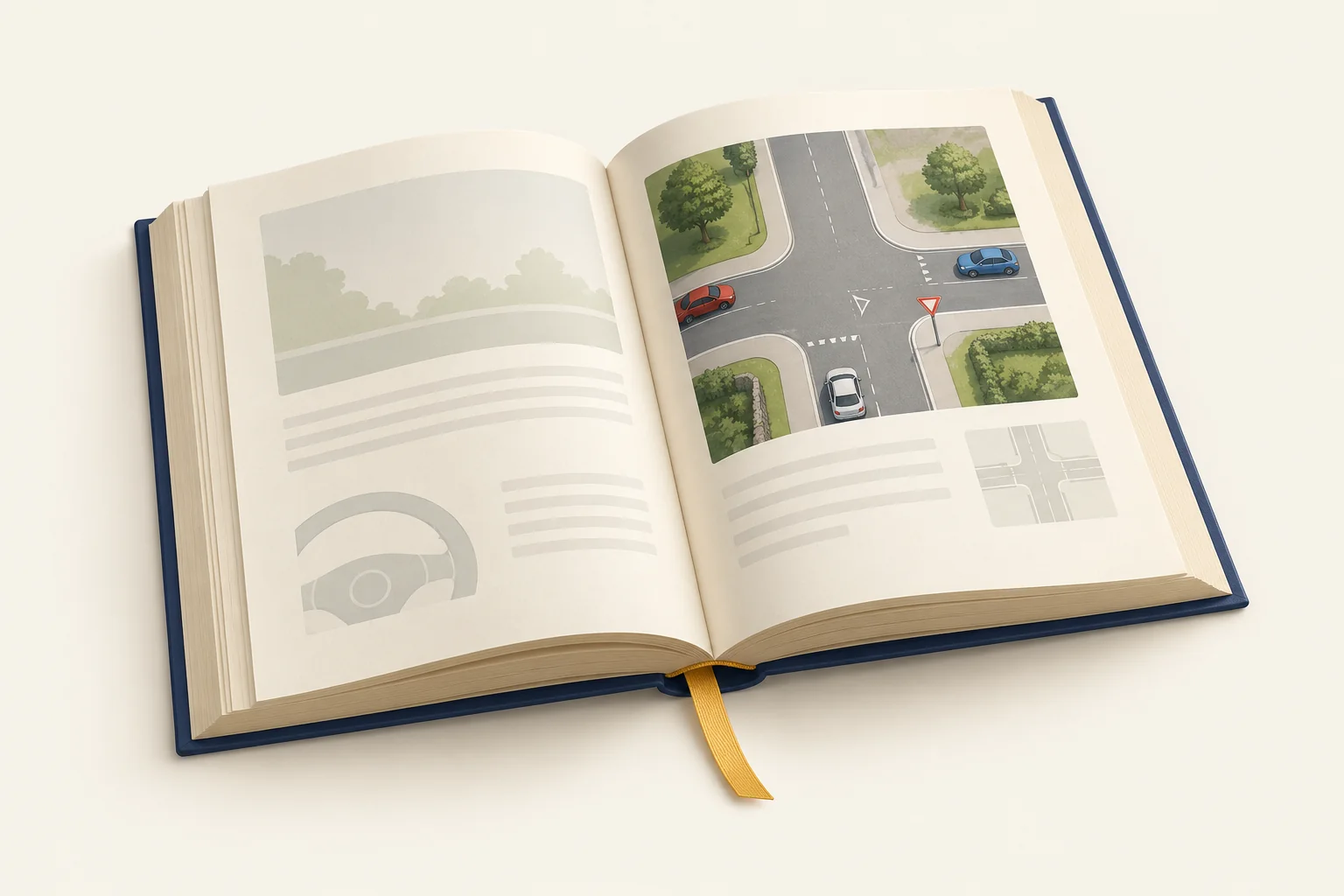
Pair a word with an action you can describe. For example, connect Rückwärtsfahren with a parked-car practice scene, or Fahrstreifen with a lane diagram. Say what you would observe in that scene before answering the question.
Check words that change the question
Pay attention to nicht (not), müssen (must), dürfen (may) and können (can). Read the whole question before choosing an answer. When a mistake comes from language rather than the rule, save the phrase that caused the confusion.
Build your own ten-word set
After a session, choose up to ten unfamiliar terms. Cover the translations and explain each term in your own words. At your next lesson, ask your instructor about one phrase you still find unclear. Confirm your actual exam language options with your school or examination provider.
Keep the German word, your explanation and one example together.
Put it into practiceOriginal, AI-assisted supplementary learning content. Not the official question catalogue or a substitute for your driving instructor. Rule summaries are selective; consult the linked text for its full scope.